
Introduction
Benchmark Data: The Post‑Purchase Attention Gap
Globe Fulfillment aggregated operational data from cross‑border DTC stores across home, apparel and electronics verticals in Q2 to Q3 2026, segmenting stores by their post‑purchase tracking setup:
- WISMO ticket share of total support volume: stores on default carrier tracking run 28% to 35%; stores on branded tracking pages hold 8% to 12%
- Support cost per order: default‑tracking stores average $0.84; branded‑tracking stores average $0.31
- Repeat purchase rate within 60 days of first delivery: 13.1% for default handoff vs. 19.4% for branded post‑purchase flows
- Review submission rate: delivery‑timed review prompts on branded pages generate 2.6 times more reviews than post‑delivery email blasts
- Delivery exception resolution time: proactive delay alerts cut resolution from 3.8 days of ticket ping‑pong to same‑day self‑service confirmation
A clear pattern emerges: the tracking page is the most emotionally volatile touchpoint in the entire customer journey, and the least managed. Stores that treat it as owned real estate recover both support capacity and repeat revenue.
Three Revenue Leaks of the Default Tracking Handoff
1. The WISMO ticket flood
Every gap in tracking visibility converts into a support conversation. Agents spend hours copy‑pasting carrier status updates that an automated alert could have delivered. During cross‑border peak seasons, WISMO volume can triple within a week, forcing temporary hires that erase margin on exactly the orders that were supposed to scale profitably.
2. The trust vacuum during peak anxiety
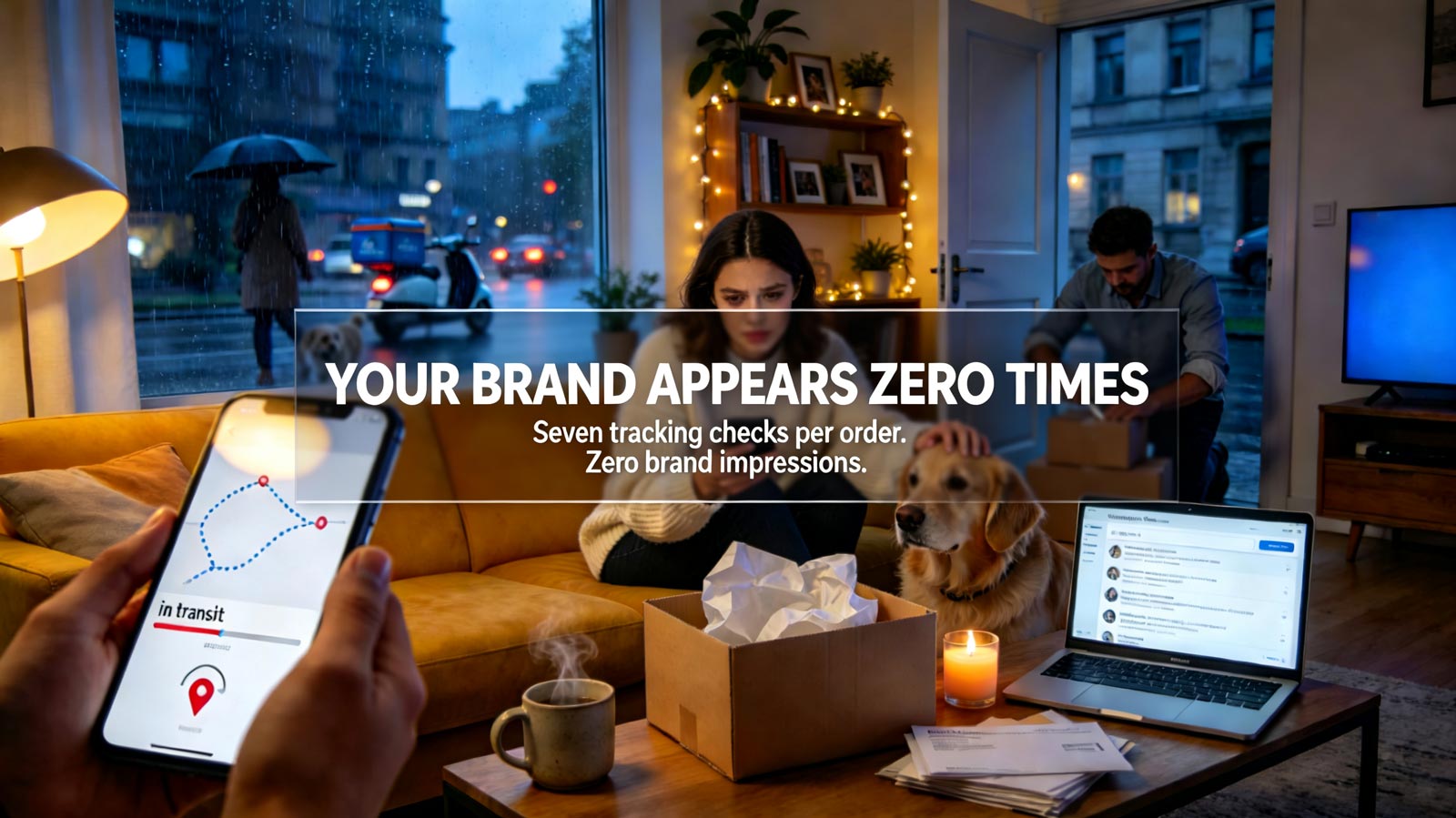
Between dispatch and delivery, customers check tracking 4 to 7 times per order. On a default carrier page, every check exposes them to carrier branding, third‑party ads and raw scan codes. Zero reinforcement of your brand promise, zero reassurance when scans stall at customs.
3. The unmonetized delivery‑moment attention
Delivery day is the single highest‑attention moment in the customer lifecycle, yet default flows waste it. No reorder prompt, no review ask, no cross‑sell. The customer receives the package, the relationship goes silent, and the second purchase window closes by default.
The Four‑Step Branded Tracking Audit Workflow
Step 1: Establish the WISMO baseline
Export the last 30 days of support tickets, tag every "where is my order" conversation, and compute tickets per 100 orders. Segment by shipping lane. Cross‑border lanes should be flagged separately, since they carry 3 to 4 times the WISMO density of domestic ones.
Step 2: Map the post‑purchase touchpoint chain
Document every touch from payment confirmation to review request: confirmation email, dispatch notification, tracking destination, exception handling, delivery confirmation. Mark every step where the customer leaves your domain. Any handoff to a carrier URL is a leak point to be reclaimed.
Step 3: Deploy branded tracking with three recovery modules
Replace carrier URLs with a branded tracking page carrying three modules: proactive delay alerts that push exception updates before customers ask; self‑service exception resolution for address fixes and customs holds; delivery‑timed prompts, meaning a review ask on delivery day, a reorder suggestion at the product's natural replenishment cycle, and cross‑sell placement after confirmation, never before.
Step 4: Run the monthly review loop
Track four indicators monthly: WISMO tickets per 100 orders, support cost per order, 60‑day repeat purchase rate, and review volume. Re‑baseline quarterly against shipping‑lane changes. The audit is only valuable as a recurring operating rhythm, not a one‑time fix.
Practical Store Case
Core Takeaways
- The tracking page is the highest‑anxiety, highest‑attention touchpoint in the post‑purchase journey, yet most stores hand it entirely to carriers. Default flows leak support capacity, trust and repeat revenue simultaneously.
- Quantify the damage before fixing it: WISMO tickets per 100 orders and support cost per order are the two fastest baselines to build and the clearest proof of ROI.
- Branded tracking pays back through three modules: proactive delay alerts, self‑service exception handling and delivery‑timed review or reorder prompts. It does not pay back through logo placement alone.
- Run the audit monthly as a standing operating rhythm. Post‑purchase performance drifts with every shipping‑lane and carrier change, so one‑time fixes decay.