
Introduction
The Copycat Tax: Why Identical Listings Inherit Identical Flaws
The Four-Step Review-Mining Framework
Apply these four steps to any candidate category before committing a purchase order. Each step uses data you can collect in days, not months.
Step 1: Mine the 1–3 star layer
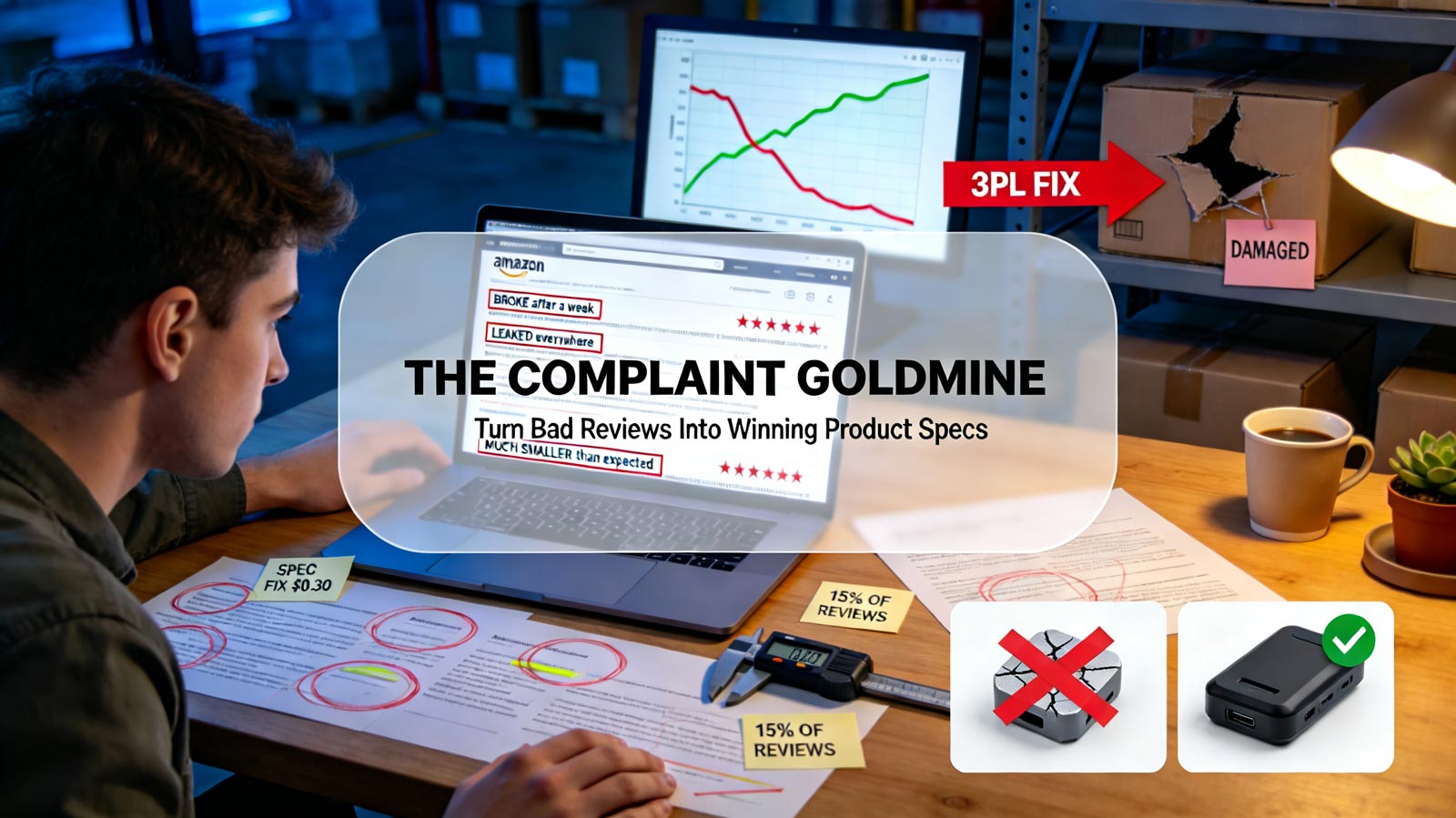
Pull 200–500 recent negative reviews across the top 5–10 listings in the target category. Keep sentences containing component language — "broke", "leaked", "too small", "stopped working" — and discard pure emotional venting.
Step 2: Cluster complaints into spec buckets
Group findings into three buckets: defect (quality failure), design (usability flaw) and expectation (listing overpromises). Only the first two are fixable through the product itself; expectation gaps are listing problems, not sourcing problems.
Step 3: Score by frequency × fix cost × demo-ability
A fix mentioned in 15% of reviews that adds $0.30 per unit outranks a rare complaint requiring full redesign. Prioritize fixes that can be photographed or demonstrated in your listing, because visible fixes convert.
Step 4: Validate with a small overseas batch, not a container
Order samples of the improved spec, then test 50–100 units through an overseas fulfillment center in your target market. Track review velocity, return reasons and damage reports against the incumbent baseline. Local dispatch cuts delivery complaints out of the data, so what remains is true product signal. If the fixed spec doesn't produce visibly better feedback at this stage, stop before bulk inventory.
The Fulfillment Split: Which Complaints Belong to Your 3PL, Not Your Product
Industry Observation: How Spec-Fix Stores Operate
- They sell the fix in the first image. Hero images and demo videos show the exact defect repaired versus the generic version. Comparison creatives consistently outperform feature-list creatives on both CTR and CPC.
- They price at a modest premium, not parity. A 10–20% premium over the copycat listing signals quality and protects margin. Pricing at parity quietly surrenders the differentiation you paid to build.
- They measure spec fixes in returns and damage rates, not just stars. A successful component upgrade shows up as fewer "broke" return reasons and lower damage reports per thousand orders — metrics your fulfillment partner sees first. Folding these into every production run keeps the product improving while competitors ship the same old spec.
What Passes the Filter: Three Review-Mining Sweet Spots for Late 2026
- Small kitchen electrics with known failure points. Seals, motors and cords generate the highest complaint density in home categories; component upgrades are cheap, easy to demo, and cut both returns and in-transit damage claims.
- Pet gear with sizing and durability complaints. Harnesses and carriers draw persistent sizing feedback; fixing fit cuts return rates — one of the costliest line items in overseas fulfillment — while earning trust in a high-loyalty niche.
- Beauty and personal-care tools with material complaints. Upgraded materials and replaceable heads support premium pricing, reduce "arrived damaged" reviews through better packaging specs, and connect naturally to the refill-anchor economics covered in our previous Winning Products analysis.
Core Takeaways
- Competitor 1–3 star reviews are a free product-research dataset: buyers document exactly which specs fail and what they would pay more for.
- Four steps turn complaints into defensible specifications — mine, cluster, score and validate with a small overseas batch — all executable before any bulk purchase order is placed.
- Split complaints before spending: packaging damage, delivery delays and size-expectation gaps are fulfillment and listing problems, and routing them to your 3PL protects sourcing budget from fixing products that were never broken.
- Sell the fix visibly with comparison creatives, price 10–20% above copycat listings, and track success in return and damage rates — the fulfillment metrics that compound every quarter while copied listings stagnate.