
Introduction
Cross-border DTC brands are operating in a vastly different landscape in 2026. Tariff reforms across the EU and US, stricter item-level declaration requirements, and mounting peak-season pressure have reshaped cross-border unit economics — and legacy fulfillment workflows are struggling to keep pace.
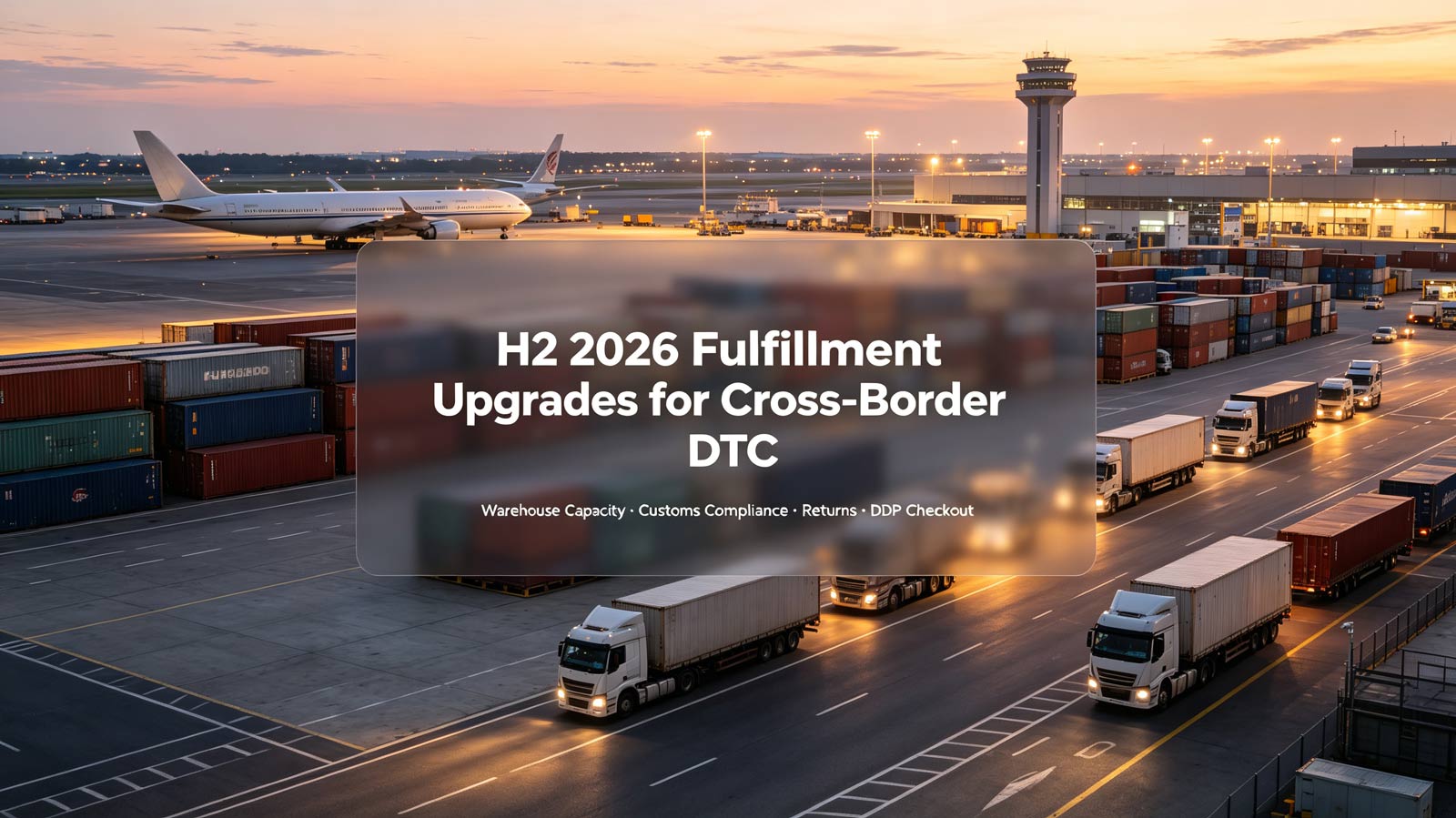
At Globe Fulfillment, we spent H1 2026 gathering merchant feedback and aligning our operations with these policy shifts. The result is a set of H2 2026 fulfillment upgrades built around four persistent pain points: regional warehouse capacity, customs compliance workload, cross-border return handling, and checkout pricing transparency.
Expanded Regional Warehouse Capacity in the US and Europe
More brands are shifting from direct parcel shipping to regional bulk stocking, and our warehouse network is scaling to match this demand.
Globe Fulfillment’s fulfillment centers across the US and Europe now support higher-volume regional inventory placement, including fast-turnover seasonal SKUs and pre-Q4 stock positioning. Storing inventory closer to end customers helps merchants shorten last-mile delivery times, reduce exposure to border cost fluctuations, and improve inventory turnover without overcommitting stock.
Stronger Customs Compliance Support
EU declaration rules have tightened in 2026, with item-level data accuracy under greater scrutiny than ever.
To help merchants keep pace, we have enhanced product data standardization and HS code classification support within our onboarding and inventory workflows. Clean source product data reduces declaration discrepancies, minimizes clearance delays, and cuts down manual rework during peak season — when even minor data inconsistencies can hold shipments at the border.
Improved Cross-Border Return Handling
Returns remain one of the most margin-sensitive areas for DTC brands, especially under 2026’s fully dutiable parcel framework.
We have refined our end-to-end return processing for US and European markets, with structured intake, SKU condition assessment, and clear restock or disposition decisioning. The goal is straightforward: help merchants recover more residual value from returned inventory and avoid duplicate duty charges on goods shipped back across borders.
Enhanced Storefront Integration for Transparent Checkout Pricing
Unexpected duties due on delivery remain a leading cause of parcel refusals and chargebacks for international DTC brands.
Our integrations with major storefronts — including Shopify and WooCommerce — now better support brands wanting to display all-inclusive landed pricing at checkout. Showing the full delivered cost upfront eliminates surprises for shoppers, lowers refusal rates, and protects conversion amid evolving cross-border tariff rules.
What This Means for DTC Merchants
Every H2 2026 upgrade targets a specific pressure point in today’s global trade environment:
- Regional warehouse capacity improves inventory geography and delivery speed
- Customs compliance support reduces declaration risk and clearance friction
- Structured return handling protects margins on returned goods
- Transparent checkout pricing stabilizes conversion and cuts refusals
Together, these updates are designed to make your fulfillment operation more resilient — and your unit economics more predictable — heading into Q4 2026 and beyond.
Core Takeaways
- H2 2026 upgrades expand regional warehouse capacity across the US and Europe to support local stocking strategies
- Strengthened product data and HS code support helps merchants navigate tightened EU declaration rules
- Refined cross-border return workflows improve residual value recovery on returned inventory
- Storefront integrations with Shopify and WooCommerce support all-inclusive landed pricing at checkout