
Introduction
H2 2026 has reshaped DTC competition entirely: growth no longer relies on unlimited traffic scaling, but on inventory efficiency, stable backend operations, and risk-controlled product portfolios. As year-end peak shopping seasons approach, merchants face overlapping challenges including order spike pressure, aging stock profit leakage, stricter cross-border compliance, and high-AOV bundle fulfillment complexity.
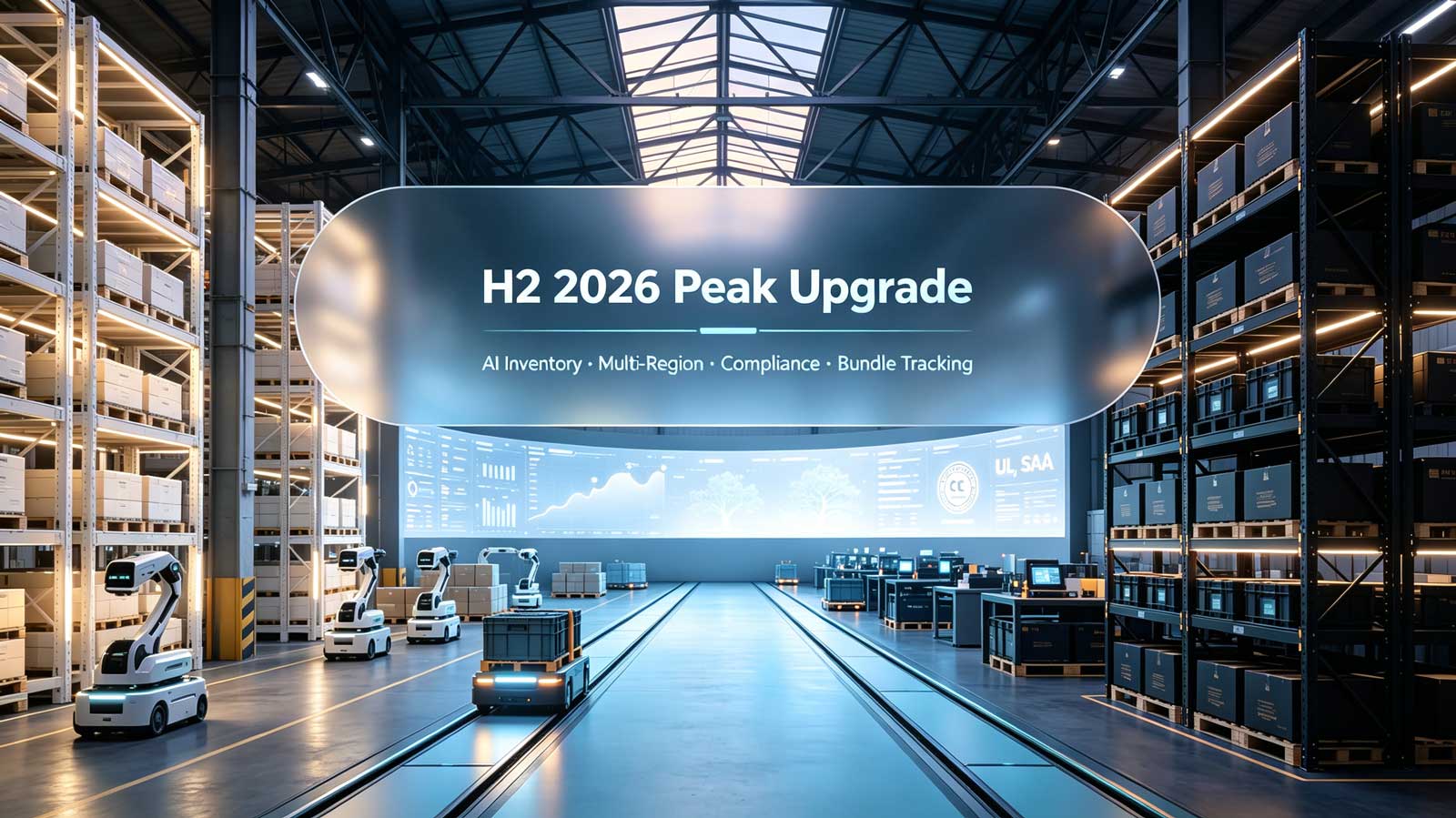
To match the new industry operational standard and resolve seasonal fulfillment bottlenecks, Globe Fulfillment has officially launched its 2026 H2 full-scale operational upgrade. This round of iteration covers multi-region warehouse capacity expansion, AI-powered inventory governance system rollout, standardized compliance SOP, and exclusive peak-season merchant support policies. It provides full-stack backend support for the efficiency-first, margin-stable DTC growth model concluded in our Industry Insights, Store Analysis, and Winning Products series.
2026 DTC Peak Season Pain Points Solved by This Upgrade
Most seasonal DTC losses stem from structural backend limitations rather than front-end marketing issues. Based on H2 2026 merchant operational data, four seasonal bottlenecks severely restrict peak profitability:
- Seasonal capacity bottlenecks: Fixed warehouse space cannot support pre-peak stocking, forcing merchants to choose between stockout risks and overstock losses.
- Passive inventory management: Static stock data fails to predict aging risks, causing hidden write-down losses during long peak sales cycles.
- High-AOV bundle fulfillment errors: Traditional single-SKU tracking cannot support multi-component kit management, triggering ghost inventory and refund risks.
- Tightened regional compliance: Electrical and wellness SKUs face stricter UL, CE, SAA verification, leading to customs delays and listing restrictions.
This company-wide upgrade targets the above four pain points, turning seasonal operational uncertainty into predictable, controllable fulfillment stability.
Core Upgrade 1: Multi-Region Warehouse Capacity Expansion
Globe Fulfillment has completed phase-II capacity expansion across core North American and European fulfillment centers, unlocking flexible seasonal inventory surge space. Different from general warehouse expansion, this iteration features targeted optimization for H2 2026’s high-potential product types.
Key upgraded capabilities
- Dedicated storage zones for high-AOV bundle kits, rigid home goods, and senior wellness electrical SKUs
- Independent fast-turn and slow-turn stock zoning, physically supporting merchants’ 60/40 inventory portfolio rule
- Elastic seasonal space reservation to avoid peak overstock occupation and off-season aging stock
The expanded network eliminates the capacity mismatch problem summarized in our Store Analysis articles, ensuring front-end promotion strategies no longer fail due to backend throughput limits.
Core Upgrade 2: AI-Powered Dynamic Inventory Governance System
To solve passive, delayed, and inaccurate traditional inventory management, Globe Fulfillment has fully launched the new AI inventory governance system for all merchant accounts. It upgrades from simple stock statistics to predictive, proactive, and rule-driven inventory operation.
Key system iterations
- Component-level bundle tracking: Real-time mapping of every accessory and part under bundle SKUs, completely eliminating ghost inventory for high-AOV orders.
- Intelligent aging stock early warning: Automatically mark stocks approaching 45-day aging thresholds and generate optimization suggestions to block profit leakage.
- Seasonal demand forecasting: Predict campaign-driven order spikes to guide scientific replenishment and avoid stockout or overstock extremes.
- Turnover-linked tiered pricing matching: Automatically grant preferential fulfillment rates for high-efficiency anchor SKUs to stabilize net margins.
This system upgrade is the core technical support for merchants to improve inventory turnover — the decisive metric separating top DTC stores from underperforming ones in 2026.
Core Upgrade 3: Peak-Season Compliance & Packaging SOP Standardization
As cross-border product compliance continues to tighten in 2026, inconsistent certification and labeling standards for electrical, labeling, and packaging easily trigger peak-season penalties. Focusing on high-risk SKUs summarized in our Winning Products series, we have fully updated seasonal compliance processes.
Compliance & operational upgrades
- Pre-warehousing mandatory verification for electrical thermal pads and senior wellness electronic devices (UL/CE/SAA document inspection)
- Reinforced customized packaging standards for rigid accessories and fragile electronic goods
- Unified peak-season batch inspection process to reduce transit damage, errors, and return rates
Standardized compliance workflows help merchants safely scale low-saturation, high-margin niche SKUs without policy and customs risks during the critical H2 profit window.
Exclusive 2026 H2 Merchant Peak Support Policies
To help all partners convert operational upgrades into actual profit growth, Globe Fulfillment has launched exclusive peak-season benefit policies, open to all new and existing merchants:
- Free full-store inventory health diagnosis (turnover rate, aging stock ratio, bundle accuracy audit)
- Priority order processing for high-margin anchor SKUs and premium bundle orders
- Discounted tiered fulfillment costs for high-turnover portfolio inventory
- One-on-one peak stocking strategy consulting to avoid capital occupation and seasonal losses
Core Takeaways
- 2026 DTC peak competition is no longer traffic-driven, but fulfillment efficiency and inventory governance-driven.
- Capacity expansion, AI inventory systems, and standardized compliance SOP solve the three biggest seasonal DTC operational pain points.
- Upgraded backend capabilities perfectly match the 60/40 portfolio rule, high-AOV scaling logic, and low-saturation SKU strategies.
- Merchants can stabilize net margins and reduce operational risks without relying on increased ad spend.
- Seasonal support policies help brands capture sustainable peak profits with lower trial-and-error costs.