
Introduction
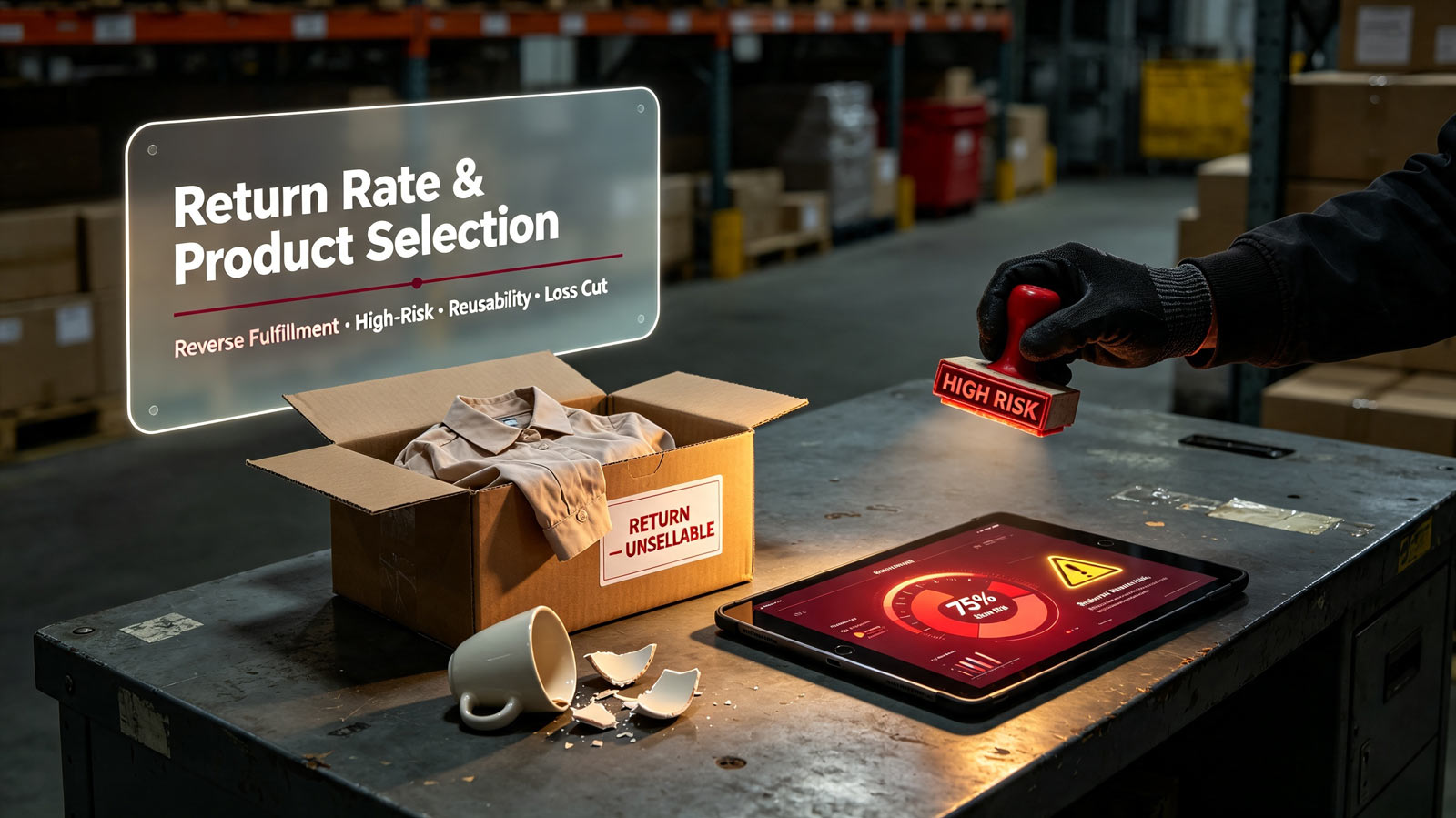
Most cross-border sellers judge product potential only by sales volume and social media popularity, ignoring return rate as a fatal hidden cost. Many items with impressive monthly orders end up unprofitable because of massive returned inventory, reprocessing fees, waste packaging and platform penalty risks. Industry statistics show that over 75% of trending explosive products are eliminated within 3 months purely due to uncontrollable after-sales returns. A large number of returned goods cannot be repackaged and resold, directly turning inventory investment into permanent losses.
Globe Fulfillment’s big data on tens of thousands of SKUs proves that sellers who add return risk assessment to the product selection standard can cut after-sales loss by 42% and extend the product lifecycle from short-term hot style to long-term stable bestseller. This article classifies typical high-return product categories, analyzes core return inducements of different commodities, introduces a reverse selection checklist combined with overseas reverse fulfillment capabilities, and shares real cases of merchants optimizing product lines to reduce refund losses.
Six Major Product Categories With Ultra-High Return Risks
Apparel & size-sensitive accessories
Clothes, shoes, hats and jewelry have extremely high size mismatch and aesthetic mismatch return rates. Buyers often return items for inappropriate fit, color difference or inconsistent style with pictures. Most returned clothing is wrinkled, stained or damaged after try-on and cannot be restocked for secondary sales.
Fragile glass, ceramic and handmade crafts
Breakage during transportation accounts for the largest proportion of after-sales disputes. Even with reinforced packaging, the damage rate cannot be completely avoided. Once broken, products lose resale value entirely.
Electronic products with complicated operation
Small home appliances, smart gadgets and Bluetooth devices require tedious setup. Customers who fail to operate will directly apply for returns without troubleshooting guidance, bringing huge reverse logistics pressure.
Customized and personalized goods
Engraved, printed and tailor-made products cannot be resold to other buyers once returned, resulting in 100% inventory loss upon refund.
Seasonal disposable limited items
Holiday decorations, festival props and temporary trend toys lose market demand quickly after the hot period. Unsold stock plus returned orders will form stagnant inventory that is hard to clear.
Oversized furniture and large household goods
High inbound freight and expensive return shipping make after-sales costs far exceed the profit of a single order. Platforms usually force merchants to bear return expenses unilaterally.
How Reverse Fulfillment Capability Supports Scientific Low-Risk Sourcing
Globe Fulfillment’s global overseas return warehouse system provides core reference dimensions for pre-listing product evaluation:
- Return reusability identification: The system evaluates whether returned goods can be inspected, repackaged and relisted. Products with less than 60% recyclable rate are marked as high-risk selection objects.
- Reverse logistics cost quotation: Automatically calculate the expense of returning parcels from end customers back to overseas warehouse, helping sellers judge whether single profit can cover potential after-sales expenditure.
- Return reason big data reference: Pull historical return records of similar SKUs in the same industry, preview common complaint points before purchasing bulk goods.
- Damaged goods disposal channel: For non-reusable returns, provide discount liquidation, local auction and recycling channels to minimize asset depreciation losses.
- Pre-sale page suggestion: Give standardized copywriting prompts on size reminder, product function description and transportation risk notice to reduce unnecessary returns in advance.
Reverse Selection Operation Checklist Based On Return Risk
- Collect peer store review content, count return causes and negative feedback frequency of target products.
- Submit product size, material, packaging and dimension information to Globe Fulfillment for return loss pre-estimation.
- Reject products whose single profit cannot cover one-way return logistics cost.
- Prioritize standardized, low-fragility, size-unrestricted commodities with over 80% re-stockable return rate.
- For high-risk categories, adopt small-batch trial order first, and suspend replenishment if the actual return rate exceeds the preset threshold.
- Configure detailed product description and size chart on listing page to eliminate information asymmetry disputes.
- Set up return receiving rules in overseas warehouse, and formulate discount sales plans for repairable returned inventory.
Real Business Optimization Case
A fashion accessories seller previously focused on trendy costume jewelry and custom name necklaces. Within two months, the return rate reached 38%. Most personalized engraved items could not be resold, causing nearly $70,000 inventory loss. The merchant introduced return rate reverse selection logic, phased out customized and easily tarnished jewelry lines, and switched to standard size-free minimalist accessories supported by Globe Fulfillment return inspection service. In the following quarter, the overall store return rate dropped to 7.6%, reusable returned goods accounted for 91% and were relisted for normal sales. Monthly net profit increased by 47% without expanding advertising budget.
Core Takeaways
- Purely sales-oriented product selection ignores return hidden expenditure, which is the main reason for many cross-border stores seeming busy but losing money.
- Return recyclability and reverse logistics cost must be two core indicators before bulk procurement.
- Mature overseas return warehouse system can greatly digest after-sales losses and prolong the sales cycle of best-selling SKUs.
- Trial order verification + data risk assessment is the most stable mode for long-term product portfolio construction.