
Introduction
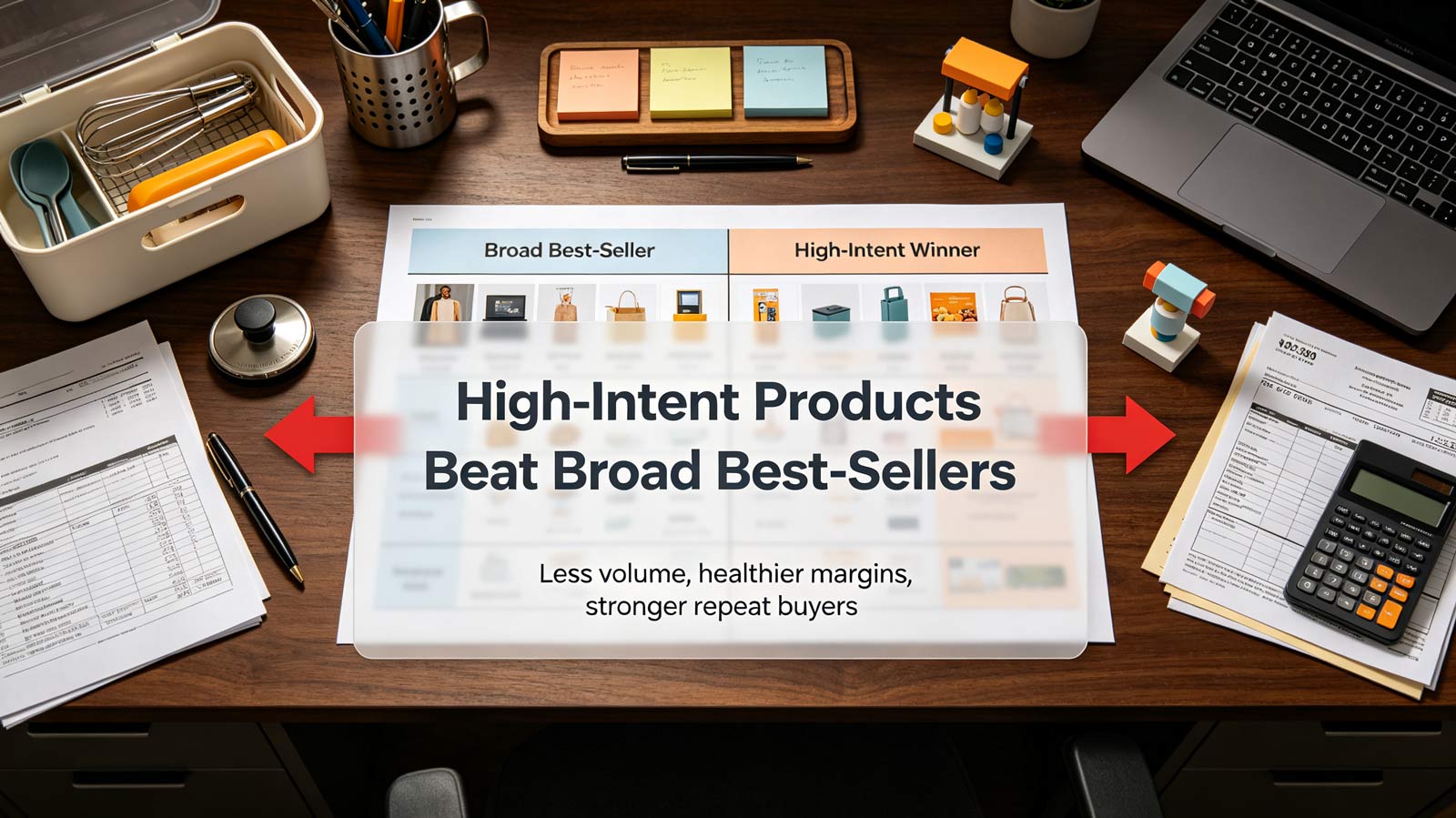
Q4 is home‑goods DTC’s most profitable season, yet many sellers pour budget into fading viral trends, triggering rising ad costs, price wars and costly post‑holiday overstock. With Q4 approaching, now is your window to validate and lock‑in inventory before Black Friday.
All featured products follow the four‑signal slow‑burn framework: stable organic demand, low refund risk, solid per‑unit profit, and repeat‑buy potential. Apply the 60/30/10 inventory rule — 60% core stock, 30% seasonal expansion, 10% experimental buffer — to scale safely after confirming real‑world buyer demand.
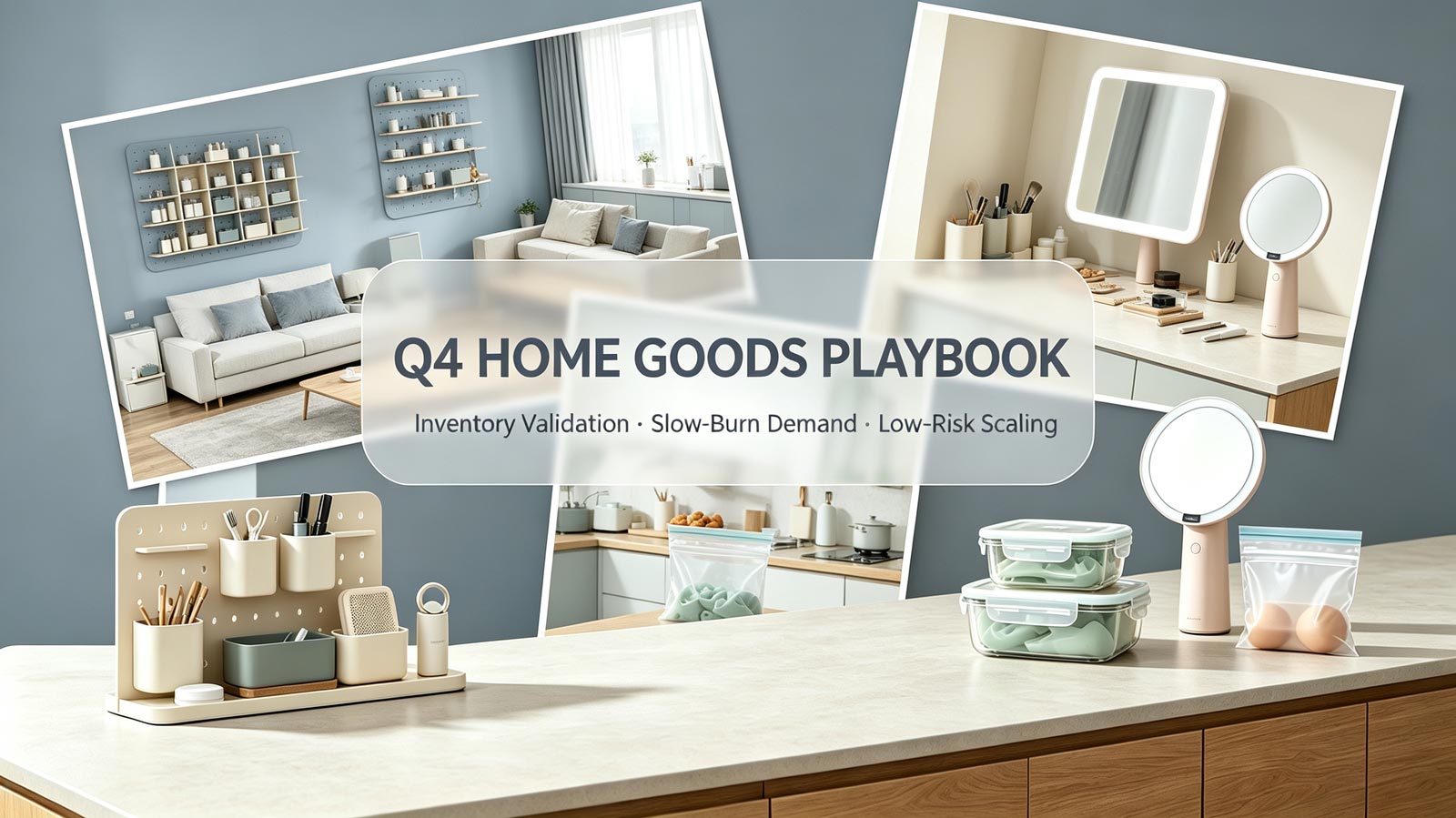
What surprised our sourcing team: 2026’s highest‑potential Q4 winners are not flashy smart gadgets, but upgraded everyday household basics that solve persistent consumer pain points. This guide outlines three low‑competition picks, audience strategies, creative direction and a low‑risk validation workflow. Market performance will vary based on branding, ads and audience targeting.
Modular Vertical Wall Storage System
Product & Market Fit
Renters and small‑apartment shoppers often avoid permanent, bulky cabinetry. This expandable wall‑mounted storage delivers flexible layout options, tool‑free installation and minimalist styling suited to modern, Nordic and cottage‑core homes. Its modular design can be reconfigured for holiday‑decor storage and year‑end home organization, fitting Q4 home‑refresh trends perfectly.
Google Trends records six months of steady, slow growth with no boom‑and‑bust volatility. Related TikTok content gains consistent, gradual views. Competitors mostly sell fixed‑size single modules; expandable sets remain undersaturated, leaving strong room for differentiation.
Commercial Profile
Price Positioning: Mid‑market premium Margin Profile: Healthy markup, strong seasonal upside and repeat‑purchase potential Inventory Risk: Low MOQ, friendly for small‑batch testing and incremental scaling Competition Density: Undersaturated compared to generic fixed‑size storage alternatives
Audience & Creative
North‑American renters, students and small‑space dwellers aged 18‑38 who prioritize aesthetic home layouts without permanent modifications.
Open short‑form videos with messy‑space before shots, then demonstrate quick assembly and finished results. Highlight no‑drill, renter‑friendly benefits. Add holiday‑storage and year‑reset scene hooks for Q4 campaigns.
Execution Notes
Conduct independent IP checks before scaling. Confirm cross‑supplier module compatibility to avoid accessory‑mismatch issues. Flat‑packed units ship cost‑effectively by sea freight with low dimensional‑weight penalties, ideal for pre‑Q4 bulk restocks. Order pre‑production samples to test build quality and modular fit. Early test creatives should focus heavily on renter‑specific pain points.
Touch‑Dimmable LED Vanity Mirror (3‑Color, Rechargeable)
Product & Market Fit
Standard vanity mirrors frequently lack adjustable lighting and portability. This upgraded foldable model offers three color‑temperature modes, stepless dimming and USB‑C rechargeable power. It solves poor makeup lighting in bedrooms and dorms, and works well as a holiday gift item.
Aesthetic home goods continue gaining traction, and shoppers will pay premiums for dual‑function beauty‑home products. Basic mirrors are heavily commoditized, while wireless, multi‑scene rechargeable variants show strong growth and low saturation.
Commercial Profile
Price Positioning: Mid‑market premium with gifting‑season upside Margin Profile: Elevated premium markup, strong holiday‑gift demand Inventory Risk: Low MOQ, suitable for trial stocking and Q4 seasonal scaling Competition Density: Low saturation for multi‑functional rechargeable variants
Audience & Creative
Young women, college students and beauty enthusiasts aged 16‑35, shopping for personal use or seasonal gifts.
Lead with the pain point of poor‑quality makeup lighting. Demonstrate all three light modes and compact folded storage. Frame the product as a premium holiday‑gift option during Q4.
Execution Notes
Verify battery safety certifications. Avoid cheap fixed‑lighting mirror variants which face fierce price competition and high return rates. Lithium‑battery goods require compliant shipping workflows and safety documentation for smooth cross‑border customs clearance. Test sample‑batch battery runtime and color consistency. Opening test videos should showcase clear before‑and‑after lighting comparisons.
Insulated Silicone Food Storage Bag (Reusable & Leak‑Proof)
Product & Market Fit
Single‑use plastic bags are wasteful and short‑lived. This high‑temperature‑safe, leak‑proof, reusable silicone storage bag suits food preservation, outdoor use and post‑holiday leftover meal prep, aligning with zero‑waste consumer trends.
Reusable kitchen goods maintain stable, year‑round long‑tail demand with no viral hype cycles. Q4 holiday gatherings create sharp seasonal demand for leftover‑storage solutions.
Commercial Profile
Price Positioning: Accessible mid‑market, friendly for broad‑audience conversion Margin Profile: Healthy baseline markup, consistent long‑tail demand Inventory Risk: Very Low MOQ, ideal for beginner store testing Competition Density: Undersaturated compared to disposable and low‑quality plastic alternatives
Audience & Creative
Household decision‑makers, eco‑conscious shoppers and outdoor users aged 25‑45, who prioritize durable, sustainable kitchen products.
Run practical stress‑test clips: leak‑proof inversion, high‑heat reheating and repeated reuse. Emphasize holiday leftover‑storage use‑cases in your Q4 content.
Execution Notes
Confirm food‑grade safety certification. Sample‑test silicone thickness to avoid high refund rates from easily torn units. Lightweight compact silicone items deliver favourable unit economics for sea‑freight bulk orders and fast holiday last‑mile delivery. Run leak‑seal and durability sample tests. Early‑stage ad creatives can highlight rigorous stress‑testing to build trust.
Quick‑Decision Matrix: Which Product Fits Your Store
- New / small stores (low traffic, still testing product‑market fit): Start with the silicone storage bag (lowest barrier to entry, broadest audience, minimal ad‑testing risk).
- Established stores with home‑organization traffic: Prioritize the modular wall storage system (higher‑value positioning, stronger Q4 seasonal demand, better customer retention).
- Beauty‑lifestyle audiences: Launch the rechargeable LED vanity mirror to match your follower interests and holiday‑gifting demand.
The 3‑Day Low‑Risk Validation Playbook (Universal For All Q4 Products)
Use this framework before committing to large‑scale inventory or big ad spend to validate real buyer intent.
- Day 1: Publish two short videos targeting your core customer pain‑point.
- Day 2: Run targeted test ads. Small stores: $20/day spend; larger stores: $50/day for faster statistical confidence.
- Day 3: Review performance. Passing benchmark: CTR > 2% and ATC rate > 5%.
Only move to small‑batch stocking if both metrics hit your thresholds. Once validated, apply the 60/30/10 inventory rule to prevent Black Friday stock‑outs.
Common Q4 Product Launch Mistakes to Avoid
- Chasing late‑cycle viral products: Most trending items enter demand decline by late Q4, bringing saturated competition, inflated ad costs and leftover inventory.
- Skipping safety certification checks for food‑contact or electronic goods: Unverified silicone and battery‑powered items risk listing removals, chargebacks and high returns.
- Launching undifferentiated commodity SKUs: Generic products compete purely on price. Upgraded multi‑feature variants hold margin better through holiday discount periods.
- Skipping data validation before pre‑holiday stocking: Inventory decisions based on supplier claims or social‑media visuals frequently lead to costly overstock. Always test first.
Core Takeaways
- Q4 2026’s most reliable home goods winners are upgraded daily essentials, not fleeting viral fads. These low‑competition picks avoid trend fatigue and post‑holiday inventory risks.
- Every product in this guide follows the four‑signal slow‑burn criteria: stable organic demand, low refund risk, solid per‑unit profit, and repeat‑buy potential.
- Store scaling strategy should match your traffic stage: new stores prioritize low‑risk, broad‑appeal items, while mature stores scale high‑value seasonal products.
- Never commit to Q4 bulk inventory before completing the 3‑day quantitative validation. CTR > 2% and ATC > 5% are the benchmark thresholds for validating real buyer intent before scaling.