Introduction
Most DTC home lifestyle brands build bundles purely for AOV growth, stacking popular items with low-cost add-ons to raise order value. While this tactic lifts upfront transaction amounts, it creates severe sell-through imbalance, leftover inventory buildup, and hidden year-end write-offs — the exact operational flaws diagnosed in our recent Store Analysis reports.
Many seemingly high-performing kits lose 6–9% gross margin annually because the products inside don't sell at the same speed — a design flaw that BOM (Bill of Materials) tracking alone cannot fix without the right product-matching rules. Viral single-SKU combinations fail in H2 2026 because they prioritize conversion over long-term unit economics and inventory sustainability.
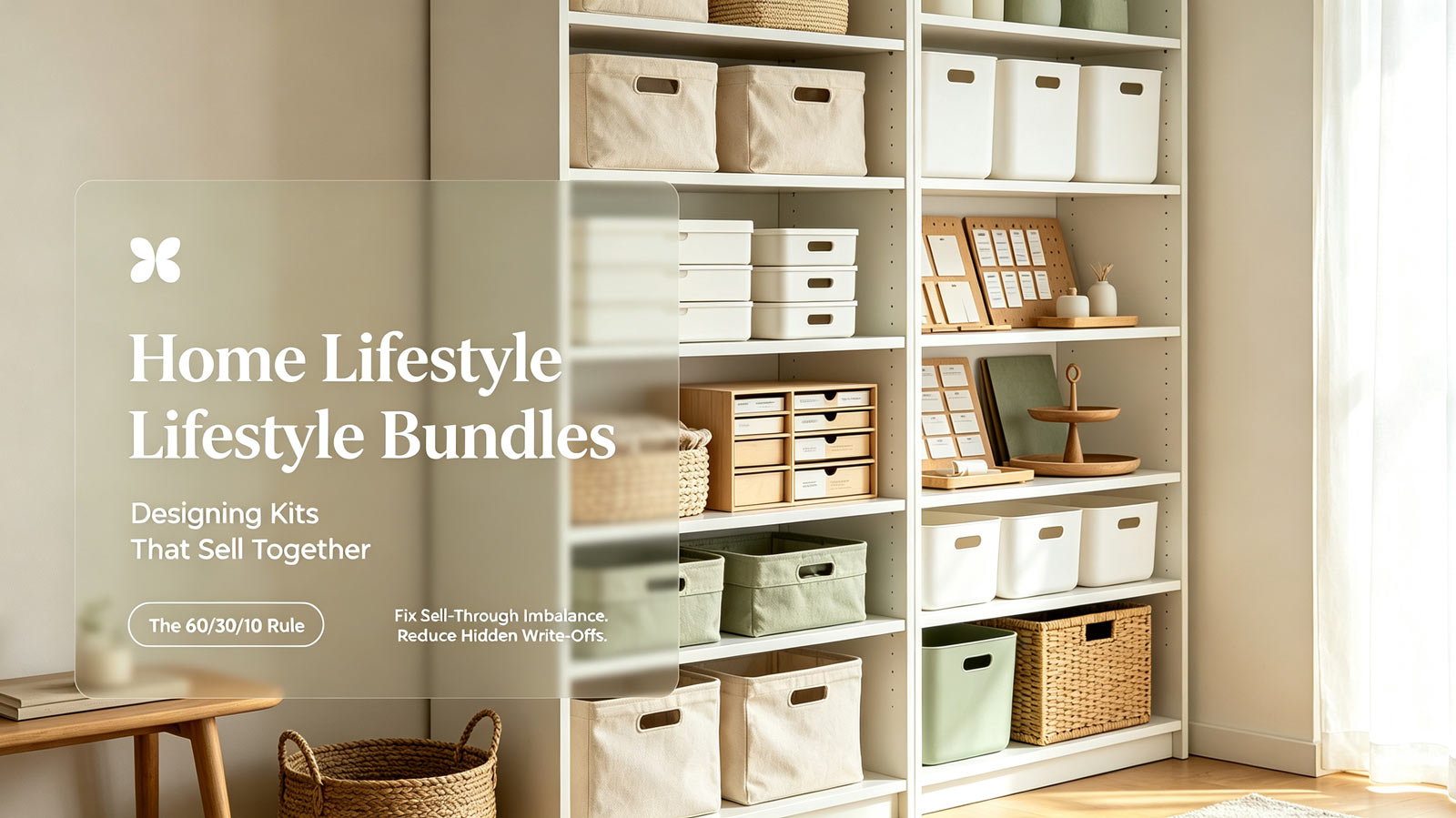
This Winning Products guide introduces the 60/30/10 Rule, a standardized product-matching framework tailored for home lifestyle catalogs. It explains how to match product turnover rates, structure profitable kit hierarchies, and design scenario-based bundles that sustain high AOV so nothing gets left behind.
Why Traditional Bundles Secretly Lose Money
Conventional bundle design follows a simple formula: bestseller + cheap accessories = higher AOV. This outdated logic creates three irreversible product-level flaws that kill long-term profitability:
Severe sell-through imbalance: Core hero items sell through rapidly, while low-value add-ons linger in warehouses for months, creating a 30%+ gap where some products fly off the shelves while others sit in the warehouse.
Artificial margin inflation: Bundles show healthy gross margins on surface-level reports, but leftover inventory carrying costs and eventual write-offs erase nearly one-tenth of annual profits.
Scenario inconsistency: Random item stacking fails to solve a complete household use case, leading to higher return rates and weaker customer loyalty compared to structured scenario kits.
In 2026’s compliance-heavy, fulfillment-competitive landscape, profitable bundles are no longer built for quick sales — they are built for balanced turnover, less profit loss, and repeatable operational stability.
The 60/30/10 Rule: How to Match Products That Sell Together
This data-proven framework aligns bundle product lifecycles, profit weight, and consumer usage scenarios to reduce sell-through imbalance. It consists of three non-negotiable rules for home lifestyle kit development.
Unified Turnover Cycle Matching
All items within a single bundle must share a similar consumption and replacement cycle. Home lifestyle items with mismatched durability and usage frequency create unavoidable leftover inventory. For example, long-lasting storage bins paired with disposable decorative accessories guarantee slow accessory accumulation and eventual dead stock over time.
Benchmark standards require all bundle items to maintain a minimum 70% relative sell-through rate compared to the core hero SKU, cutting down the 30% performance gap that causes most profit loss. Components falling between 60% and 70% relative sell-through should be monitored closely and considered for replacement in the next procurement cycle. Only components persistently below 60% require immediate bundle restructuring.
Tiered Profit Hierarchy Structure
High-stability bundles follow a fixed profit tier ratio: 60% core hero + 30% functional accessory + 10% decorative enhancement. This structure balances customer perceived value and blended gross margin.
The core item drives conversion and solves the primary user need; functional accessories improve usability and justify higher AOV; low-cost decorative elements enhance visual appeal without creating leftover inventory risk.
Scenario-Locked Item Combination
Every bundle must serve one complete, independent household scenario, rather than mixing random trending goods. Top-performing H2 2026 kits focus on clear use cases: full-room organization, indoor ambiance upgrading, seasonal household arrangement, and multi-functional living space optimization.
Scenario-locked bundles reduce return rates by 15–20% compared to generic mixed bundles, as customers purchase for a specific lifestyle solution instead of impulsive single-item attraction.
Real Store Case: Better Product Matching Improves Bundle Profit
A mid-sized DTC home lifestyle store restructured its 350-unit monthly home organization kit using the 60/30/10 Rule, resolving severe poor product matching issues.
Before optimization: The original bundle paired fast-selling foldable storage boxes with low-demand decorative inserts and specialty hooks. Over 90 days, core items restocked 3 times, while 210 sets of accessories remained unsold. Write-offs for these unsold add-ons dragged the bundle’s true gross margin from 25% down to 13%.
After optimization: The brand replaced mismatched low-turnover add-ons with medium-velocity fabric dividers and multi-purpose labels that matched the core product’s usage cycle. Within two months, product sell-through consistency improved steadily, leftover inventory write-offs dropped sharply, and the bundle’s true gross margin rebounded to 22% while retaining its original AOV and conversion performance.
H2 2026 Winning Bundle Optimization Checklist
Use this standard checklist to iterate and upgrade your existing home lifestyle bundles:
Audit 90-day sell-through data to remove any accessory with <70% relative turnover rate
Restructure bundle SKUs following the 60/30/10 core-accessory-decor profit hierarchy
Lock each bundle to one clear household lifestyle scenario to reduce return rates
Align item durability and replacement cycles to avoid long-term leftover inventory
Sync bundle structure with Globe Fulfillment’s BOM-level tracking rules for full component visibility
Core Takeaways
Traditional AOV-first bundle design creates large sell-through gaps and hidden leftover inventory losses, eroding 6–9% of annual gross profit.
The 60/30/10 Rule unifies product turnover, profit hierarchy, and scenario positioning to build waste-free, high-margin kits.
Maintaining a minimum 70% relative sell-through rate eliminates the 30% performance gap that causes most write-offs, with a 60% threshold for mandatory restructuring.
Scenario-locked home lifestyle bundles deliver more stable conversion, lower returns, and stronger long-term customer retention.
Winning product strategies rely on coordinated product design + BOM inventory governance, forming a closed-loop profitable DTC operation system.