Introduction
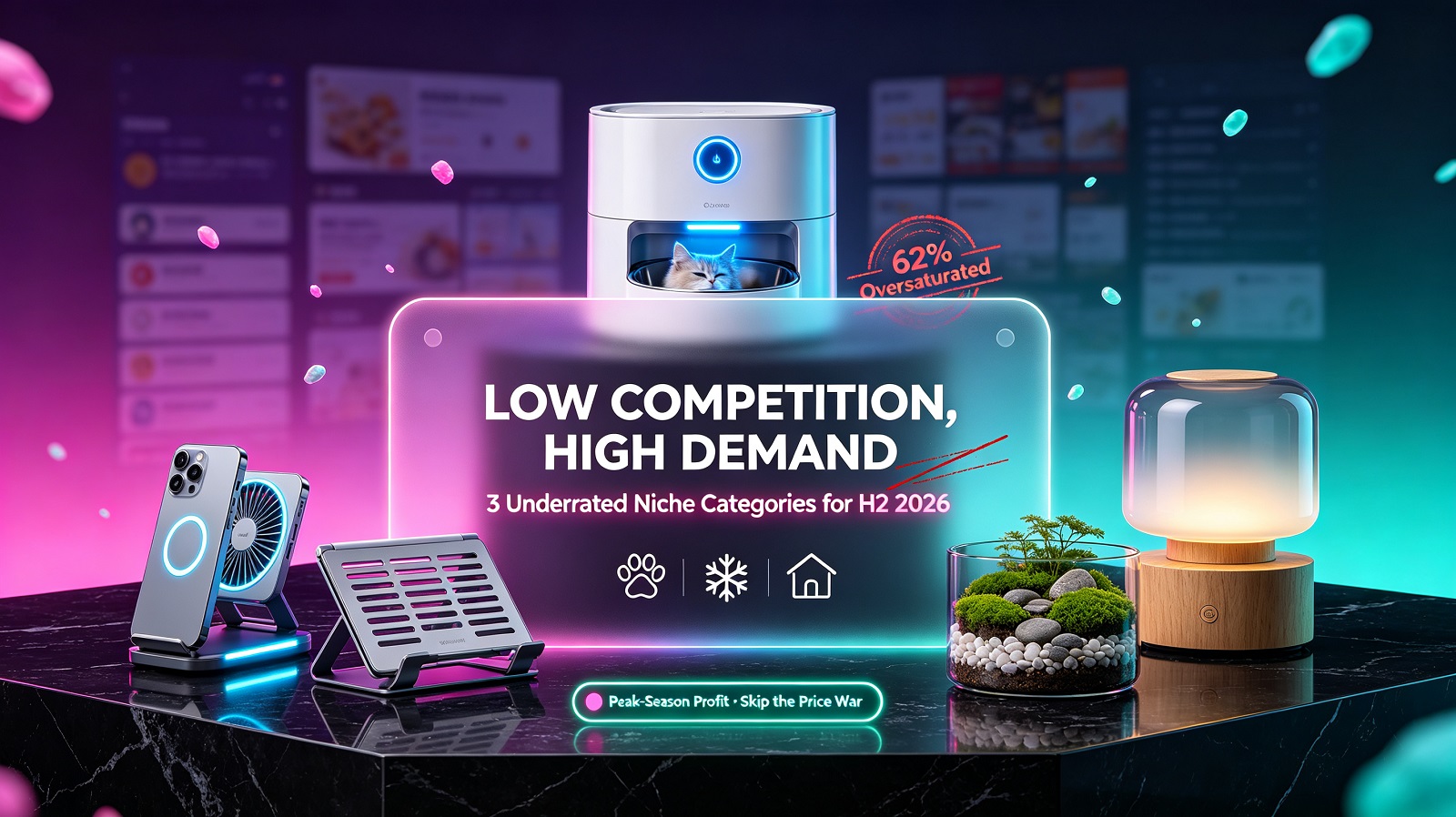
Latest cross-border product benchmark data shows over 62% of top-performing Q4 2025 SKUs have become oversaturated in H1 2026, driving ad costs up by an average of 27% and squeezing profit margins thin. Yet 34% of data-backed sellers are still capturing double-digit growth this year—by betting on low-competition, high-demand niche categories most stores overlook.
Most sellers fall into the peak-season trap: chasing viral, oversaturated products that flood every marketplace right before Q3 and Q4. By the time inventory lands in warehouses, market competition is fierce, pricing wars erupt, and hard-earned peak traffic fails to translate into profits. Winning product selection in H2 2026 is no longer about following trends—it’s about identifying underrated, scenario-driven categories with stable demand growth and low competition. This Winning Products analysis breaks down three verified high-potential categories for the second half of 2026, unpacks their breakout logic, and delivers actionable selection and fulfillment strategies to help sellers stand out in the crowded peak season. You can pair these product picks with data-driven inventory planning from our Store Analysis column to maximize SKU profitability.
Data Source Note
This product analysis is compiled from aggregated category growth data, marketplace saturation metrics, and seller performance records covering 2,800+ cross-border stores on Globe Fulfillment’s North American and EU warehouse network in Q2 2026. All trend judgments combine official industry forecasts and real operational data, focusing on low-saturation, high-scalability niche tracks suitable for small-to-medium cross-border sellers.
Three Underrated High-Growth Product Categories for H2 2026
Upgraded Smart Pet Lifestyle Accessories
Trend overview: The global pet economy is no longer limited to basic feeding and grooming supplies. 2026 marks a clear shift toward pet humanization and intelligent lifestyle consumption. Industry data predicts the U.S. pet market will reach $165 billion this year, with smart pet accessories maintaining a sustained 20%+ month-on-month growth rate. Unlike homogenized traditional pet toys, upgraded intelligent and functional pet products solve real pain points for busy Western pet owners, with low market saturation and strong premium space.
Market gap: Mass merchants still flood the market with cheap, single-function pet supplies, leading to low customer loyalty and thin profit margins. Forward-thinking sellers focus on segmented smart scenarios: automatic feeders with portion control, noise-reducing smart water fountains, insulated elevated pet bowls, and weather-adaptive outdoor pet harnesses. These scenario-based upgraded SKUs avoid price competition entirely.
Store observation: A mid-sized EU seller replaced 40% of their traditional pet SKUs with smart lifestyle accessories in Q2 2026. Without increasing ad spend, their SKU profit margin rose 11% on average, and repeat purchase rates increased significantly thanks to functional product stickiness.
Key selection & fulfillment fix: Prioritize lightweight, compact smart pet gadgets with low breakage rates and stable demand. Start by filtering SKUs with intelligent sensing, automatic adjustment, or multi-scene applicability. Pair these small-sized products with consolidated shipping strategies to cut per-unit logistics costs and further boost net profits.
Portable Heat Relief & Device Cooling Gadgets
Trend overview: Persistent high-temperature weather across Europe and North America has spawned booming “cooling economy” demand, extending from seasonal summer needs to year-round portable scenario consumption. Traditional large-scale cooling equipment faces high logistics costs and complex after-sales issues, while mini portable cooling gadgets have become the most cost-effective breakout track for cross-border sellers. Magnetic phone heat sinks, foldable laptop cooling stands, and wearable ice-cool neck bands continue to see explosive search growth across major marketplaces.
Market gap: Most sellers blindly stock large fans and desktop cooling devices, resulting in severe overstock and fierce price competition. Few merchants focus on portable, scene-specific mini cooling tools tailored for commuting, office, and gaming scenarios. These compact gadgets feature low volume, light weight, low warehousing costs, and strong seasonal demand explosiveness—perfect for Q3 peak season layout.
Store observation: A North American-focused seller introduced magnetic semiconductor cooling back clips for gaming devices in early Q2. Leveraging compact parcel sizes and consolidated fulfillment, the brand avoided DIM weight surcharges, achieving an 18% higher net profit rate than peers selling traditional cooling equipment.
Key selection & fulfillment fix: Screen for portable, battery-safe cooling gadgets with compact packaging and multi-scene applicability. Start by sorting trending cooling SKUs with monthly search growth exceeding 15%. Utilize standardized small-package fulfillment solutions to minimize storage and shipping leakage during peak season.
Emotional Relief & Minimalist Home Micro-Upgrade Goods
Trend overview: Under sustained inflation pressure, Western consumers are cutting spending on large home renovations and high-value luxury goods, while increasing small-ticket home micro-upgrade consumption that delivers emotional value. Slow-lifestyle and stress-relief products are dominating social media traffic: ambient sound lamps, DIY terrarium kits, and fidget toys, alongside multi-functional storage organizers. These low-cost, high-value goods bring visual and emotional comfort, forming consistent baseline demand in ordinary families.
Market gap: Public home goods categories such as storage boxes and wall decorations are highly saturated. The market still lacks refined, scenario-matched micro-upgrade products that combine minimalism, practicality, and stress relief. Most sellers ignore the emotional consumption demand, missing high-margin niche opportunities in the mass home category.
Store observation: A UK-based store launched minimalist ambient sound lamps and desktop stress-relief ornaments in Q2. The small-ticket lightweight products required low upfront capital, achieved viral social dissemination, and generated steady off-peak sales while preparing for Q4 holiday gifting demand.
Key selection & fulfillment fix: Prioritize lightweight, easy-to-ship, low-damage home micro-upgrade SKUs with emotional and decorative attributes. Start by selecting products suitable for holiday gifting and daily home use to expand usage scenarios. Rely on stable warehousing and fast turnover mechanisms to avoid overstock risks.
Operational Reference: Long-Term Category Competitiveness
These three niche tracks are not short-term seasonal fads. They represent lasting consumption upgrades in pet lifestyle, portable scenario tooling, and emotional home consumption, which will maintain stable demand from H2 2026 through early 2027. While mainstream saturated categories face rising customer acquisition costs and falling profits, these underrated tracks allow sellers to capture peak-season growth with lower competition and smaller capital investment.
Excellent product performance ultimately relies on matched operational capabilities. To optimize fulfillment costs and inventory turnover for these lightweight niche SKUs, you can refer to the latest platform operational updates released in our Company News column on August 4.
Common Product Selection Pitfalls
Blindly chasing saturated mainstream trending SKUs
Blindly following popular public categories leads to homogeneous competition, rising ad costs, and negligible profit margins. Most trending products lose profitability once peak season arrives.
Ignoring scenario matching and user pain points
Selecting products based solely on high search volume without verifying scenario applicability results in low conversion rates and high return rates, wasting peak-season traffic resources.
Overlooking fulfillment adaptability of niche products
Many high-potential niche SKUs have small profits but quick turnover. Unoptimized packaging, scattered shipments, and inaccurate SKU data will completely offset category profit advantages.
Suggested Review Items for Merchants
Gradually replace 10–15% of low-margin inventory with the three high-potential niche categories
Verify scenario applicability and user pain points of new products before bulk stocking to reduce return risks
Optimize packaging settings for lightweight niche SKUs to avoid unnecessary DIM weight surcharges
Monitor category search growth data from late August to early September to lock in peak-season pre-stock rhythm
Match differentiated pricing strategies for emotional value and functional upgraded niche products to maximize premium profits
Core Takeaways
H2 2026 peak-season competition no longer favors sellers who chase trends blindly. The real growth opportunities lie in these low-saturation, high-scalability niche categories that balance demand stability and profit margins: upgraded smart pet supplies, portable cooling gadgets, and emotional home micro-upgrade goods.
Winning product selection requires both forward-looking trend judgment and refined operational matching. Executing these niche strategies profitably depends on matching product selection with operational efficiency—particularly for lightweight, high-turnover SKUs where fulfillment costs determine final margins.
Combine these winning product strategies with inventory optimization frameworks from the Store Analysis column and fulfillment cost control tactics from the Industry Insights column to build a complete H2 peak-season profit system.