
Introduction
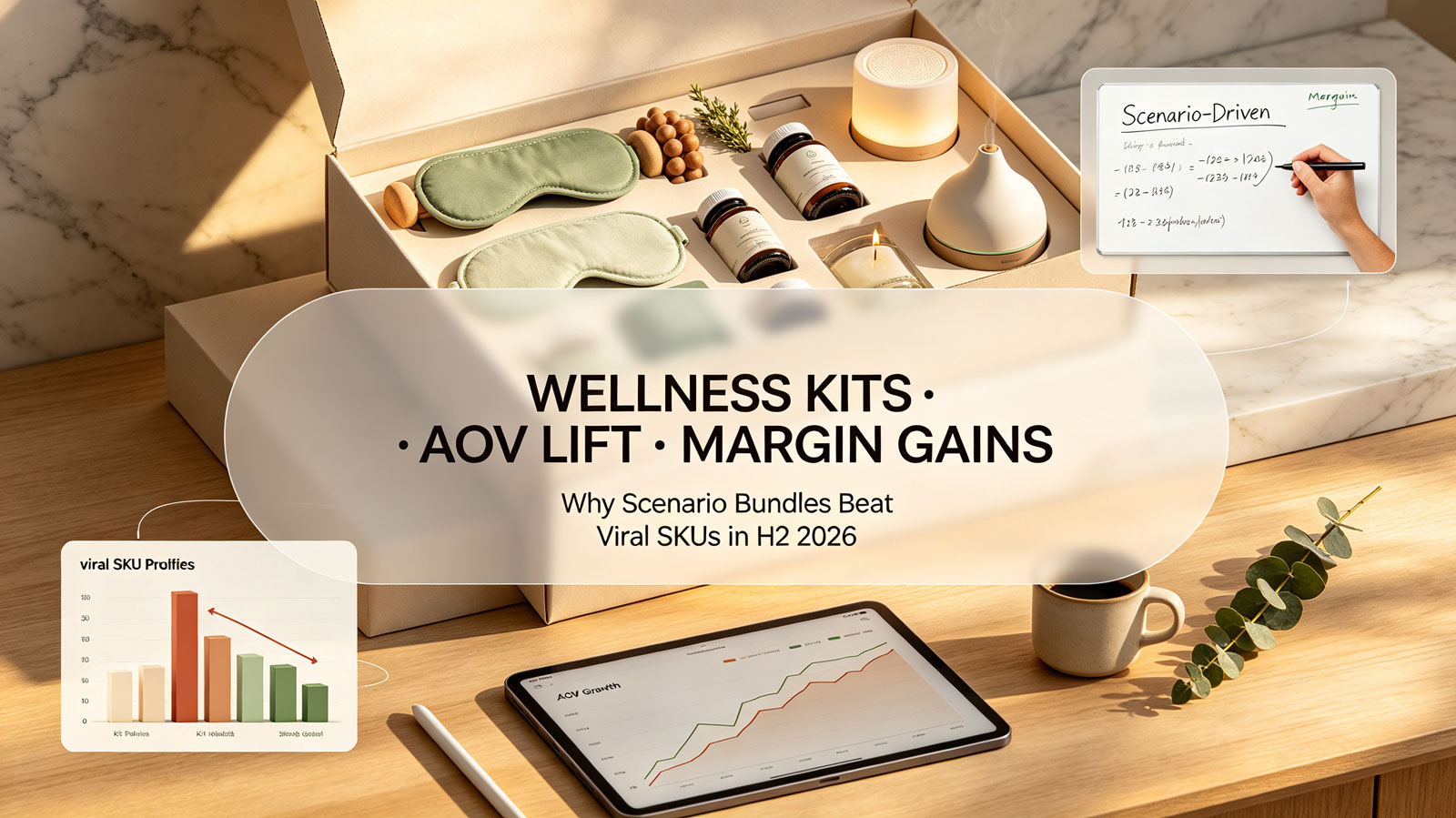
Why Wellness Kits Beat Single Viral SKUs in H2 2026
- Higher resistance to price competition: Single trending goods face direct price matching from low-cost competitors. Solution-based kits deliver combined functional value that cannot be easily replicated or undercut.
- Stabilized gross margin: Well-structured kits balance high-cost core items with high-margin auxiliary components, offsetting margin compression that plagues standalone bestsellers.
- Extended product lifecycle: Viral SKUs peak and decline within months. Scenario-based wellness kits maintain steady sales for 6–12 months or longer, reducing frequent product iteration costs.
- Improved inventory utilization: Kits absorb slow-moving compatible components without forcing discount clearance, lowering overall store write-off rates.
Four Traits of High-Performing Winning Wellness Kits
Profitable kits follow fixed product logic, not random SKU stacking. All top-converting, high-margin wellness bundles share the following four core characteristics:
Scenario-Driven Functional Compatibility
Every component serves one unified user routine or pain point, such as joint relief daily care, senior home safety, or personal relaxation setup. No meaningless filler SKUs are included to inflate bundle value. Each item independently solves a sub-demand of the core user scenario.
Balanced Margin Hierarchy
Winning kits adopt a “low-margin core + high-margin accessory” structure. Brands pair necessary low-profit functional hero items with complementary high-margin small parts to guarantee blended bundle margin, avoiding the common mistake of stacking multiple tight-margin bestsellers. Use our profit margin calculator to accurately measure your bundle’s blended profitability and avoid hidden margin compression.
Controlled Discount Positioning
Top stores market kits based on complete solution convenience instead of steep discounts. Bundle savings are positioned as bundled-purchase benefits rather than price cuts, protecting brand pricing posture and preventing customer discount dependency.
Aligned Sales Velocity
Three Common Kit Building Mistakes That Kill Margins
Most low-profit bundles stem from standardized product selection errors, not market fluctuations. These three mistakes account for the majority of kit margin leakage across mid-tier DTC stores:
Blindly Stacking Bestselling Single SKUs
Popular viral items usually carry intense competition and thin margins. Combining multiple bestsellers and applying bundle discounts directly compresses blended profit margins, creating high-volume yet low-profit product lines. For example, one mid-tier wellness store packaged three low-margin trending massage devices into a “family health bundle” with a 25% sitewide discount. The bundle generated 2,000 monthly orders but yielded a net profit margin of only 3%, far lower than the 12% margin the brand previously earned by selling each device individually.
Adding Low-Value Filler Components
Many brands add cheap, useless accessories to increase bundle perceived value. These fillers increase fulfillment weight, raise logistics costs, and do not improve customer retention, only eroding unit economics over time.
Globe Fulfillment's packaging optimization team can audit kit volumetric weights to ensure added components do not disproportionately increase outbound shipping costs.
Over-Reliance on Deep Bundle Discounts
Winning Product Checklist: Validate Your Kit Profitability
- The bundle targets a clear, specific user scenario rather than random category combination
- All components deliver practical functional value with no redundant filler goods
- Blended bundle gross margin meets or exceeds store baseline profitability
- Promotion positioning emphasizes solution value instead of heavy price cuts
- Component sales velocity is balanced to avoid residual dead stock. Use our inventory turnover calculator to verify aligned component turnover speed and prevent stranded kit inventory.
- Kit sales data is tracked independently from single-item performance
- Kit component stock is tracked at the BOM level to prevent ghost inventory and fulfillment errors
Core Takeaways
- H2 2026 DTC wellness profitability leans toward structured scenario kits, not unpredictable viral single SKUs.
- Qualified wellness kits lift store AOV by 27–34% and improve gross margin by 8–13 percentage points on average.
- Blind bestseller stacking, filler items, and over-discounting are the three main causes of bundle profit leakage.
- Winning kits balance functional value, margin structure, discount discipline, and inventory velocity.
- Kits serve as stable profit anchors to offset viral trend volatility, aligning with the 60/40 portfolio rule.
- Free Tooling: Leverage our online calculators to quickly validate your wellness kit margin health and inventory efficiency before official launch.