

Introduction
The DTC landscape for H2 2026 is undergoing a clear structural reset. For years, most merchants chased short-cycle viral products, betting on algorithm momentum to generate quick revenue. This playbook is rapidly losing effectiveness: rising ad competition, copycat flooding, tightening platform rules, and shorter trend lifespans compress gross margins and amplify inventory risks.
Meanwhile, demographic-driven niche wellness categories are emerging as a reliable growth engine. Senior wellness, in particular, stands out as an underserved segment with stable, long-term demand, less price competition, and consistent willingness to pay for safety-focused functional goods. This article breaks down the core industry transition, key barriers merchants face when entering wellness niches, and observable patterns that separate resilient stores from trend-reliant operators.
Three Permanent Industry Changes Reshaping DTC Competition
The shift away from trending SKUs is not temporary market fluctuation. Three structural changes redefine what makes a profitable store in late 2026:
- Shopper preference tilts toward functional, age-specific solutions: Generic wellness merchandise saturates marketplaces. Consumers actively seek products built around specific user pain points instead of one-size-fits-all designs, creating sustained demand for demographic-focused niches.
- Trend profit cycles continue shrinking: Viral items often peak within 3–6 weeks. Late entrants face price wars, oversupply, and high risk of unsellable leftover inventory.
- Compliance enforcement grows stricter regionally: Electrical wellness goods, heating devices and timing electronics face heightened certification checks across North America, EU and Australia. Undocumented products risk customs holds and listing removal.
Forward-thinking merchants are adjusting their portfolio mix accordingly, separating volatile trend testing inventory from stable anchor SKUs following observable balanced portfolio patterns seen across successful DTC brands.
Why Senior Wellness Beats Generic Wellness in H2 2026
General wellness markets — yoga gear, massage rollers, sleep accessories for younger audiences — are flooded with low-cost competitors. Senior lightweight wellness avoids this saturation by targeting distinct user requirements that mass-market brands overlook.
Core competitive advantages of the niche
- Low copycat saturation: Many manufacturers and sellers prioritize youth-focused aesthetics; few develop simplified, safety-first goods tailored for seniors.
- Reduced price sensitivity: Buyers consist of seniors and caregiver purchasers, who prioritize safety, usability and reliability over rock-bottom pricing, protecting gross margins of 32%–41%.
- Demand driven by demographics, not trends: Consumption maintains steady year-round volume with predictable seasonal peaks, supporting long-term inventory planning.
- Built-in gifting demand: Adult children regularly purchase these items as practical gifts, expanding organic conversion channels. This creates predictable seasonal demand spikes around Mother's Day, Father's Day, and year-end holidays—unlike viral products with random algorithm-driven peaks.
Even with these strengths, merchants cannot treat senior wellness SKUs the same as regular consumer goods. Compliance and marketing positioning become make-or-break factors for scalability.
Two Critical Compliance Risks for Wellness Electrical SKUs
The biggest hidden barrier for new entrants into senior wellness involves regulatory classification and safety documentation — especially for electrical items such as thermal relief pads and reminder clocks.
3.1 Regional electrical safety certification requirements
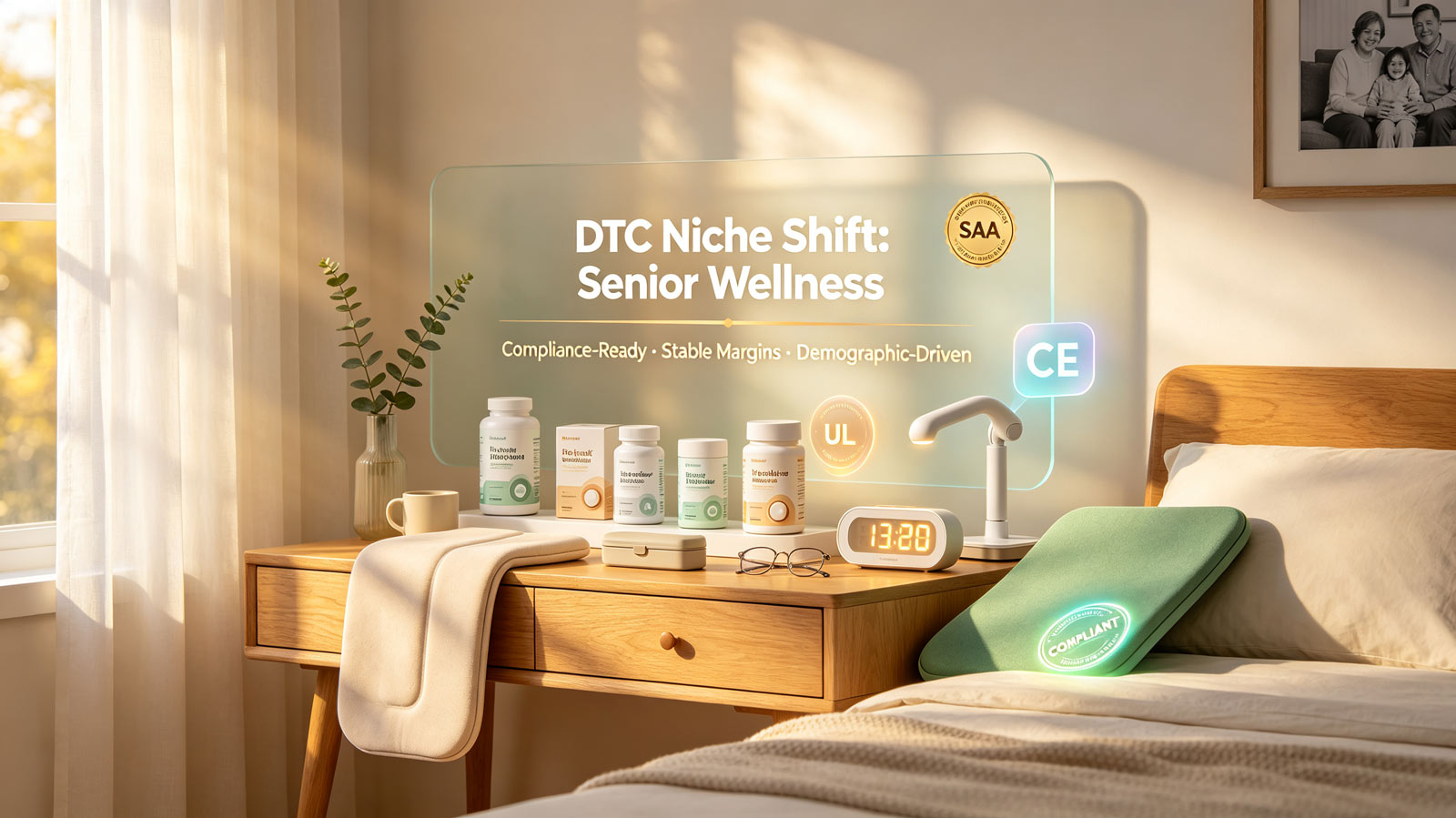
Low-voltage heating pads and electronic timing devices qualify as electrical appliances, not ordinary consumer goods. Market access depends on valid regional certification: UL or ETL for North America, CE-LVD/EMC for EU markets, and SAA for Australia. Missing documentation leads to customs delays, product seizures and listing suspensions. Merchants must verify manufacturer compliance paperwork before committing to bulk orders.
3.2 Marketing Language Boundaries to Avoid Medical Device Reclassification
Lifestyle wellness products are not medical devices by default. However, careless wording can push items such as medication reminders, joint relief thermal pads and mobility aids into regulated medical device territory. When listing these products, brands must frame features as daily routine support, rather than medical treatment, dosage management or therapeutic intervention. Clear positioning reduces regulatory risk and avoids costly listing removals.
Industry Observation: Portfolio Structure for Sustainable Profitability
Senior wellness SKUs perform best when deployed as stable anchor inventory rather than standalone test items. Industry data confirms that merchants adopting structured portfolio splits—roughly 60% stable anchor inventory including vetted senior wellness products with proven turnover, 40% controlled trend testing—outperform pure viral-first stores by significant margins. This allocation insulates overall store profitability when volatile product lines underperform, a pattern observed across hundreds of DTC store audits.
- Prioritize SKU diversity across categories: thermal comfort, mobility assistance, daily routine timers and anti-slip home mats to spread operational risk.
- Adopt standardized batch packaging and foldable, rollable formats where applicable to lower volumetric shipping costs and improve inventory turnover.
This structural mindset helps brands avoid overexposing capital to fleeting viral trends amid the H2 market reset.
Core Takeaways
- H2 2026 marks a permanent shift away from overreliance on fleeting viral products toward demographic niche strategies.
- Senior lightweight wellness delivers stable margins, lower competition and consistent demand, making it an ideal anchor portfolio segment.
- Electrical wellness goods carry elevated compliance risks; certification verification and careful listing language are non-negotiable.
- Merchants with balanced inventory structures demonstrate stronger resilience amid market volatility.
- Differentiation stems from user-centric functional design and regulatory readiness, not only competitive pricing.