
Introduction
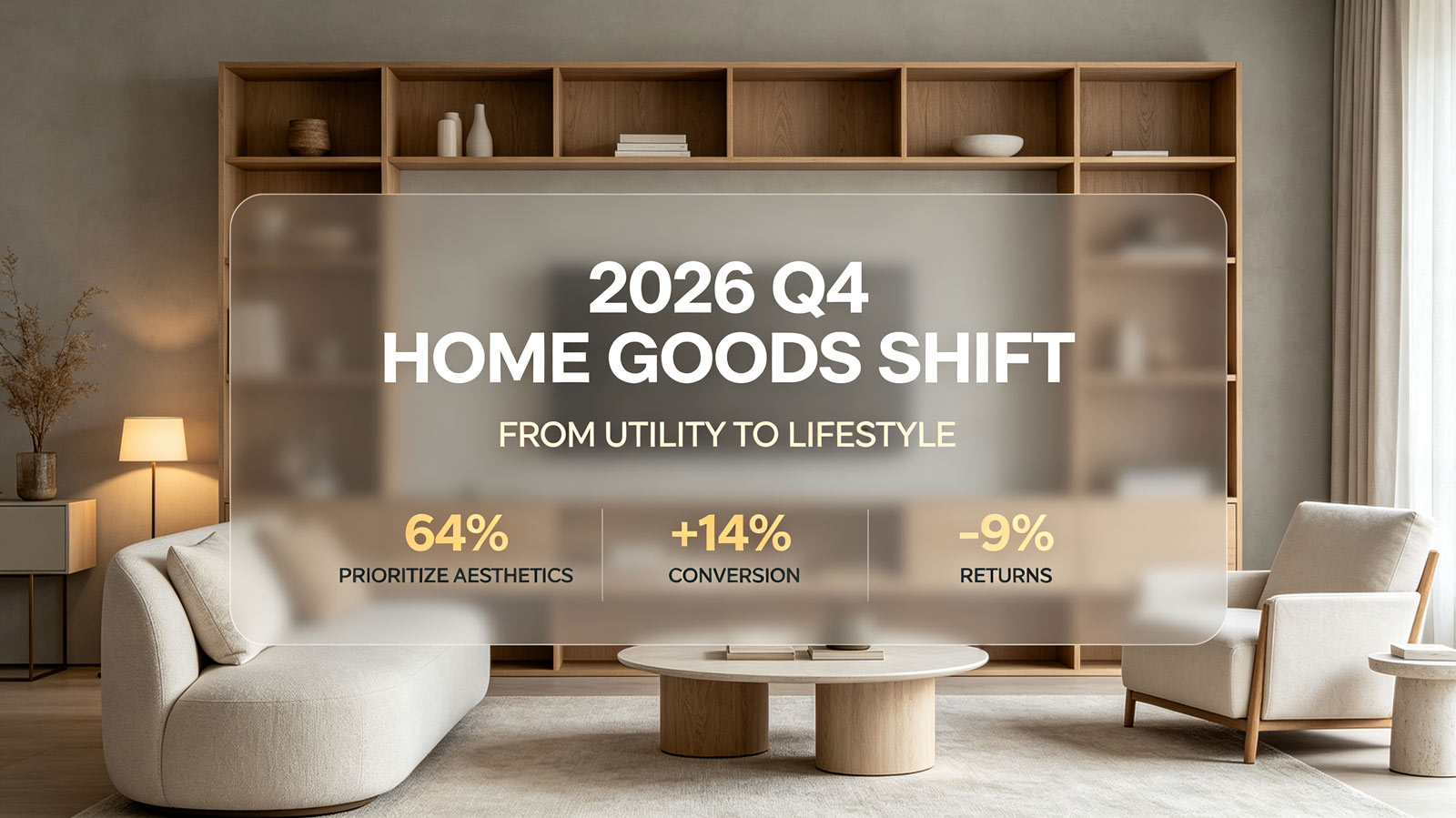
2026 marks a permanent structural shift in home goods e‑commerce.For years, DTC home purchases were purely feature‑driven: storage capacity, material durability, basic utility. That logic no longer dominates.Hard data confirms the pivot: 64% of North American shoppers now prioritize aesthetic room consistency over pure functional specs. Functional performance is now baseline. Mood alignment and lifestyle cohesion are the core conversion drivers.The biggest Q4 edge does not come from new gadgets. It comes from repositioning everyday basics to match mood‑driven buying habits.
The 2026 Q4 Home Goods Market Shift: Utility to Lifestyle
Home goods used to be purely transactional: buy a bin to organize, a mirror to groom, a tool to cook. Decisions were based on function, durability, price.
Now homes are multi‑purpose workspaces. High indoor occupancy has turned upgrades into low‑cost lifestyle enhancement.
Shoppers now evaluate products by room atmosphere, visual consistency, and daily comfort — not just basic performance.
This shift has split the market in two. Generic goods with zero aesthetic differentiation faced 18% YoY organic traffic decline. Stores with mood‑centric messaging recorded 23% higher repeat purchase rates. SKUs balancing practicality and lifestyle value maintain stable growth.
Three Defining Q4 2026 Home Goods Industry Trends
1. Cohesive Warm Minimalism Replaces Harsh Sterile Design
Plain, ultra‑minimal decor is out. 2026 leans into warm, neutral, unified design. Consumers avoid visually jarring, single‑function products.
Modular, adaptable, neutral‑toned home essentials lead conversion rates this Q4. They support seasonal home refreshes, holiday decor integration, and long‑term daily use without falling out of style.
2. Sustainable & Certified Goods Become Trust Baselines
Eco‑conscious consumption is no longer niche. It is a minimum expectation. Shoppers associate reusable, durable materials with higher quality.
Disposable alternatives continue losing market share heading into Q4’s heavy gathering and meal‑prep season. Certified, long‑lifespan home basics generate lower return rates, stronger trust signals, and better long‑tail search visibility for DTC stores.
3. Multi‑Scene Versatility Outperforms Single‑Purpose SKUs
Consumers resist one‑off, single‑scenario items. Q4’s fluctuating needs — daily routine, holiday hosting, cleanup, reorganization — favor flexible, multi‑use products.
SKUs limited to narrow use cases suffer seasonal demand drops and higher competition. Versatile home essentials maintain steady organic traffic and perform reliably across pre‑holiday, peak‑Q4, and post‑holiday periods.
Consumer Segmentation: Demographic & Regional Mood Preference Differences
Generational Behavior Gap: Gen Z vs. Gen X
Gen Z buyers (18‑28) prioritize personalized atmosphere and visual uniqueness. They are 72% more likely to purchase upgraded home basics for aesthetic matching purposes, even if functional differences are minimal. Trend cohesion and social‑media‑worthy home presentation dominate their purchase decisions.
Gen X buyers (39‑54) balance mood value with practicality. They accept aesthetic upgrades but heavily weight durability, low‑maintenance performance, and long‑term household usability. Their mood‑centric purchases focus on “stable comfort” rather than trendy styling.
Regional Preference Gap: North America vs. Europe
North American markets favor warm minimalism, multi‑functional modularity, and holiday‑adaptable home aesthetics. Seasonal home refresh demand spikes strongly in Q4, driving mood‑centric conversion uplifts.
European markets prioritize low‑key, sustainable, understated design consistency. Eco‑friendly materials and visual simplicity outperform bold decorative upgrades. European mood‑driven purchases focus on long‑term residential harmony rather than seasonal novelty.
Data‑Backed Practical Case
Case: A 14‑SKU US home decor DTC brand
The store originally built listings purely around functional specs such as “stackable storage bins”. It shifted product page copy and creative direction toward mood‑centric outcomes, highlighting “clean, cohesive closet aesthetic”.
60‑day results:
- Conversion rate +14%
- Return rate ‑9%
- Organic search traffic +31%
Why Viral Trend Chasing Creates Q4 Inventory Risk
Strategic Store Adjustments for Q4 2026‑ Differentiated Mood‑Centric Strategies For Different Store Scales
Small stores (<10 SKUs): Focus on one cohesive aesthetic theme
Rewrite existing descriptions to emphasize room atmosphere, not specs.
Mid‑to‑large stores (20+ SKUs): Build mood‑based product collections
Create themed collections like “Warm Minimalist Kitchen”. Use cross‑sell bundles that unify visual tone.
Established mature stores (high‑traffic): Standardize mood‑centric brand language
Segment messaging: Gen‑Z lifestyle content and Gen‑X comfort‑first storytelling.
Core Takeaways
- Q4 growth is driven by lifestyle value, not functional upgrades. Two‑thirds of buyers prioritize aesthetic consistency over raw performance.
- Mood‑centric positioning delivers higher repeat rates, improved organic traffic, and lower return risks.
- Consumer mood preferences vary sharply by generation and region. Scale‑based differentiated strategies are required to capture segmented Q4 demand.
- Viral novelty trends carry structural seasonal risks. Sustainable growth relies on aligning catalogs with long‑term lifestyle and aesthetic shifts.