
Introduction
Nowadays most cross-border merchants operate dozens of stores across Shopify, Amazon, TikTok Shop, Shopee and other platforms separately. Each store independently arranges inventory, submits orders and manages logistics, resulting in scattered inventory, repeated warehousing costs, manual order entry errors and messy after-sales management. Industry research shows that sellers running 5+ separate stores waste over 45% of labor and warehousing costs due to fragmented fulfillment modes.
Globe Fulfillment industry data indicates that merchants who adopt one backend to realize unified inventory and order dispatch for all online stores can cut manual workload by 82%, reduce duplicate inventory occupancy by 38%, and lift overall order delivery consistency greatly. This industry insight analyzes the pain points of multi-store decentralized operation, explains the value of centralized global fulfillment management, sorts out compatible platform access channels, and shares practical multi-brand multi-store operation cases, helping sellers break data and inventory barriers between different sales channels.
Core Pain Points of Decentralized Multi-Store Fulfillment
Duplicate stocking leads to severe capital and warehouse waste
Sellers create independent inventory batches for each store to avoid stockout on single channel. The same product is stored in multiple batches in overseas warehouses, taking up extra storage space and tying up large amounts of working capital. Once one platform’s sales decline, redundant inventory cannot be flexibly allocated to other hot-selling stores.
Manual order synchronization causes high error rate and delayed shipment
Without system interconnection, operators need to export orders from each store background one by one and import them to logistics tools manually. Information omission, address mistakes and order missing frequently happen, triggering late delivery, platform penalty points and negative buyer reviews.
nconsistent after-sales return handling across different stores
Returned goods from different platforms enter separate logistics channels. Merchants cannot view unified return data, unable to judge which store the return order belongs to, resulting in failed re-listing of usable returned products and direct asset loss.
Inability to make overall sales forecasting across the whole brand
Separate data from each store cannot be aggregated into a brand-wide sales report. Sellers can only judge replenishment quantity based on single-shop data, leading to inaccurate demand prediction and frequent stockout or overstock.
Industry Trend: Centralized Unified Fulfillment Becomes Standard for Branded Sellers
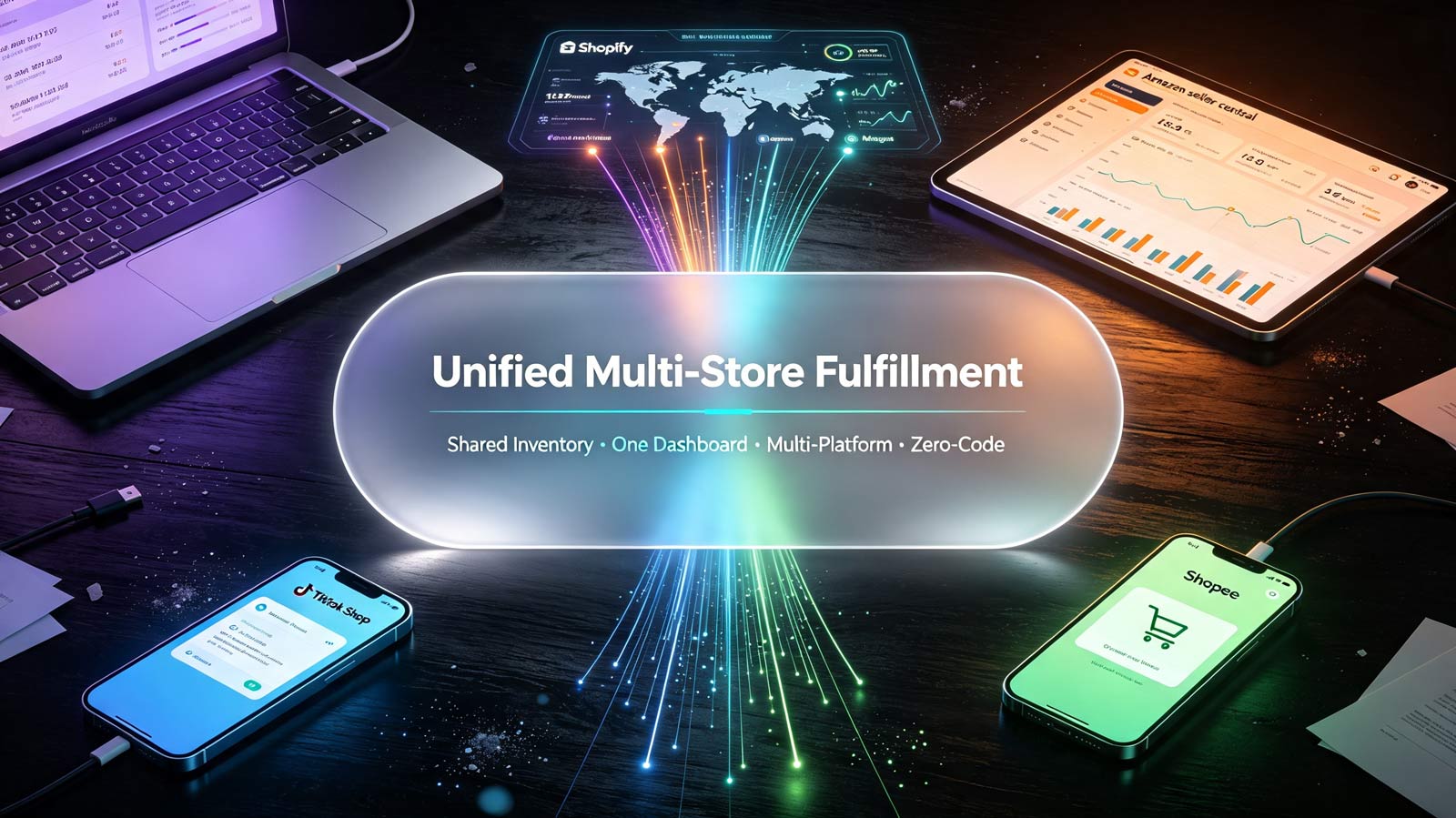
In 2026, cross-border e-commerce is shifting from single-store petty operation to multi-channel brand layout. Platforms continuously tighten delivery SLA requirements, so fragmented manual management can no longer support large-scale business expansion. Unified multi-store fulfillment relies on a single global warehouse pool and one management dashboard. All orders from every authorized store automatically converge to the Globe Fulfillment system. The system intelligently allocates inventory from the nearest overseas warehouse, generates shipping labels and tracks logistics information synchronously to each original store backend.
The system supports one-click authorization access to mainstream e-commerce platforms, no complex secondary development required. All inventory data, order records, delivery tracking and return forms are displayed on one unified panel, realizing brand-level supply chain visualization.
Specific Advantages of Globe Fulfillment Multi-Store Unified Solution
- Shared global inventory pool: All bound stores share the same batch of overseas stock; orders from any channel can be picked and shipped from available inventory, eliminating repeated stocking.
- Automatic order grabbing & sorting: System pulls new orders every 5 minutes, filters abnormal addresses and duplicate orders automatically without manual copying.
- Synchronized logistics information: Tracking numbers are pushed back to corresponding store background in real time to satisfy platform logistics uploading rules.
- Unified return management: All return parcels enter the same overseas warehouse inspection link; qualified goods go back to shared inventory and can be sold by any store.
- Brand-wide data report: Generate integrated sales, inventory, cost and profit statements covering all authorized shops for macro business decision-making.
Real Multi-Store Brand Case
A home goods brand operates 8 Shopify independent sites plus 3 Amazon US stations. Previously each shop had independent inventory and two full-time staff responsible for order processing every day. Labor cost and warehouse expenditure remained high, and stockout problems occurred frequently during promotion periods. After connecting all stores to Globe Fulfillment unified fulfillment system, the brand canceled scattered separate stocking, used a single inventory pool for all channels. Daily order processing manpower was reduced from 2 people to part-time management only. Within two months, inventory capital occupation decreased by 38%, platform late delivery complaints dropped to zero, and overall monthly GMV grew by 27%.
Core Summary
- Decentralized multi-store operation brings redundant cost, low efficiency and uncontrollable risks, which restricts brand long-term expansion.
- Unified inventory and order management via one fulfillment platform breaks channel barriers and maximizes inventory utilization.
- Centralized data viewing helps merchants make scientific replenishment and product strategy from the overall brand dimension.
- Zero-code platform authorization greatly reduces technical access threshold, suitable for small and medium sellers as well as mature cross-border brands.