
Introduction
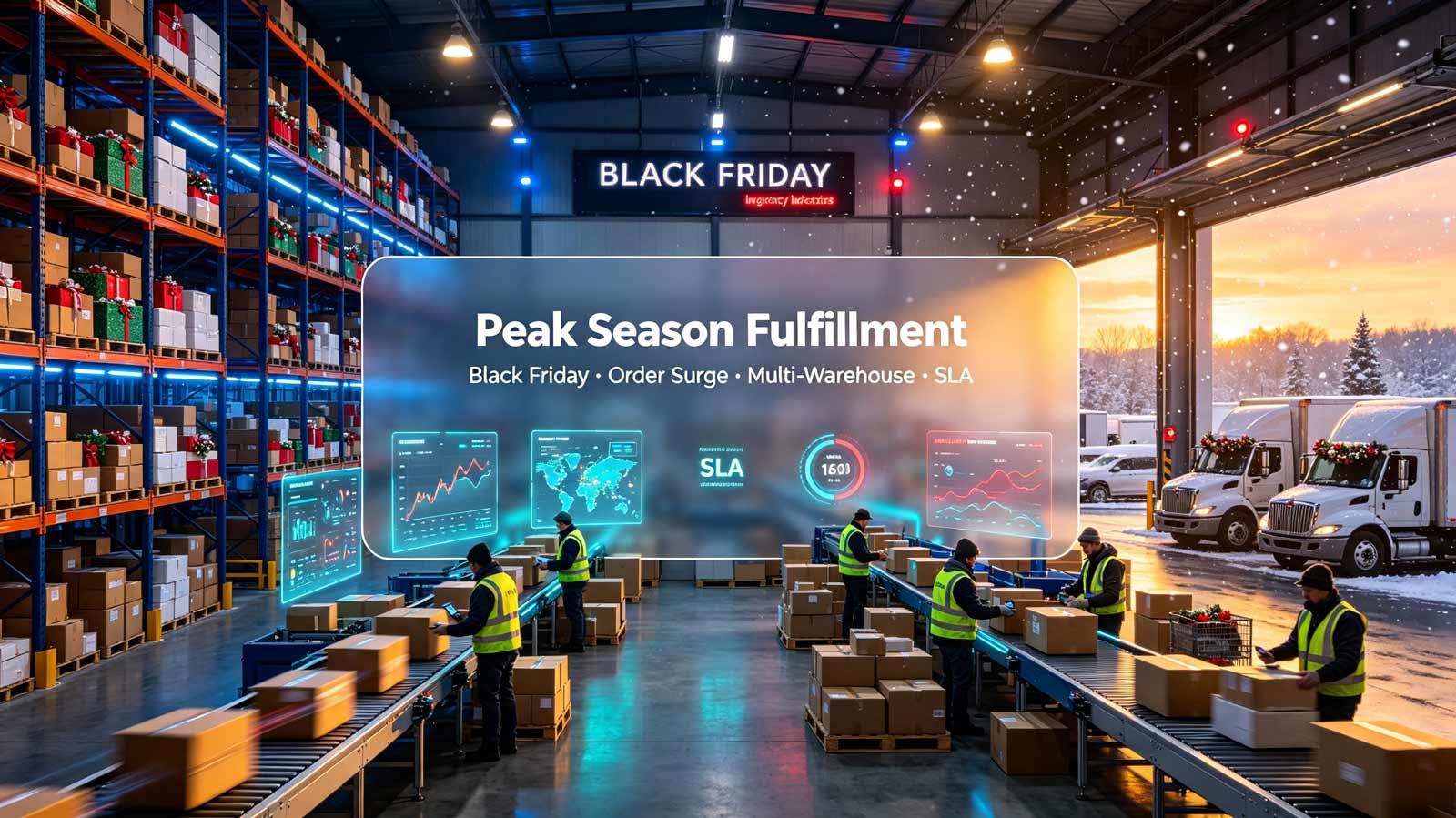
Black Friday, Cyber Monday and Christmas shopping season bring explosive order surges for cross-border e-commerce sellers, yet over 60% of merchants face shipment delays, warehouse backlogs, stock misallocation and parcel loss during peak periods. Platforms enforce strict delivery SLA rules, and any breakdown in the fulfillment chain will lead to store penalties, listing downranking and massive negative reviews.
Many sellers only prepare advertising and inventory stocking in advance, ignoring warehouse manpower reservation, logistics channel scheduling and abnormal order emergency disposal mechanisms. Once order volume spikes beyond the supply chain bearing capacity, the whole store operation will fall into passive after-sales remediation.
Based on Globe Fulfillment’s multi-year peak season operation data, sellers who adopt standardized pre-holiday fulfillment planning can cut delay rates by 75% and reduce peak-period customer complaints by 68%. This article sorts out common hidden risks in holiday fulfillment, explains the system and hardware capacity layout of our overseas warehouses during big promotions, and forms a complete pre-season preparation checklist to help sellers pass through peak sales smoothly.
Typical Hidden Risks In Holiday Peak Fulfillment
Insufficient warehouse picking manpower leading to order backlog
Temporary order volume may increase 5–15 times compared with usual days. Without pre-reserved staff, parcels cannot be labeled and dispatched in time, triggering platform overdue shipment punishment.
Inappropriate inventory distribution causes regional stockout
If goods are overly concentrated in a single overseas warehouse, buyers from other countries cannot be covered; transferring stock during promotion periods will waste several days of transit time and miss sales window.
Logistics channel blockage and courier sorting explosion
Mainstream express companies face heavy parcel pressure in holiday season, resulting in long transit delays and unavailable tracking updates, which seriously damage buyer experience.
Abnormal orders surge with no quick interception mechanism
Wrong addresses, duplicate orders and fraudulent orders multiply during big sales. Manual screening is slow, leading to unnecessary outbound freight and return losses.
Return parcels pile up without dedicated processing team
Post-holiday return volume rises sharply. Unprocessed returns occupy warehouse storage space, affect normal picking efficiency and cause new inventory confusion.
Globe Fulfillment Peak Season Capacity Guarantee System
Pre-season manpower and site expansion
Each overseas warehouse signs seasonal worker agreements 45 days before major promotions, expands temporary operation areas and sorting stations, and sets up dedicated peak operation teams to ensure daily outbound efficiency keeps up with order growth.
Multi-warehouse intelligent inventory allocation suggestion
The AI system analyzes historical order distribution data of each store, automatically recommends reasonable stock proportion in US, UK, Germany, Malaysia and other nodes, avoiding centralized inventory risk and supporting nearest warehouse automatic delivery.
Multi-line logistics channel backup
Cooperate with multiple mainstream local couriers simultaneously. When one channel is congested, the system automatically switches to alternative logistics to avoid full-channel stagnation.
Real-time abnormal order automatic interception
The backend enables enhanced risk filtering mode during peak hours, automatically flagging invalid addresses, repeated orders and high-risk fraud orders, suspending outbound and reminding merchants for confirmation.
Independent return processing area for post-promotion aftersales
Special receiving and inspection zones are opened for holiday returns. Returned goods are classified, inspected and restocked or disposed of separately without interfering with normal order picking work.
Seller Pre-Peak Season Standard Preparation Checklist
- Finish inventory data confirmation 30 days in advance, submit replenishment plan and complete inbound to designated overseas warehouses.
- Follow system suggestions to split inventory into multiple warehouse nodes to cover core sales regions.
- Turn on automatic order interception and address verification functions in the background before promotion starts.
- Set reasonable delivery time descriptions on product pages according to official peak logistics timelines to avoid overpromising.
- Reserve a small proportion of emergency inventory to cope with unexpected hot-selling SKUs out of stock.
- Agree on return receiving and disposal rules in advance to speed up post-holiday inventory clearance.
- Bind emergency contact information to receive real-time exception alerts during order explosion periods.
Practical Case Of Holiday Peak Operation
A home decor independent station seller suffered severe order backlog and 200+ negative reviews during last year’s Black Friday due to single-warehouse stocking and insufficient warehouse capacity. In the following year, the seller followed Globe Fulfillment’s peak planning scheme to distribute goods in US East and West Coast warehouses in advance and enabled multi-logistics backup. During the whole promotion period, no overdue shipments occurred, the store rating remained stable, and the conversion rate increased by 29% year-on-year without extra advertising cost.
Core Conclusions
- Peak season problems mostly root in insufficient pre-planning rather than pure system or warehouse limitation.
- Multi-node inventory layout and multi-channel logistics backup are the two core pillars of stable holiday fulfillment.
- Automatic system interception can greatly reduce artificial errors and invalid logistics costs during order surges.
- Separating normal outbound and return processing links is essential to maintain long-term warehouse operation efficiency.