
Introduction
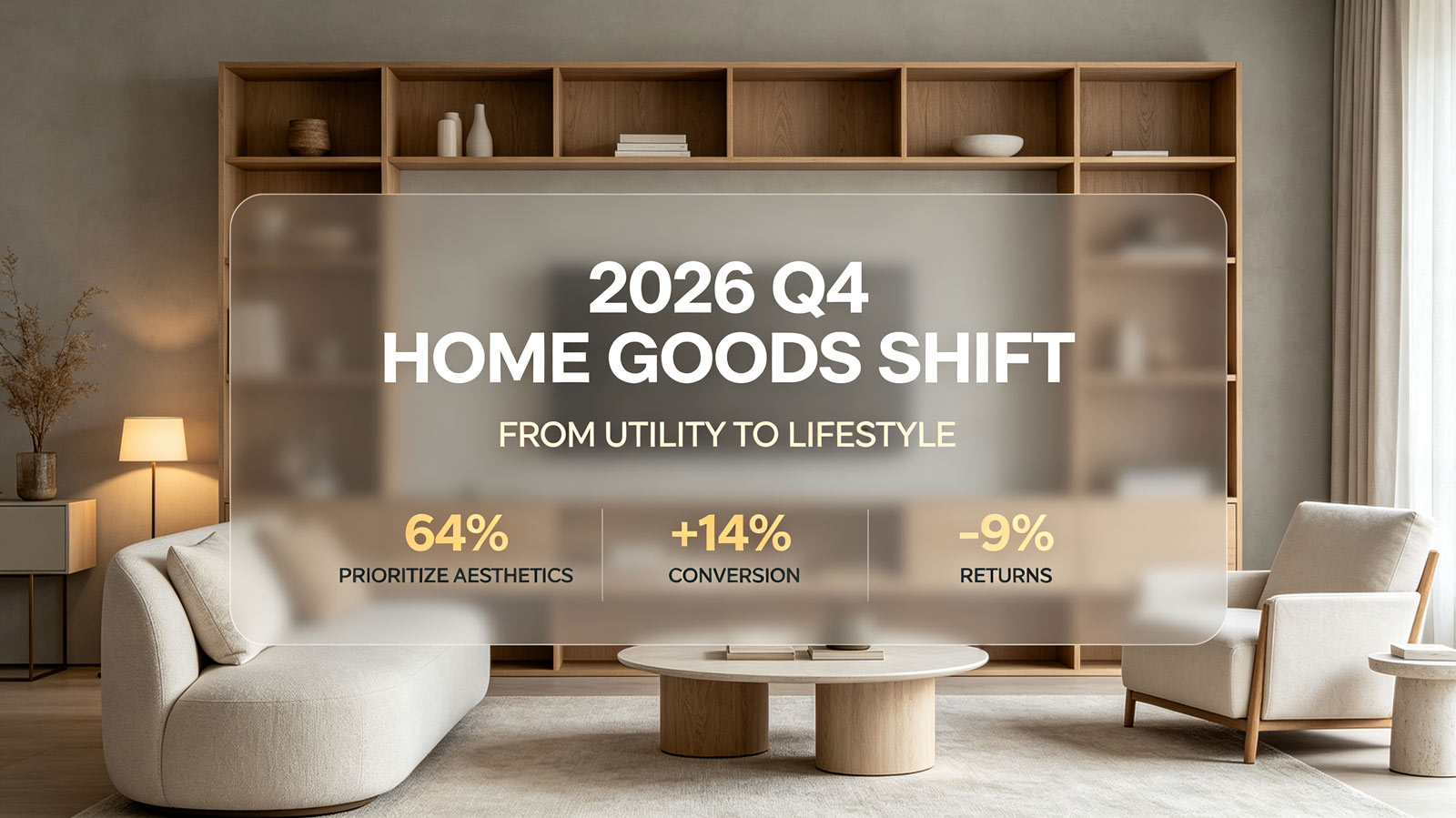
The 2026 Core Category Shift: Home As Utility + Sanctuary
Three Outdated Bundle Habits Killing 2026 Growth
Most stagnating home DTC stores are not failing due to poor traffic or high ad costs. They are clinging to pre‑2026 merchandising rules that no longer match dual‑demand shopper psychology.
Strict functional-only bundle building
Merchants that eliminate decorative components entirely to avoid inventory risk miss emotional value premiums. Pure‑functional kits now face commoditization pressure, with 43.6% lower upsell potential compared to balanced bundles.
Random decorative add-on stacking
Blindly adding decor items for AOV gain fails modern cohesion demands. Mismatched colors, textures, and styles break room uniformity, increasing aesthetic‑related returns by 21.3% and eroding brand lifestyle credibility.
Spec-focused product page storytellingd
Updated 2026 Industry Benchmarks: Functional vs. Emotional Bundle Performance
Side‑by‑side shopper and store KPI data clearly illustrate the performance gap between single‑value and dual‑value home bundles:
- +18.3% higher AOV for balanced bundles
- Bundles pairing core functional kits with cohesive decorative accents command noticeably higher average order value, as shoppers willingly pay a premium for one‑stop room harmony.
- ‑14.9% lower return rate
- Dual‑value bundles reduce buyer remorse. Shoppers purchase for both utility and mood improvement, creating higher post‑purchase satisfaction versus purely functional kits.
- +26.5% higher social mention rate
- Aesthetically cohesive home bundles generate far more unboxing and room‑transformation content, driving free organic traffic that functional‑only bundles cannot capture.
- 3.2x faster first‑time buyer conversion from lifestyle traffic
- Bundles with mood‑driven lifestyle visuals and ambiance‑focused storytelling convert casual browsers into paying customers far faster, outperforming spec‑heavy, utility‑only bundle pages.
What Top-Performing 2026 Brands Do Differently
- Enforce style cohesion rules: all decorative bundle components match a unified room tone, eliminating visual mismatch risk
- Rewrite PDP storytelling to lead with lifestyle transformation, then support with functional specifications
- Preserve operational safety via fixed decor volume caps, balancing emotional value gains and inventory control
Trend Diagnostic Checklist: Is Your Bundle Strategy Outdated?
Use these signal checks to identify whether your store is misaligned with 2026 dual‑demand consumer behavior:
Signal 1: 80%+ of your bundle SKUs are function‑only
Risk: Commoditized pricing pressure and limited organic social reach.
Fix: Introduce tone‑cohesive decorative elements within safe volume limits to boost perceived value.
Signal 2: High functional conversion but low repeat rat
Risk: Shoppers view your brand as a utility supplier, not a lifestyle brand.
Fix: Add consistent ambiance value to build long‑term brand identity and repurchase intent.
Signal 3: Decor components lack style uniformity
Risk: 21.3% higher aesthetic‑driven return rates.
Fix: Standardize color and texture matching rules for all bundle add‑ons.
Signal 4: PDP copy leads with technical specs instead of lifestyle outcomes
Risk: Failure to convert emotion‑driven modern browsers.
Fix: Restructure page narrative around room transformation and mood improvement.
Core Takeaways
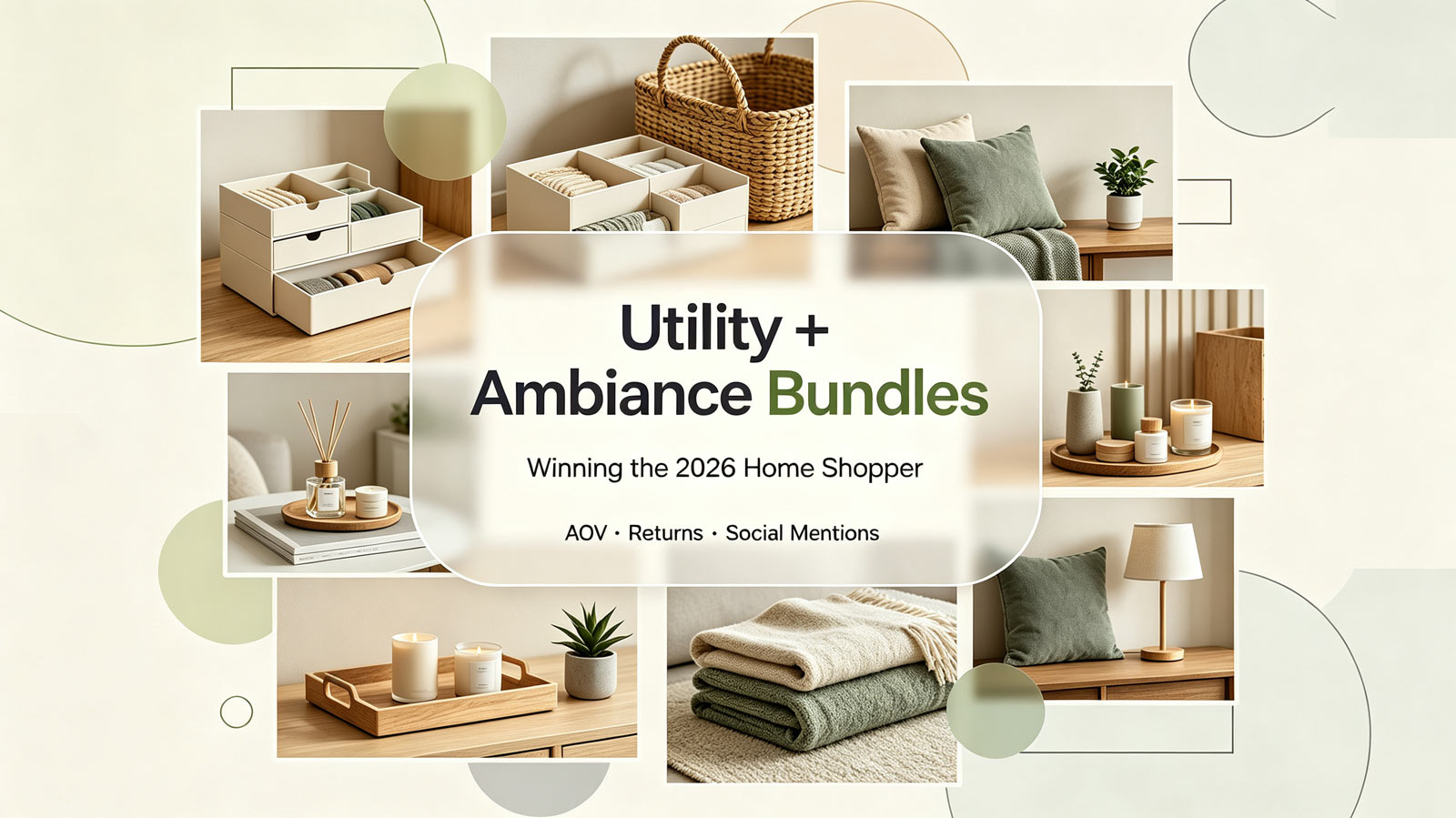
- 2026 home bundle demand is dual‑layered: shoppers buy functional solutions and emotional room ambiance in the same purchase.
- Pure utility bundles are becoming commoditized, while balanced functional‑emotional bundles capture higher AOV, lower returns, and free social traffic.
- Sustainable bundle growth comes from controlled aesthetic upgrades within hard volume caps — not random decor stacking.