
Introduction
Between 2024 and 2025, home‑goods DTC brands thrived on viral‑driven growth. Short‑form social content turned niche household items into instant bestsellers, making trend‑chasing the lowest‑barrier growth path for new and mid‑sized North‑American‑bound brands.
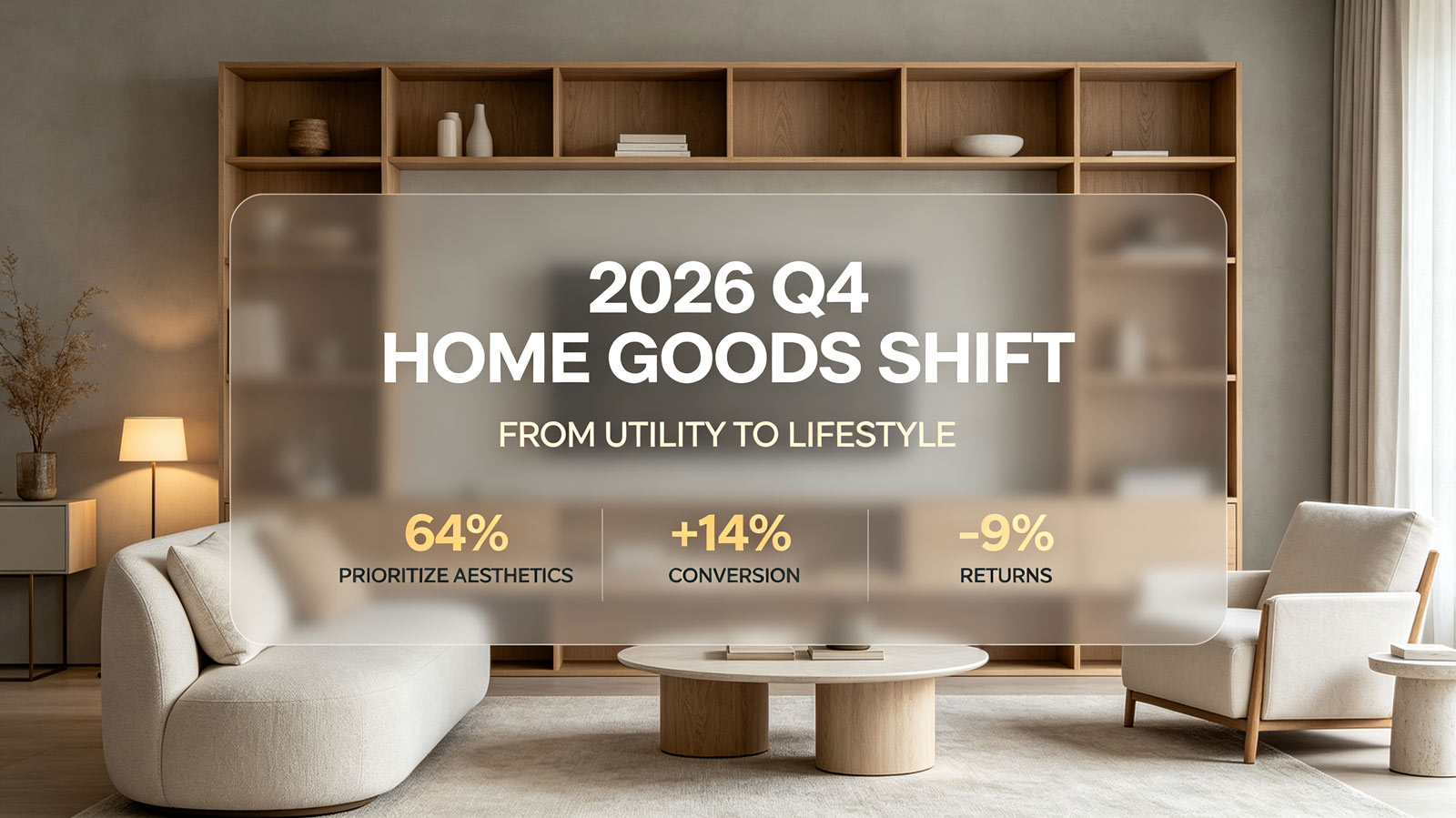
2026 marks a decisive industry reversal. Viral‑traffic volatility has spiked, trend lifecycles have plummeted, and inventory‑heavy merchants are grappling with trend‑related overstock and margin compression. Our Winning Products column has shown how to screen viral SKUs at the operational level. This report reveals the macro shifts behind why that screening is now essential. It unpacks the four macro shifts collapsing the viral‑only model. Leading segments of the home DTC sector are moving away from hype‑centric operations. Resilient business structures are replacing them.
Industry Background: Four Structural Macro Shifts Killing Viral Growth
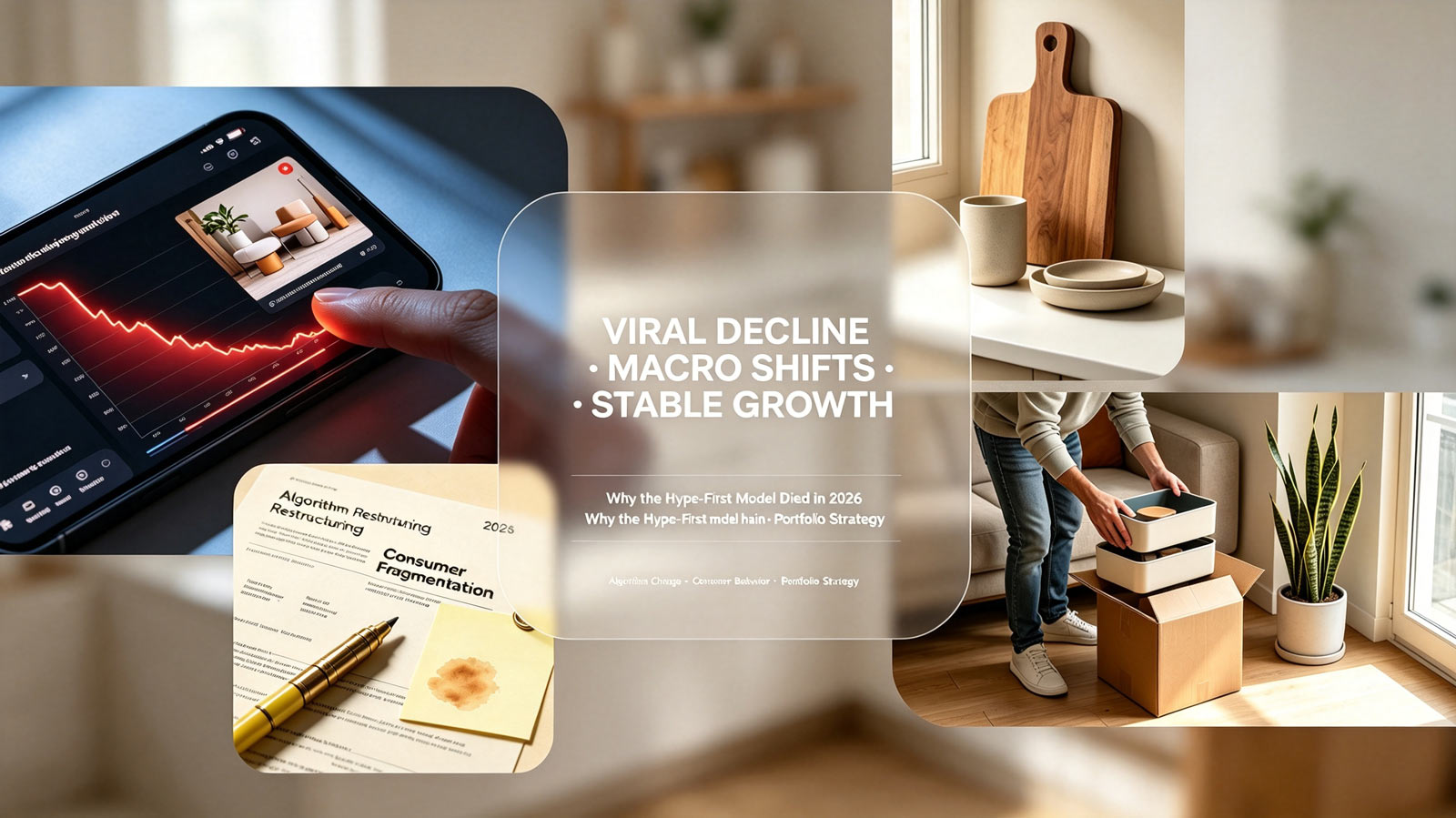
The decline of viral DTC growth is not a temporary market fluctuation. It is caused by four irreversible, overlapping structural shifts across platforms, consumer behavior, industry costs, and supply chains. Together, these four forces break the core logic of hype‑based scaling that dominated home goods ecommerce from 2024 to 2025.
1. Platform Algorithm Restructuring Compresses Trend Lifecycles
Major social commerce platforms completed core algorithm upgrades in Q3 2026, shifting from single‑hype amplification to diversified content distribution. For home goods, the average viral lifecycle has fallen from 12–16 weeks to just 5–8 weeks. Market saturation speed increased by 42% year‑over‑year. The profitable window is now too short for most merchants to recoup ad and procurement costs. This leaves little time for brands to scale profitably before public attention shifts.
2. Consumer Attention Fragmentation Eliminates Single‑Item Dominance
Post‑pandemic home shopping habits have fully stabilized. Users now browse 30% more home product categories than two years ago. They actively compare styles, functions, and sustainability across listings instead of fixating on one viral item.
Single‑product viral dominance has become structurally unsustainable. Broader browsing diversity directly reduces the odds of any single SKU achieving long‑term market hype.
3. Platform Fee Inflation Erodes Viral Product Margins
Successive platform fee adjustments have raised baseline operational costs across all social commerce channels in 2026. Viral products rely on high traffic volume to sustain profits. But surging ad costs, platform fees, and shipping deductions have eroded margins.
Late‑cycle trending inventory now commonly generates flat or negative margins for mid‑sized merchants. Even high‑traffic viral SKUs no longer guarantee profitable growth.
4. Supply Chain Volatility Removes Low‑Risk Trend Scaling
2026 raw material fluctuations and unstable international freight costs have broken traditional viral scaling logic. Small‑batch repeated restocks carry rising unit costs. Large‑batch pre‑orders face severe overstock risk once trends fade. The cost‑efficiency foundation of rapid viral iteration has completely collapsed. Merchants can no longer scale trends safely or predictably.
Four 2026 Consumer Behavior Traits Reshaping Market Demand
Driven by the four macro shifts above, consumer shopping psychology has settled into four stable 2026 traits. These behavioral changes explain why viral SKUs struggle to sustain sales, retention, and positive brand value.
1. Shoppers Separate Novelty Buys From Household Necessities
Modern North American shoppers clearly distinguish decorative viral items from long‑term household essentials. Viral products drive one‑time impulse purchases based on aesthetics. Once social hype fades, these SKUs lose all self‑sustaining demand. They cannot generate recurring baseline revenue.
2. Functional Durability Outweighs Visual Novelty
Home goods have entered a large‑scale industry replacement cycle in 2026. Consumers now prioritize practicality, service life, and daily usability over trendy appearances. Data shows visually driven viral home goods carry a 65% higher return rate than functionally stable staples. Their repurchase rate sits 58% lower than functionally stable staples.
3. Organic Traffic Value Surpasses Algorithmic Viral Traffic
Algorithm traffic is temporary and platform‑dependent. Long‑term store competitiveness now relies on organic search, direct visitors, and accumulated brand credibility. Viral SKUs cannot sustain keyword ranking, page weight, or user loyalty. They contribute zero compounding asset value to a store.
4. Post‑Purchase Experience Creates Viral Product Penalties
Most viral home goods are optimized for short‑video visuals rather than real usage scenarios. Inconsistent post‑purchase experience triggers negative reviews. Ratings drop. Platform exposure falls. This negative loop accelerates SKU elimination from mainstream recommendation streams.
Industry Strategic Shift: Top Brands Phase Out Hype‑First Operations
Aligned with macro market and consumer changes, the home DTC industry is undergoing a clear strategic reset in late 2026. Industry‑wide merchant data shows top‑performing independent brands have comprehensively reduced viral trend inventory proportions.
The top 20 mid‑to‑large home goods DTC brands have cut trending SKU inventory ratios from an average of 45% in 2025 down to 22% in Q4 2026. Leading merchants are shifting focus from continuous trend chasing to stable core product quality, long‑term user experience, and anti‑volatility portfolio building.
This collective shift is not temporary risk aversion. It represents the industry’s official abandonment of the outdated hype‑first growth model to adapt to today’s low‑volatility, stability‑oriented market environment.
Three Common Macro‑Level Market Misjudgments
Most stores suffering inventory losses and profit decline in 2026 share three consistent macro‑level misjudgments of the current market rules.
1. Confusing algorithmic spikes with genuine long‑term demand
Short‑term viral popularity is a result of platform content amplification, not proof of lasting consumer demand. Many merchants overestimate trend sustainability and treat one‑to‑two‑week traffic peaks as valid market validation, triggering blind bulk stocking.
2. Equating fast viral revenue with sustainable business growth
Over‑reliance on hype growth creates false prosperity. It hides structural operational risks such as low repurchase rates, unstable traffic quality, and margin erosion.
3. Applying outdated low‑cost viral scaling logic to 2026
Merchants clinging to 2024‑era operational assumptions fail to account for higher fees, shorter trend windows, and fiercer competition. This outdated mindset directly causes margin collapse and inventory backlog.
New 2026 Industry Standard: Hype‑Assisted, Stability‑Driven Growth
Following the full structural collapse of viral‑only growth, the home DTC industry has formed a unified, data‑backed development paradigm for Q4 2026 and beyond.
Trend products serve only as incremental traffic tools. Viral SKUs function as low‑cost audience acquisition channels to expand user profiles and test emerging preferences. They no longer carry core revenue or profit responsibilities.
Stable household staples serve as the fundamental business pillar. Functional, high‑repurchase home goods support stable baseline revenue and organic traffic. They deliver reliable profit margins.
They help brands resist algorithm changes and trend volatility. Based on current 2026 market data, this balanced structure represents the most viable long‑term growth path for most home goods DTC brands operating in the tightened 2026 market.
Real Store Case: How One Brand Survived the Viral Collapse
Brand Overview: A mid‑sized US home organization DTC brand with two years of stable US and Canadian operations. Before 2026, the brand followed mainstream industry logic and relied heavily on viral trend iteration to drive growth.
Pre‑Adjustment Industry Pain Points (Q1–Q2 2026): The brand maintained a 48% viral SKU inventory ratio to continuously chase new social trends. As macro industry conditions shifted, it faced typical sector‑wide symptoms: extreme revenue volatility, rising dead stock, and declining organic traffic share.
Before strategic adjustment, four baseline metrics reflected the structural damage:
- Monthly revenue fluctuation rate reached 63%
- Dead stock capital occupancy hit 32%
- Store customer repurchase rate remained below 11%
- Organic traffic share dropped 18% quarter‑over‑quarter
Industry‑Aligned Strategic Adjustment (Q3 2026): The brand responded to the four macro industry shifts. It reduced viral inventory proportion to 25%, reserved only small‑batch trend testing for audience acquisition, and shifted core resources to optimizing stable staple products and long‑term user operations.
Post‑Adjustment Results (Verified After One Quarter):
- Monthly revenue volatility reduced by 59%, achieving stable monthly output
- Dead stock capital occupancy dropped from 32% to 18%, greatly releasing cash flow
- Store repurchase rate increased steadily to 17%, improving user asset value
- Organic traffic share rebounded quarter‑over‑quarter, rebuilding long‑term competitiveness
Core Takeaways
- 2026 marks the official end of the viral‑only growth era. Platform algorithm changes, fragmented attention, rising costs, and supply chain volatility have permanently broken the hype‑first model.
- Four updated consumer behavior traits have reshaped market demand logic, making pure trend‑dependent operations unsustainable for long‑term brand development.
- Leading brands are abandoning blind trend chasing. They are forming a new stable‑oriented growth paradigm. This is becoming the industry standard.
- Stores that rebalanced from 45% viral inventory to 25% achieved 59% lower revenue volatility and 6pp higher repurchase rates within one quarter.