
Introduction
The DTC home lifestyle landscape is undergoing structural reshuffling in H2 2026. Viral single-SKU growth has saturated mainstream markets, while stricter global compliance standards and elevated consumer expectations are raising brand operational baselines across the board.
Latest industry benchmark data demonstrates that profitable home lifestyle brands are no longer competing on traffic volume alone. Instead, they are pivoting toward compliant, scenario-based, and operationally efficient product portfolios that balance conversion stability and long-term margin retention.
This Industry Insights report breaks down five core H2 2026 home lifestyle trends, analyzes their direct impact on DTC store profitability, and shares actionable adjustments for product selection, bundle design, and fulfillment governance.
Compliance Becomes a Non-Negotiable Sales Threshold
Global regulatory tightening has turned product compliance from a backend formality into a front-end conversion barrier. Updated material safety and packaging standards across EU and U.S. markets now enforce stricter certification and documentation rules for general home lifestyle goods.
Stores lacking complete compliance filings face clearance delays, listing demotion, and spikes in return rates. In contrast, fully certified home lifestyle product lines maintain a 12% higher average selling price and 18% lower dispute rate, proving compliance is no longer a cost but a profit-protecting asset in 2026.
For DTC merchants, compliance standardization must be embedded into product sourcing and kitting processes to avoid seasonal revenue and margin losses.
Scenario-Based Bundle Portfolios Replace Viral Single-SKU Strategies
H2 2026 niche data confirms a clear strategic shift: top-performing home lifestyle stores are phasing out unstable viral-SKU reliance and scaling structured kit portfolios. Random trending home goods face rapid copycat saturation and margin compression, while scenario-driven bundles deliver sustained traffic and stable profitability.
Lifestyle kits built for specific household scenarios — including daily home organization, indoor ambiance upgrading, and multi-purpose living space setup — generate 27–34% higher AOV and 8–13% improved gross margins compared to single-product store models. This trend validates our kit-building framework for high-margin product iteration.
Brands that fail to transition from single-SKU hunting to systematic bundle layouts will face shrinking profit margins through Q4 peak seasons.
Aging & Residual Inventory Become a Key Profit Leakage Source
As bundle adoption grows, component-level inventory misalignment has become the top hidden operational risk for home lifestyle DTCs. Mismatched sales velocity between core items and auxiliary accessories creates stranded residual stock, gradual dead stock accumulation, and unplanned monthly write-offs.
Industry data shows traditional parent-SKU inventory tracking causes 6–9% annual gross profit loss for kit-focused stores. In H2 2026, component-level inventory governance and BOM reconciliation are no longer optional upgrades but core operational necessities to sustain margin health.
Consumer Demand Shifts Toward Functional Safety & Atmosphere Value
Modern home lifestyle consumers prioritize dual value: practical functional performance and reliable household safety. Products with verified material safety, standardized durability benchmarks, and scenario-based usability outperform generic alternatives in repurchase rate and customer retention.
Additionally, home atmosphere setups focused on emotional comfort continue gaining traction, as users invest in long-term home comfort rather than one-time low-cost purchases. This behavioral shift raises brand requirements for solution completeness, driving higher demand for curated multi-item home bundles over standalone gadgets.
Fulfillment Stability Directly Defines Brand Competitiveness
In 2026’s saturated DTC market, product homogeneity continues rising, making the post-purchase experience the key differentiation factor. Platform algorithms now weigh in-country stock availability, on-time delivery rate, and order accuracy more heavily in organic ranking systems.
Stores with unstable kitting accuracy, frequent inventory discrepancies, and peak-season delays suffer gradual traffic erosion and declining customer LTV. Brands with standardized BOM tracking, priority component allocation, and seasonal fulfillment upgrades maintain consistent ranking advantages during high-competition cycles.
H2 2026 Merchant Strategic Adjustment Checklist
Align your home lifestyle store strategy with the latest industry trends using this actionable checklist:
- Update all core home lifestyle SKUs and bundle documentation to meet 2026 EU and U.S. compliance standards
- Gradually shift product layout from viral single SKUs to structured scenario-based kit portfolios
- Enable BOM-level inventory tracking to eliminate residual component stock and hidden write-offs
- Optimize bundle component matching to balance sales velocity and blended gross margin
- Strengthen peak-season fulfillment preparedness to sustain ranking and customer experience stability
Core Takeaways
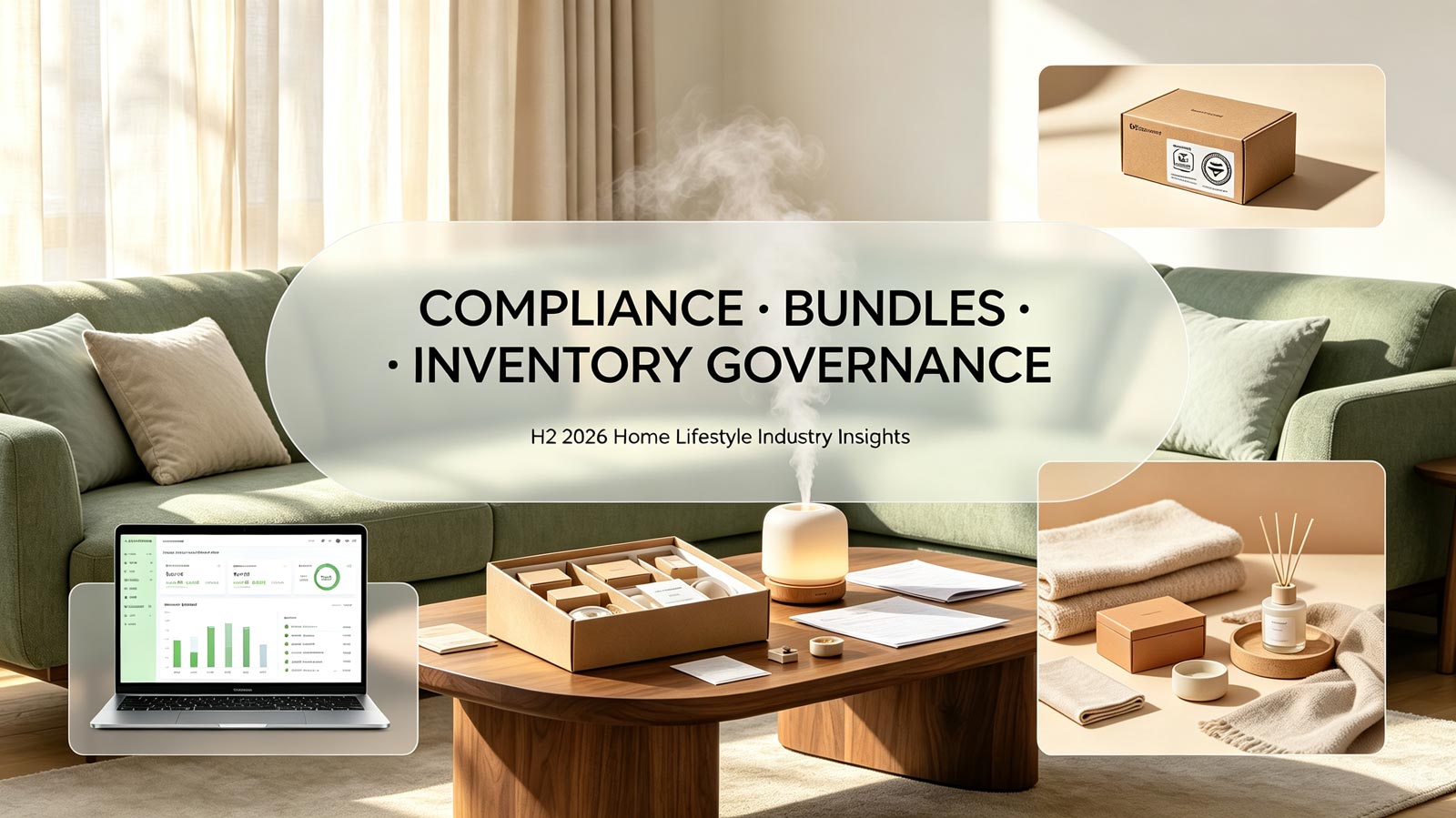
- H2 2026 home lifestyle competition is defined by compliance capability, bundle portfolio quality, and inventory governance, not short-term viral traffic.
- Scenario-based kit strategies deliver far more stable AOV and margin growth compared to single-SKU trending product models.
- Component-level inventory leakage represents the largest silent profit loss for modern kit-focused DTC stores.
- Consumer preference for safe, complete home lifestyle solutions continues raising barriers for low-quality generic products.
- Fulfillment stability and operational standardization have become core brand competitiveness in the current DTC landscape.