
Introduction
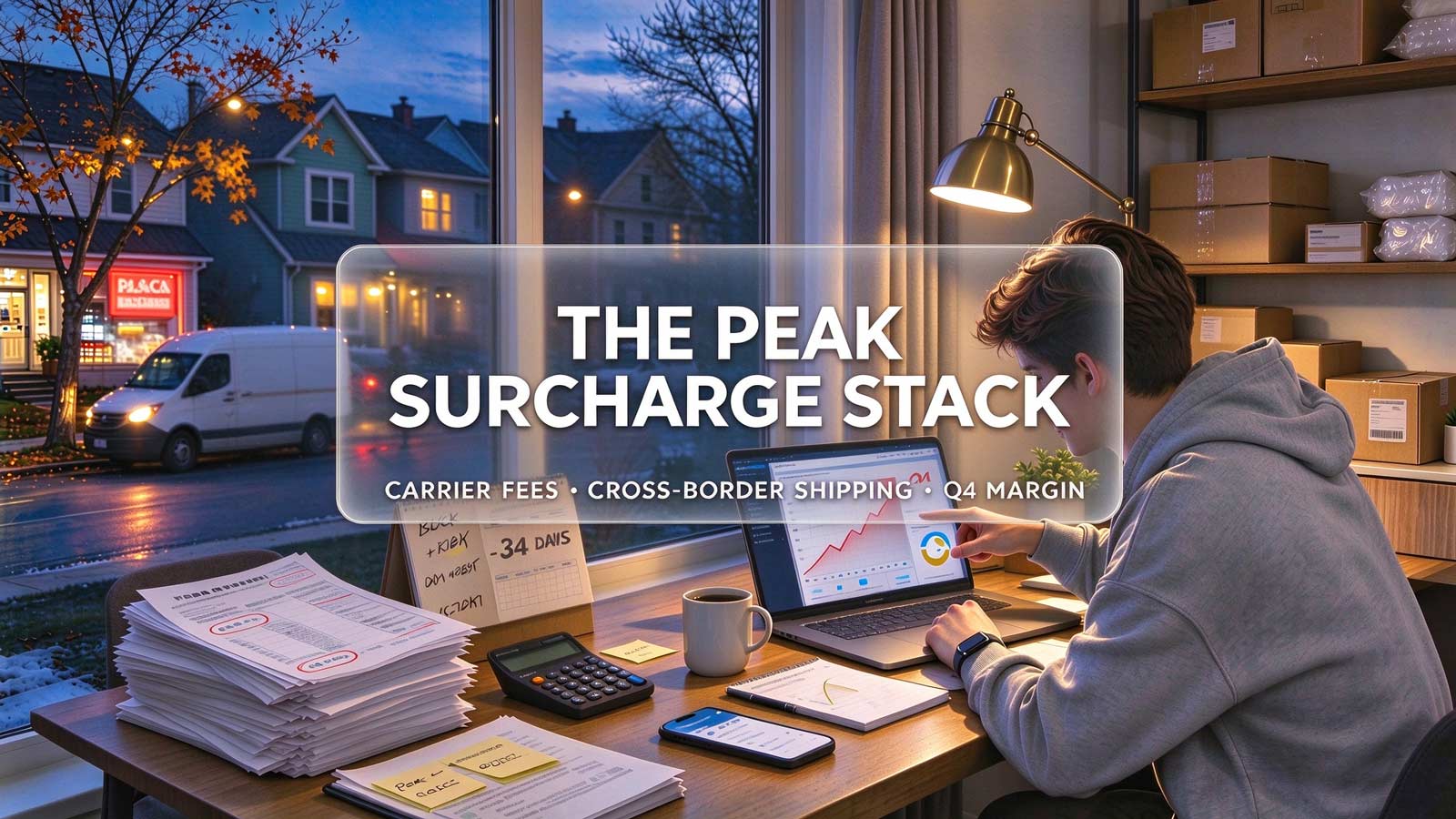
Every October, cross-border sellers budget for growth—more SKUs, more ad spend, more inventory. Yet the cost line that quietly blows up most Q4 P&Ls isn't media or goods: it's the stack of carrier peak surcharges applied to every parcel from late October through December. With air capacity tight and last-mile networks bracing for record volumes in 2026, these fees are no longer a rounding error. This analysis shows where the 2026 surcharge stack hits hardest and which fulfillment levers protect margin before Black Friday.
Where the 2026 Surcharge Stack Lands
The peak-season fee stack is not one charge but several layers that compound on the same parcel. Most sellers discover them line by line, on invoices that arrive weeks after the damage is done:
- Peak handling surcharges applied per shipment across all service levels, typically activating in mid-to-late October;
- Fuel surcharges recalculated weekly, which can move 10–20% within a single month;
- Residential and remote-area delivery fees that hit home-delivery DTC orders hardest;
- Dimensional-weight penalties on oversized packaging, charged on volume rather than actual weight.
Individually, each fee looks manageable. Stacked, they routinely add 15–25% to per-order shipping cost during the six weeks that matter most. Cross-border sellers are exposed twice: they pay international line-haul premiums first, then absorb destination-market peak fees at the last mile—fees their domestic competitors have already priced into free-shipping thresholds months earlier.
How Peak Fees Interact with 2026's Other Cost Pressures
Surcharges rarely arrive alone. Three concurrent pressures determine how much of the fee stack actually reaches your P&L:
- Tariff-driven landed cost inflation has already pushed many sellers toward cheaper service levels; peak fees then apply on top of a more fragile cost base, leaving less room to absorb them.
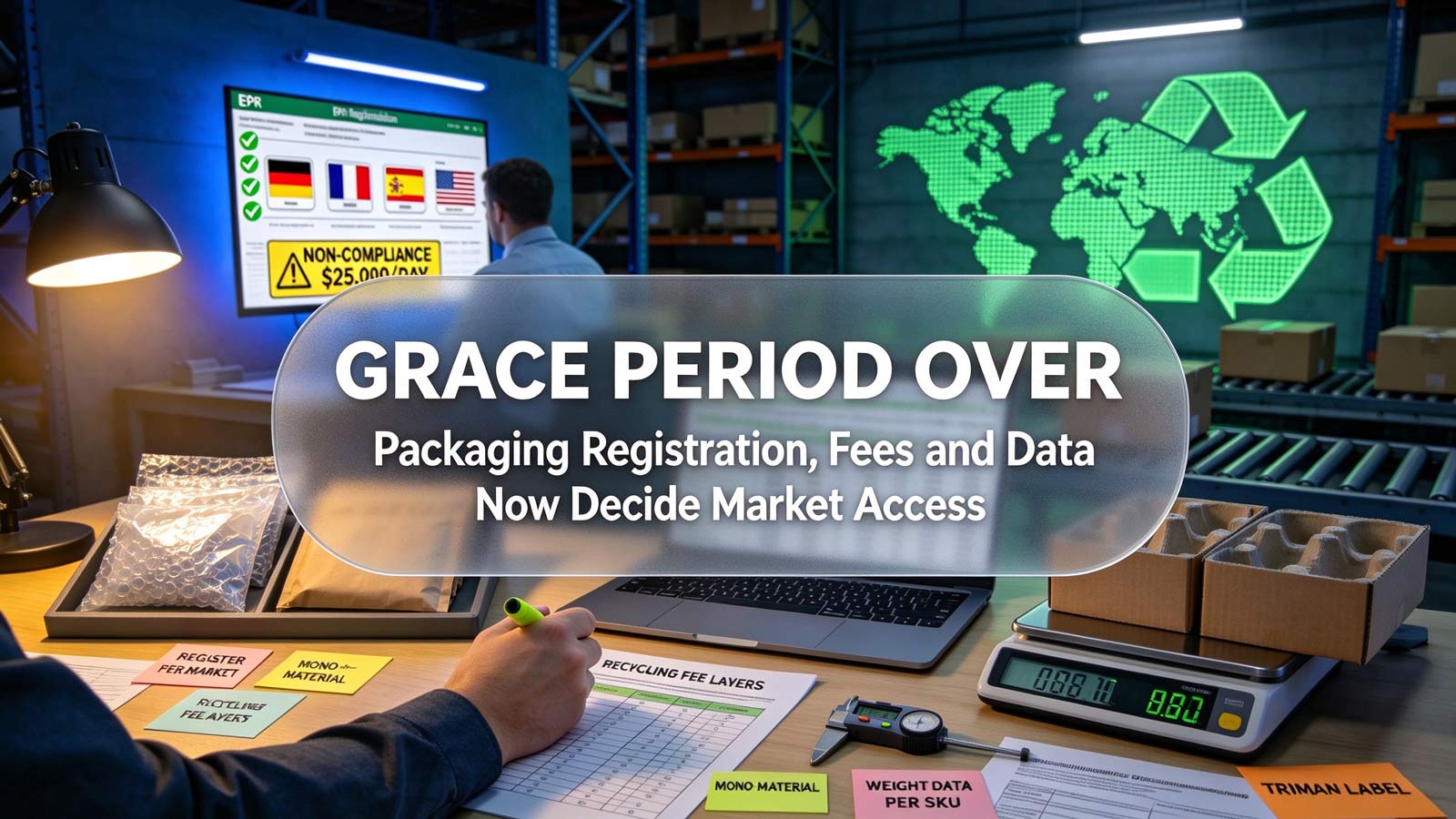
- EPR packaging compliance costs are raising per-unit packaging spend exactly when carriers begin penalizing dimensional weight—an expensive double hit for oversized or non-compliant cartons.
- Air capacity constraints mean the traditional escape route—upgrading to faster line-haul to protect delivery promises—now costs peak-season premiums of its own.
The practical consequence: treating surcharges as an isolated shipping problem understates the exposure. Sellers who model peak fees alongside tariffs, packaging rules and capacity constraints consistently make better network decisions than those who negotiate carrier rates alone.
Benchmark: What Surcharges Do to Unit Economics by Market
Aggregated merchant data shows a clear split by average order value:
- Low-AOV stores (under $35) see surcharges consume 60–80% of per-order shipping budget, effectively erasing gross margin on orders shipped after late October unless thresholds are adjusted.
- Mid-AOV stores ($35–$80) retain margin only when orders ship from in-market inventory rather than cross-border injection.
- High-AOV stores face the mildest proportional hit—but absorb the largest absolute loss when premium line-haul is used to meet delivery promises that local stock could have covered.
The pattern is consistent: surcharges don't punish sellers for shipping internationally; they punish sellers for shipping internationally during peak without a localized buffer. Even partial localization changes the math—sellers fulfilling 60% or more of Q4 volume in-market report surcharge exposure dropping to near-zero on those orders, along with faster delivery and fewer WISMO tickets during the year's highest-volume support period.
Three Levers to Pull Before Black Friday
- Pre-position inventory in regional fulfillment centers. Converting cross-border parcels into local shipments moves orders off peak international line-haul entirely. This is the single highest-impact lever, and the window to act on it is now: inbound freight takes 3–6 weeks, and peak outbound rates activate before most sellers finish their Q4 ad planning.
- Re-price free-shipping thresholds by market. Align minimum order values with post-surcharge delivery cost per destination before rates activate—not after the first margin report disappoints. Consider a temporary threshold adjustment for the six peak weeks rather than a permanent change, and communicate it as a delivery-promise investment rather than a price increase.
- Attack dimensional weight at the packaging layer. Right-sized cartons, reduced void fill and consolidated multi-item shipments blunt the most preventable fee category—one that carriers quote automatically, whether or not you saw it coming. Packaging optimization requires no carrier negotiation and no customer-facing change, which makes it the fastest lever to deploy.
A 5-Step October Readiness Checklist
Before peak rates activate, run this audit:
- Pull last year's peak invoices and itemize every surcharge by category, carrier and destination market;
- Model the 2026 stack against current unit economics by AOV band, flagging any order profile that goes negative;
- Decide localization coverage by market—full in-market fulfillment where volume justifies it, consolidated injection where it doesn't;
- Adjust thresholds, packaging specs and carton sizes, then brief customer support on the changes;
- Set a weekly surcharge review for November–December, because fuel and capacity fees will move after launch.
Core Takeaways
- Peak surcharges now function as a margin tax on every cross-border parcel from late October through December—build them into unit economics, not as a year-end surprise.
- Low-AOV orders absorb the highest proportional hit; adjust market-specific free-shipping thresholds and minimum order values before peak rates activate.
- Pre-positioning inventory in regional fulfillment centers converts unpredictable peak fees into fixed, forecastable local delivery costs.
- Right-sized packaging and order consolidation are the cheapest surcharge defense—dimensional-weight fees are the one peak cost fully within your control.