
Introduction
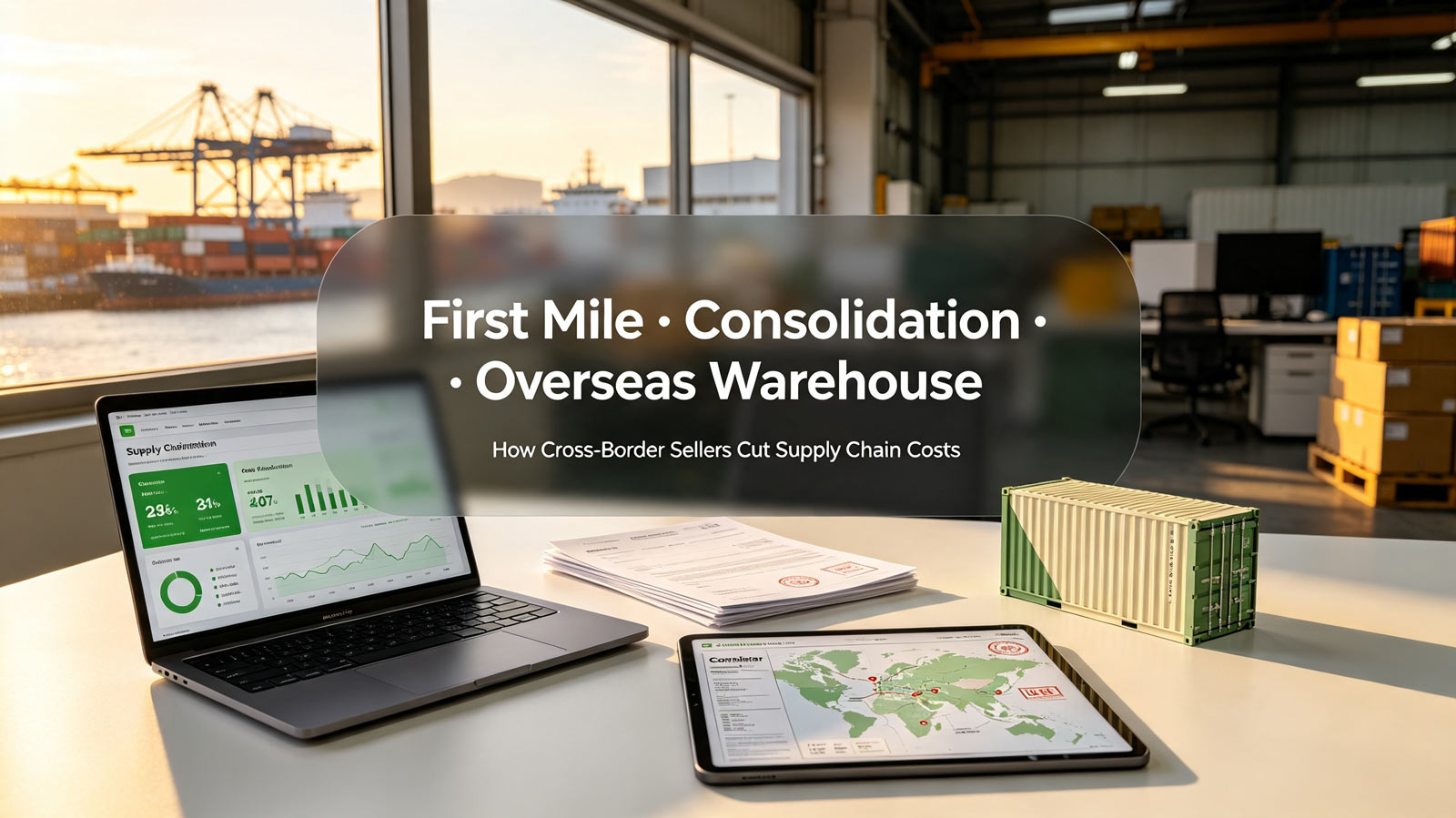
In 2026, as overseas warehouse stocking becomes the mainstream fulfillment mode for cross-border independent stores and social e-commerce, the first-mile inbound transportation from domestic warehouses to overseas storage nodes directly determines capital occupation speed and overall supply chain cost. Many sellers adopt scattered small-batch shipments according to order urgency, leading to extremely high unit freight, frequent space shortages and unpredictable inbound delays. Industry research shows that unreasonable first-mile arrangements can take up 18%~32% of the total supply chain expense of a single product. This article sorts out the latest channel characteristics of cross-border first-mile logistics, analyzes typical operation pain points, and shares replicable consolidation shipping schemes and whole-process optimization methods, enabling sellers to control inbound cost and inventory turnover efficiency from the source.
Why First Mile Logistics Becomes A Key Cost Control Link In 2026
In the early stage of cross-border overseas warehouse development, most merchants only pay attention to local last-mile delivery and ignore the planning of domestic outbound links. With the continuous rise of international oil prices and international shipping congestion risks, the profit gap caused by different first-mile solutions is gradually enlarged.
First, fragmented individual shipments greatly push up unit logistics price. Logistics carriers give the lowest preferential unit price only for large consolidated containers. Multiple separate parcels will be calculated at expensive express or small batch air rates, which accumulates huge unnecessary expenditure over long-term stocking.
Second, unplanned shipments easily miss fixed vessel and flight schedules. Goods cannot be loaded on the nearest transportation route, resulting in waiting for the next batch of space and delaying inventory shelf time. Hot-selling products are prone to out-of-stock during the blank period, directly losing order revenue.
Third, improper channel selection will bring customs inspection risks. Some low-price irregular channels have unstable customs clearance rates. Once detained by customs, goods face fines, return or destruction, bringing irreversible loss to inventory assets.
A senior cross-border logistics industry expert commented: “Last-mile delivery decides customer experience, while first-mile shipping decides your bottom-line profit. Scientific consolidation and channel matching are the most direct way to reduce supply chain losses this year.”
Four Core Pain Points Existing In Most Sellers’ First Mile Arrangement
Pain Point 1: Random urgent replenishment without pre-planning Sellers only arrange shipment after inventory is nearly exhausted, and have to choose premium emergency air freight with high price, lacking long-term stocking rhythm planning.
Pain Point 2: Multiple suppliers send goods separately without consolidation Products are purchased from multiple domestic factories, each supplier delivers parcels independently to overseas warehouses, failing to merge into one batch shipment and losing bulk discount qualifications.
Pain Point 3: Blindly pursue the lowest quoted price without verifying channel stability Merchants only compare unit price and select unknown small logistics providers, resulting in frequent customs hold-up, lost goods and untraceable parcels.
Pain Point 4: Unreasonable packaging and palletization leading to dimensional weight overcharge Goods are packed loosely without standardized pallet integration, occupying extra container space and being charged excess volume fees by shipping companies.
Standard First Mile Consolidation & Shipping Optimization Operation Process
Step 1: Make monthly stocking forecast and fix regular shipment cycles Refer to historical sales data to confirm monthly total stocking volume, set fixed weekly or bi-weekly consolidated shipment plans, avoid emergency scattered orders as much as possible.
Step 2: Centralize all supplier goods into designated domestic transit warehouse Unify all purchased inventory to one domestic consolidation warehouse provided by the fulfillment provider, sort and count all SKUs uniformly before international transportation.
Step 3: Match transportation channel according to product attributes and timeliness demand Select sea freight for large-volume, non-urgent conventional inventory; choose bulk air freight for hot-selling fast-moving items; adopt China-Europe rail for European market stable replenishment to balance cost and lead time.
Step 4: Complete standardized pallet packaging and volume optimization Unify outer box specification, compress redundant filler materials, assemble goods into standard pallets to improve container space utilization and cut dimensional weight charges.
Step 5: Track whole logistics nodes and adjust subsequent shipment proportion Follow up vessel departure, customs clearance and overseas warehouse receipt progress in real time. Summarize channel delay situations monthly, and replace unstable transportation lines in a timely manner.
First Mile Logistics Cost & Risk Control Checklist
- Establish a monthly stocking plan 30 days in advance to minimize temporary emergency air freight proportion within 10%.
- Mandate all suppliers to deliver goods to the unified domestic transit warehouse to realize one-batch consolidated international shipment.
- Confirm customs clearance qualification and historical detention rate of logistics channels before signing cooperation to avoid compliance risks.
- Optimize packaging size and pallet stacking mode to reduce calculated volume and lower extra freight caused by dimensional weight.
- Reserve 5%~10% emergency inventory through small-batch quick channels to prevent total out-of-stock when main shipment is delayed.
- Sign long-term framework agreements with formal first-mile service providers to lock in annual preferential pricing and avoid seasonal price hikes.
Real Merchant First Mile Cost Reduction Case
A home goods DTC brand mainly stocking in US overseas warehouses used to arrange shipments separately from three different factories every week. Each small batch delivery adopted scattered air express, with extremely high single-piece inbound cost, and goods often waited more than 15 days before being put on shelves due to space arrangement problems.
After cooperating with Globe Fulfillment’s domestic consolidation warehouse and integrated first-mile service, the brand gathered all purchased products into the transit warehouse for unified sorting and weekly containerized sea freight shipment. Hot SKUs are supplemented by small batch bulk air freight separately.
Within two months, the merchant’s average first-mile logistics cost per product dropped by 29%, the average inbound cycle from domestic dispatch to overseas shelf was shortened from 18 days to 7 days, and the out-of-stock rate of core best-selling items decreased significantly.
The brand supply chain manager stated: “We used to split shipments for convenience, but overlooked the superposition of freight and time costs. Centralized consolidation and channel classification make our stocking budget highly predictable and controllable.”
Key Takeaways
- In 2026 cross-border operation, first-mile inbound logistics is a decisive link for controlling overall supply chain cost and inventory turnover speed.
- Scattered urgent replenishment and multi-source separated delivery are the two biggest sources of unnecessary freight waste.
- Centralized domestic consolidation + classified channel selection based on timeliness demand is the most mature and cost-effective first-mile operation mode.
- Cooperating with fulfillment providers with integrated domestic transit and global shipping capacity can greatly simplify the docking process and reduce multi-party coordination errors.