

Industry
Most cross-border store owners only analyze front-end data such as traffic, conversion rate, and product CTR, while completely ignoring back-end fulfillment data — the hidden core factor that determines store profitability, rating, and long-term scaling. In 2026, e-commerce algorithm evaluation mechanisms on Shopify, Amazon, TikTok Shop, and AliExpress highly prioritize shipping speed, order accuracy, and delivery stability. Industry data shows that over 78% of underperforming stores suffer profit losses not from poor marketing, but from unreasonable inventory allocation, high logistics costs, and unstable manual fulfillment operations. Even stores with high traffic often face shrinking profit margins, rising return rates, and declining seller ratings due to chaotic supply chain management.
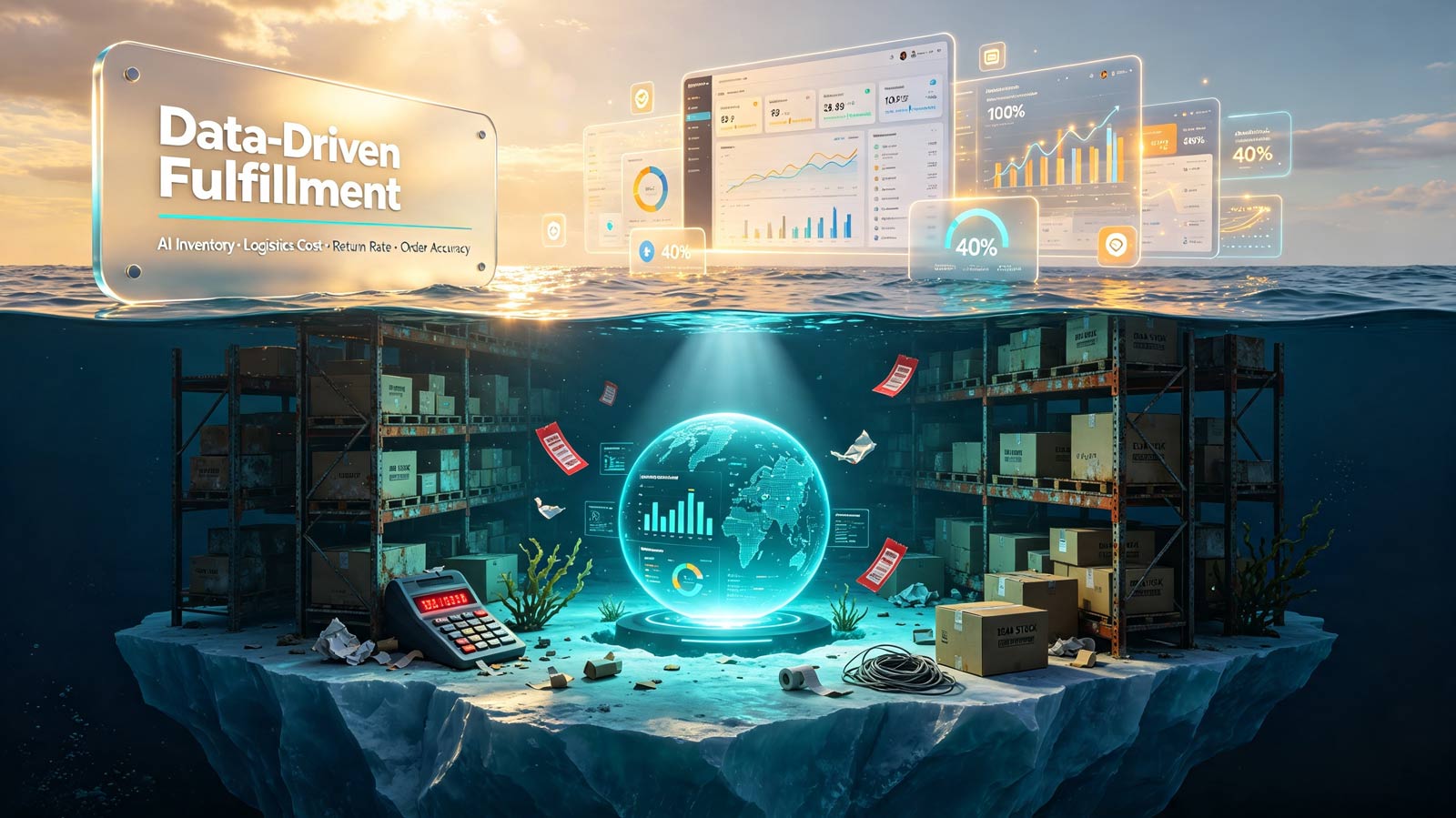
Globe Fulfillment’s global store operation data proves that stores that regularly optimize operations based on AI fulfillment data can achieve 40% lower logistics costs, 30% reduced return rates, 95% fewer stockout incidents, and a significant improvement in customer satisfaction from 87% to 98%. Data-driven fulfillment optimization has become the most cost-effective way to increase store net profit without raising advertising budgets.
This store analysis blog focuses on cross-border store operational pain points, analyzes how fulfillment data affects store weight and profit, shares standard store data diagnosis dimensions, provides actionable optimization checklists, and displays real seller growth cases. It helps merchants accurately locate store operational weaknesses, eliminate supply chain losses, and achieve stable store growth through standardized data analysis.
Core Store Operational Pain Points Caused by Blind Fulfillment Decisions
Most sellers rely on experience rather than data to arrange inventory, shipping, and order management. Blind operational decisions lead to invisible consumption of store profits, long-term rating decline, and blocked store scaling. The following four pain points are common in 90% of medium and small cross-border stores.
Unmeasured Inventory Data Causes Capital Waste & Stockouts
Most store operators cannot accurately quantify sales trends, seasonal demand fluctuations, and regional hot-selling differences. Manual inventory estimation leads to two extreme operational problems: best-selling SKUs are out of stock for a long time, resulting in lost orders and reduced platform keyword rankings; slow-moving SKUs occupy overseas warehouse space for a long time, generating continuous storage fees and capital pressure. Many stores have high monthly GMV but low net profit entirely due to ineffective inventory data management.
A fitness equipment brand’s Logistics Director shared: “We used to judge inventory purely by monthly sales volume data. We could not predict demand changes in advance, resulting in overstock of slow-moving goods. In just one quarter, we faced $50,000 excess inventory losses. Traditional store data analysis ignored supply chain indicators, making our store operation always inefficient.”
Lack of Logistics Data Analysis Leads to Continuous High Operating Costs
Most sellers only focus on single shipping cost but ignore comprehensive logistics data including channel timeliness, regional shipping premium, return logistics loss, and abnormal order rate. Long-term use of single logistics channels or manual random channel selection causes the store’s overall logistics cost to be 20%–30% higher than the industry optimized level. Without data comparison, stores cannot form cost-control closed loops and always maintain low profit margins.
No Fulfillment Accuracy Data Monitoring Triggers High Return Rates
Order misdelivery, delayed delivery, and package damage caused by manual fulfillment errors are important reasons for high store return rates and negative reviews. Most store background data cannot monitor real-time order processing accuracy, manual error rate, and delivery timeliness. When return rates rise, sellers cannot locate the root cause, resulting in repeated operational mistakes and continuously declining store reputation.
Disconnected Front-End & Back-End Data Restricts Store Scaling
Traditional store analysis separates front-end marketing data and back-end fulfillment data. Traffic conversion data cannot guide inventory preparation, and shipping data cannot feed back to product selection and pricing strategy. Data disconnection makes store operation always passive, unable to form precise, automated, and scalable operational systems.
Industry Trend: Data-Driven AI Fulfillment Becomes Standard for Store Growth
In 2026, cross-border e-commerce has completely entered data-driven refined operation. Traffic dividends are disappearing, and supply chain efficiency has become the core competitive difference between stores. Excellent DTC brands and mature sellers all rely on AI fulfillment data analysis to realize scientific inventory scheduling, intelligent logistics matching, and automated order management, so as to reduce losses and increase profits steadily.
Globe Fulfillment’s full-suite AI data system provides real-time store fulfillment data monitoring, including 30-day demand prediction data, multi-channel logistics cost comparison data, order processing accuracy data, regional delivery efficiency data, and return cause analysis data. The system helps sellers comprehensively quantify store supply chain problems and provide targeted optimization suggestions. Through AI data analysis, sellers can reduce stockout risks by 95%, cut excess inventory costs by 40%, and reduce manual operational workload by 80%.
A home and garden store Operations Manager commented: “After we started using data-driven AI fulfillment management, our store operational problems became clear at a glance. We optimized inventory and shipping strategies according to system data, and customer satisfaction quickly rose from 87% to 98%, with negative reviews almost eliminated.”
Store Fulfillment Data Optimization Operational Checklist
Combined with tens of thousands of global store operational cases, we sorted out a set of replicable store data analysis and optimization checklist, suitable for Amazon, Shopify, TikTok Shop, and AliExpress all-platform stores:
- Full Store Data Integration: Integrate front-end store sales data, traffic data, and back-end fulfillment inventory, shipping, and return data to form a complete store operational data report.
- AI Demand Data Reference: Take 30-day AI demand forecasting data as the core basis for inventory replenishment to avoid subjective judgment errors and balance stockout and overstock risks.
- Logistics Cost Data Comparison: Regularly view AI logistics channel comparison data, eliminate high-cost and low-efficiency shipping channels, and dynamically optimize regional shipping solutions.
- Order Accuracy Data Monitoring: Track daily order processing accuracy, abnormal order rate, and delayed delivery rate, and eliminate manual fulfillment errors through automated systems.
- Regional Operational Data Optimization: Allocate inventory intelligently according to regional sales heat and delivery data, realize local warehouse delivery for hot-selling regions, and improve delivery speed by 45%.
- Return Data Analysis & Improvement: Analyze return cause data regularly, optimize inventory quality, packaging standards, and delivery timeliness to reduce store return rates by up to 30%.
- Monthly Profit Data Review: Compare monthly fulfillment cost changes, inventory loss data, and customer satisfaction data to form a continuous store profit optimization loop.
Real Store Operation Success Cases & Testimonials
North American 3C Electronics Store: 10x Order Growth via Data Optimization
This North American 3C electronics store previously operated purely by experience. Blind inventory preparation led to frequent stockouts in peak seasons and serious overstock losses in off-seasons. The store’s daily order volume was stagnant at 500 units for a long time, and the profit margin was severely squeezed by logistics and inventory costs.
After accessing Globe Fulfillment’s AI data analysis system, the store fully adjusted its inventory replenishment and logistics strategy based on predictive data and real-time operational data. Intelligent inventory allocation and automated order processing greatly improved store operational efficiency. The store’s daily order volume successfully increased from 500 to 5,000, achieving a tenfold growth.
“AI data-driven fulfillment completely changed our blind store operation mode. We expanded our business across three continents with accurate inventory forecasting and intelligent logistics optimization, achieving 340% revenue growth and 45% shipping cost reduction. Fulfillment data is the core asset of our store growth.” — E-commerce Director, Global Electronics Brand
European Fashion DTC Store: Greatly Improved User Reputation & Repeat Purchase Rate
A European local fashion DTC store faced high return rates and slow delivery speed for a long time. The store team could not find the core operational problems through traditional traffic data analysis, resulting in low customer repurchase rates and slow store growth.
By analyzing AI fulfillment return data and delivery efficiency data, the store optimized reverse logistics processes and regional warehouse allocation. The store’s overall return rate dropped by 30%, delivery speed increased by 45%, and store review scores and repurchase rates continued to rise, forming a stable user growth system.
Key Takeaways
Summarizing the 2026 cross-border store refined operation rules and mass merchant verification cases:
- Traditional store analysis focusing only on front-end traffic data is flawed; back-end fulfillment data determines the final net profit and long-term weight of the store.
- AI data-driven inventory scheduling, logistics matching, and order management can effectively solve stockouts, overstock, high costs, and high return rate pain points.
- The integration of front-end sales data and back-end fulfillment data is the only way to scale cross-border stores steadily in the refined competition era.
- Standardized AI fulfillment data monitoring can reduce store comprehensive operational costs by up to 40% and greatly improve customer satisfaction and store reputation.