
Introduction
Sustainable consumption awareness has expanded steadily across North American consumer groups this year, affected by local environmental policies, community green advocacy and long-term shopping value concepts. Many independent store operators maintain unified product display logic without adjusting content to match regional eco-focused demands, leading to stable visitor volume yet limited growth of medium and high-intent order traffic.
This industry insight collects consumer survey records from major US and Canadian sales regions in Q2 2026. It compares the acceptance degree of eco-friendly goods among different age groups, points out typical content display deviations that reduce page trust, and provides adjustable SKU planning and page presentation plans suitable for stores of different operation scales.
Industry Background: Factors Reshaping North American Green Shopping Habits
Three external factors affect local buyer screening standards when browsing independent store pages, bringing gradual changes to commodity selection logic.
First, updated regional waste classification and packaging rules. Multiple states in the US and Canadian provinces have rolled out clearer requirements for recyclable packaging, pushing buyers to check product packaging material descriptions before placing orders.
Second, rising attention to long-cycle reusable goods. Local consumers gradually reduce purchases of disposable short-lifespan products, and tend to select items made with renewable raw materials.
Third, transparent brand environmental disclosure becomes a reference factor. Buyers will browse public brand sustainability statements, material test reports and carbon emission notes to judge whether goods match personal consumption values.
Merchants who ignore these subtle demand shifts may lose portions of traffic from buyers with eco-focused shopping intentions.
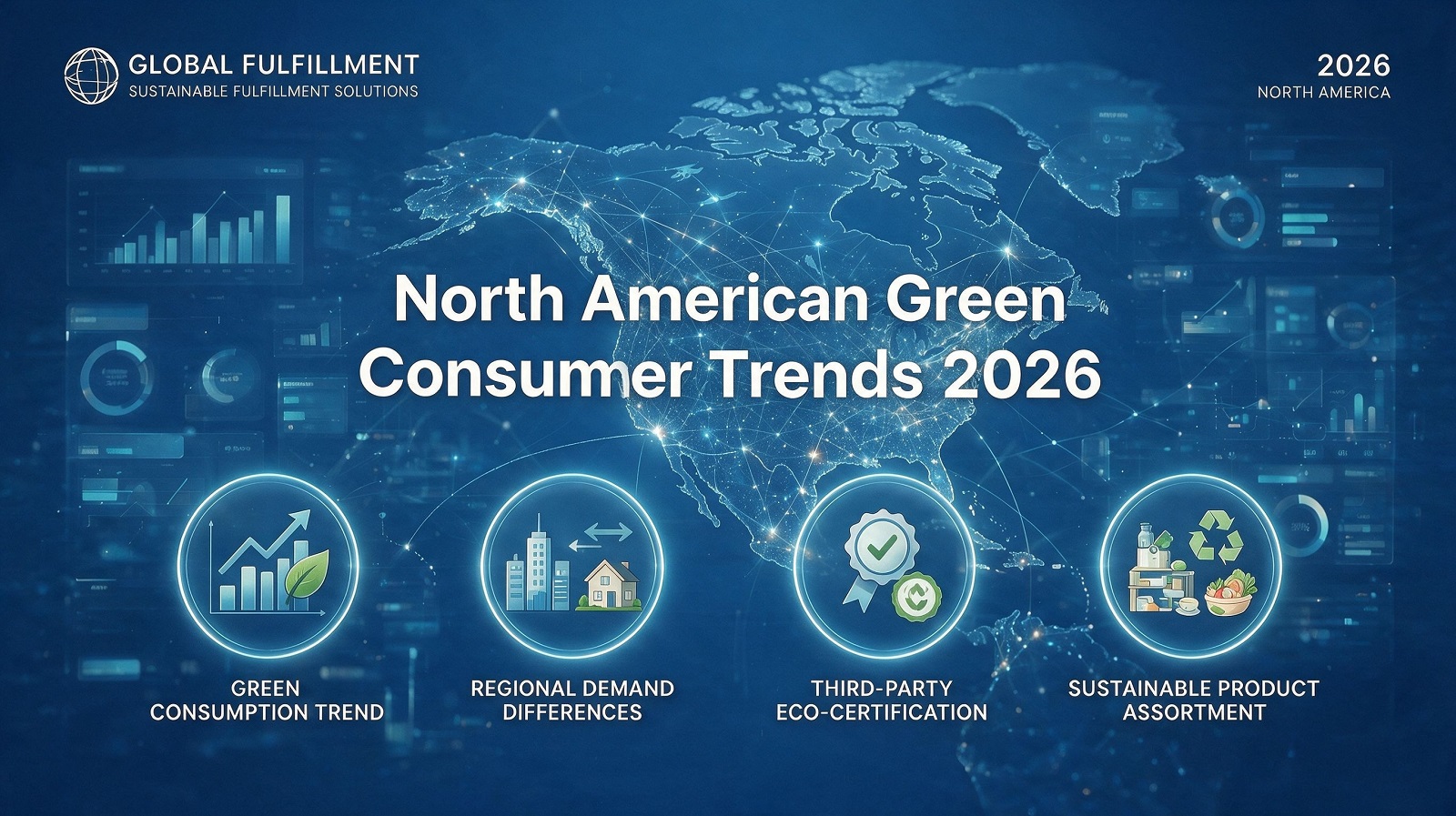
Four Observable Green Preference Traits Among North American Consumers
Trait 1: Packaging recyclability acts as a regular screening condition
Most local users will scan product page packaging descriptions in the early browsing stage. Stores that only introduce product functions without supplementary packaging material details tend to see slightly higher page exit rates among eco-focused visitors.
Trait 2: Acceptance of reasonably priced eco-friendly goods improves
Consumers hold mild tolerance for moderate price premiums on sustainable products. As long as pages clearly display material advantages and service life, buyers can accept small price gaps compared with ordinary non-recyclable alternatives.
Trait 3: Clear third-party eco-certifications boost page trust
Simple self-written environmental descriptions fail to leave deep impressions. Products with standardized third-party test labels and recyclability certificates receive more positive review feedback after delivery.
Trait 4: Regional demand differences exist between urban and suburban buyers
Urban consumers pay more attention to low-carbon production labels, while suburban groups focus more on product reusability and waste disposal convenience. Uniform product introduction cannot match the two groups’ separate reference priorities.
Differentiated Store Layout Adjustment Ideas
Small Single-Category Independent Stores
Small teams can optimize detail modules on core product pages first. Add fixed display blocks for raw material and packaging recyclability information, and place certification images below product parameter tables. There is no need to expand multiple eco-focused product lines at once.
Multi-Category Stores Covering US & Canada
Brands covering multiple regional markets can set split page display modules for urban and suburban visitor groups. Develop two sets of descriptive copy for the same SKU, adjusting the proportion of carbon footprint and reusable feature introduction according to regional crowd characteristics. Regularly update certification document displays to maintain information timeliness.
Common Operation Deviations In Green Product Display
Deviation 1: Adding vague environmental copy without supporting certification materials
Generalized descriptive text without matching test reports cannot raise buyer trust, and may cause users to hold doubts about brand authenticity.
Deviation 2: Applying identical eco selling points to all North American regions
Urban and suburban consumer reference priorities differ noticeably. Unified page content cannot respond to segmented demand characteristics of local crowds.
Deviation 3: Overemphasizing eco attributes while omitting core product practical performance
Excessively long environmental descriptions take up main page space, covering core parameters such as size, function and after-sales rules that buyers also need to confirm before checkout.
Deviation 4: Failing to update green compliance information along with policy adjustments
Local environmental standards update every few quarters. Outdated material descriptions reduce page information freshness and fail to match latest official requirements.
Standard Store Sustainable Layout Optimization Workflow
Step 1: Collect 3-month store review data to sort user eco-related consulting points
Summarize frequently asked questions about packaging, raw materials and product recyclability from local buyers in target markets.
Step 2: Supplement standardized certification display modules on core product pages
Add independent sections for third-party eco-test reports, recyclable packaging explanations and product service life descriptions, placed in positions easy for visitors to notice.
Step 3: Adjust copy proportions for urban and suburban visitor groups
Edit two sets of scene introduction text to highlight carbon reduction or reusable features separately for different regional browsing traffic.
Step 4: Track monthly page bounce rate and order conversion data
Observe traffic quality changes after content adjustment, and modify display weight of eco modules according to actual visitor behavior feedback.
Step 5: Recalibrate page information quarterly to match updated regional environmental policies
Check local packaging and material rules every three months to revise outdated product descriptions in a timely manner.
Daily Green Consumer Insight Operation Checklist
Support eco-related descriptions with official third-party certification materials instead of vague general statements.
Separate content display logic for urban and suburban North American visitor groups.
Balance environmental attribute introduction and core product parameter display on detail pages.
Adjust SKU layout proportion to increase reusable and recyclable product series for target markets.
Update page eco compliance information quarterly to align with local policy changes.
Track review focus points from local buyers to continuously optimize sustainable product display logic.
Real Store Observation Case
A home goods independent store mainly serves US and Canadian markets. The store previously placed brief environmental text at the bottom of product pages without supporting certification images, using unified copy for all regional visitors. In Q1 2026, the store saw slow growth of high-intent traffic and steady moderate return volume.
After adjusting page content and SKU display logic following the four consumer preference traits summarized in this article:
• Exit rate of eco-focused browsing visitors dropped slightly;
• User consultation volume about packaging and material compliance decreased;
• Positive review mentions of sustainable product features grew gradually;
• Overall store traffic quality maintained mild upward improvement.
The store’s industry operation analyst noted that grasping regional green consumption differences helps match page content with real buyer demands, rather than relying on broad unified marketing statements to attract orders.
Core Takeaways
Four green consumption traits reshape North American store operation standards in 2026, covering packaging recyclability, moderate premium acceptance, certification trust and urban-suburban demand differentiation.
Small single-category stores and multi-region brand merchants can launch targeted page and SKU optimization plans matching their operation scale.
Vague environmental copy, unified regional selling points and outdated compliance information are common operation deviations limiting store traffic conversion quality.
Systematic adjustment of product page display and segmented copy design can better respond to local sustainable shopping demands and stabilize long-term store traffic quality.