
Introduction
Many cross-border merchants only sell individual standalone SKUs. Even when core products gain steady orders, average order value stays flat, restraining overall monthly revenue growth. Simple random product bundles cannot resonate with user real usage demands and rarely drive extra purchases.
This Hot Item Selection guide focuses on niche scene-oriented bundle design, a sustainable merchandising method to raise unit order value without heavy advertising discounts. It clarifies executable combo matching rules, provides scalable plans for small and large stores, points out unappealing bundle design errors, and delivers a full-cycle product combination launch process supported by real store data.
Merchandising Background: Limitations of Single-SKU Operation
Stores relying solely on individual product sales face two obvious profit bottlenecks.
First, revenue growth heavily depends on new visitor traffic. Without supplementary bundled purchases, total revenue can only expand by continuously increasing advertising spending to attract more buyers.
Second, core product profit space is compressed by price comparison. Users only buy one main item and easily switch to cheaper competing listings, with no extra supporting goods to create differentiated purchase incentives.
Well-designed scene matching bundles solve both issues: they encourage one-time multi-item purchases and build unique store product combinations that competitors cannot fully replicate.
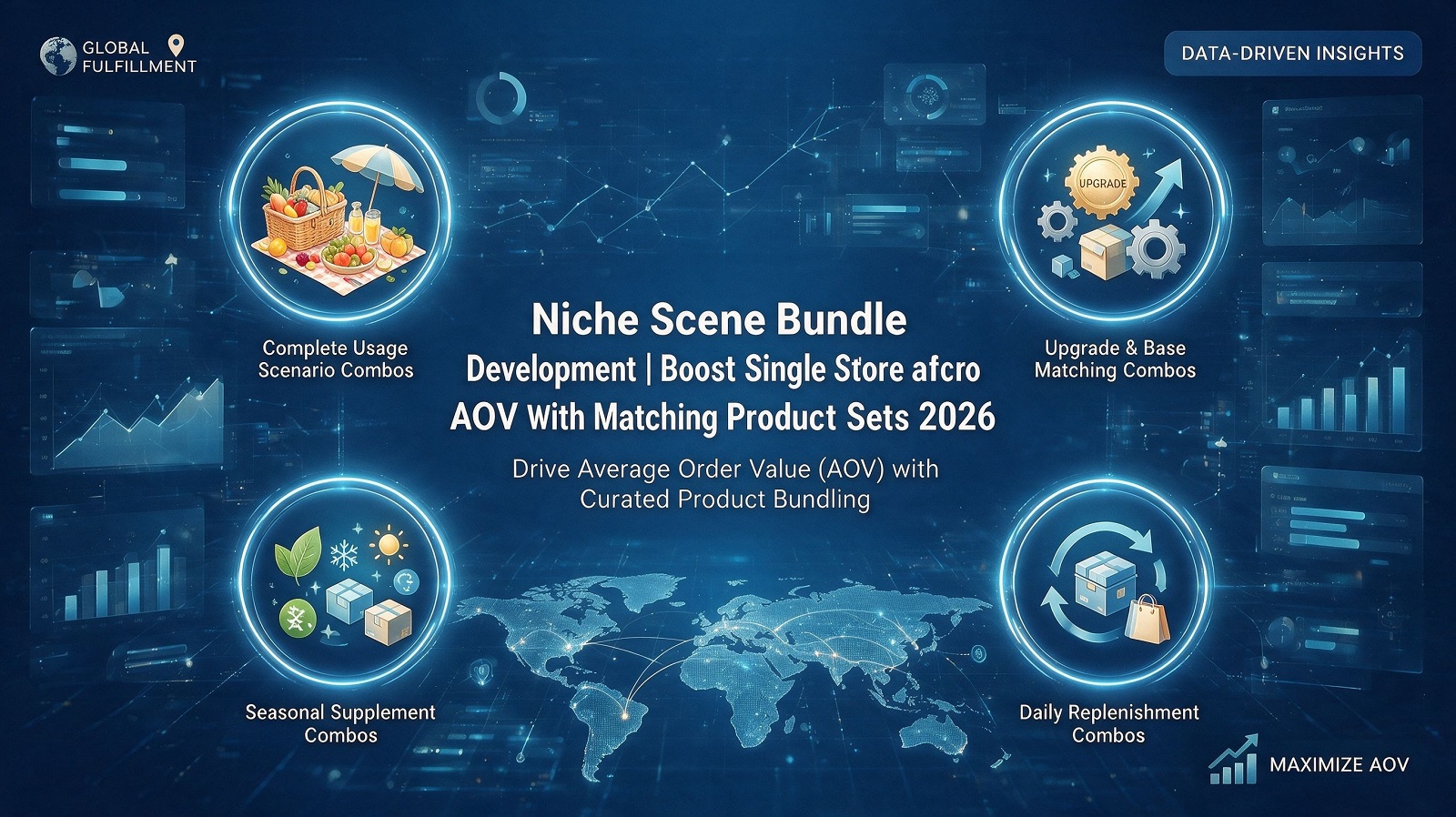
Four Practical Niche Scene Bundle Matching Logics
All combo schemes center on real user usage scenarios rather than random product pairing, with clear positioning for different consumer demands.
Logic 1: Complete Usage Scene Combo
Match all items users need to finish one specific activity into a single set. For example, outdoor picnic core goods plus storage bags, tableware and portable lighting; home skincare main devices plus disposable replacement accessories. The full set eliminates separate purchasing trouble for buyers.
Logic 2: Upgrade & Basic Matching Combo
Pair standard entry-level core SKUs with advanced functional upgrade accessories. It supplies two value options for users: budget basic sets and fully equipped premium sets, covering consumers with different spending expectations.
Logic 3: Seasonal Supplementary Combo
Combine year-round core hot items with limited seasonal exclusive accessories. The seasonal attachments add time-limited purchasing motivation without changing the steady-demand main product, stimulating immediate bundle checkout.
Logic 4: Daily Replenishment Combo
Match long-life core products with quick-consumption consumables that require regular repurchases. After users buy the main durable goods, they will return to purchase supporting consumables, stabilizing long-term repeat order volume.
Differentiated Bundle Development Strategies For Different Merchant Scales
Small Single-Category Boutique Stores
Small teams focus on complete scene combos and seasonal supplementary sets. The two modes require low supply chain adjustment costs and fast trial stocking. Avoid launching too many upgrade matching combinations to prevent scattered inventory capital.
Multi-Category Brand Stores
Brands with stable supply chains can deploy all four bundle systems simultaneously. Develop tiered upgrade combo series, launch monthly seasonal limited accessory sets, and build long-term consumable replenishment product lines to maintain continuous average order value growth across all sales cycles.
Common Unsuccessful Bundle Design Mistakes
Mistake 1: Randomly pair unrelated products without scene connection
Combining goods that do not match daily usage habits confuses buyers. Such bundles generate low click rates and fail to drive additional purchases.
Mistake 2: Overstuff combos with redundant accessories to raise prices
Adding useless trivial items increases the overall package cost. Users will reject overpriced bundles and choose to buy single core products separately.
Mistake 3: Uniform bundle pricing without separate single-item options
Forcing consumers to purchase full sets reduces conversion for users who only need the main product, triggering customer loss and higher return rates.
Mistake 4: Static bundle combinations without regular iteration
Unchanged matching sets will be copied by competitors quickly. Merchants need to update seasonal accessories and supporting parts periodically to maintain combo uniqueness.
Standard Scene Bundle Development & Launch Workflow
Step 1: Collect user review feedback to sort out supporting accessory demands
Summarize buyer consultation questions and comment requests for matching auxiliary products of core hot SKUs.
Step 2: Select suitable bundle logic matching store category characteristics
Small stores adopt full-scene and seasonal combos; multi-category brands deploy all four bundle layout systems.
Step 3: Confirm stocking proportion and cost accounting for each combo set
Control the quantity of auxiliary accessories to guarantee stable gross profit after bundling discounts.
Step 4: Design exclusive bundle display modules on product pages
Highlight scene matching advantages and total cost savings compared to separate single-item purchases.
Step 5: Track weekly combo sales data to adjust replenishment ratios
Expand stock of popular bundles, and optimize or discontinue combinations with weak transaction performance.
Daily Winning Product Bundle Operation Checklist
All combo sets must be built around unified user usage scenes instead of random matching.
Keep single-item purchasing available while launching bundled packages to avoid losing single-demand buyers.
Control accessory costs to maintain healthy profit margins after bundle discounts.
Update seasonal supporting accessories regularly to avoid copycat identical combinations.
Develop full-scene matching combos for top-selling core SKUs to lift average order value.
Track weekly combo transaction data to adjust stocking and combination structures timely.
Practical Merchandising Optimization Case
An outdoor supply independent store long sold separate tents and picnic mats as core hot SKUs, with flat average order value for a long time. The store previously launched random product combos without scene logic, which brought almost no improvement in unit sales.
In Q2 2026, the merchandising team rebuilt bundle layouts following four niche scene logics: launched full picnic scene sets, designed basic and upgraded matching combos, rolled out summer seasonal limited accessory kits, and created replenishment consumable bundles for outdoor gear.
After three months of operation:
• Store average order value grew steadily;
• Bundle purchase proportion of total orders increased notably;
• Slow-moving accessory inventory was effectively digested;
• The store formed differentiated package advantages over competing merchants.
The store merchandiser shared feedback: Scene-based bundled design is an easy-to-execute winning product operation method. It relies on existing verified hot SKUs to boost revenue without risky new trend product sourcing.
Core Takeaways
Selling only standalone SKUs limits store revenue growth and average order value, bringing concentrated price competition risks.
Four scene-oriented bundle logics including full-scene sets, upgrade matching, seasonal supplementary and replenishment combos provide executable merchandising directions.
Small single-category stores and multi-category brands can adopt differentiated bundle development schemes matching their capital and supply chain capacity.
Reasonable scene matching combos raise unit transaction value, digest auxiliary inventory and build mild store product differentiation barriers.