
Introduction
Consumption behavior across European markets has undergone obvious shifts this year, affected by regional economic conditions, environmental protection policies and diversified shopping channels. Many independent store operators still follow the product and marketing ideas formed in previous years, which gradually widen the gap between store content and local buyer expectations.
Based on multi-quarter consumer survey data collected from mainstream European warehouse coverage areas, this industry insight focuses on visible changes in user decision-making logic. It contrasts past consumption habits with current mainstream demands, points out operational deviations easily made by sellers, and offers targeted adjustment plans for stores of different positioning.
Industry Background: Shifts in European Consumption Environment
Three external factors jointly reshape local buyer shopping preferences in 2026.
First, regional green product policies are being rolled out continuously. More local buyers will take material environmental compliance, recyclable packaging and carbon footprint as reference factors before placing orders.
Second, rational consumption awareness rises. Users tend to reject impulsive overconsumption and prefer durable, multi-scene practical goods rather than single-use trendy items with short lifespans.
Third, trust in brand authenticity grows. Simple low-price appeal can no longer drive stable orders; buyers pay more attention to brand background, real user reviews and transparent after-sales rules.
Merchants who fail to adjust store operation logic according to these changes will face slower conversion growth and weaker repeat purchase willingness.
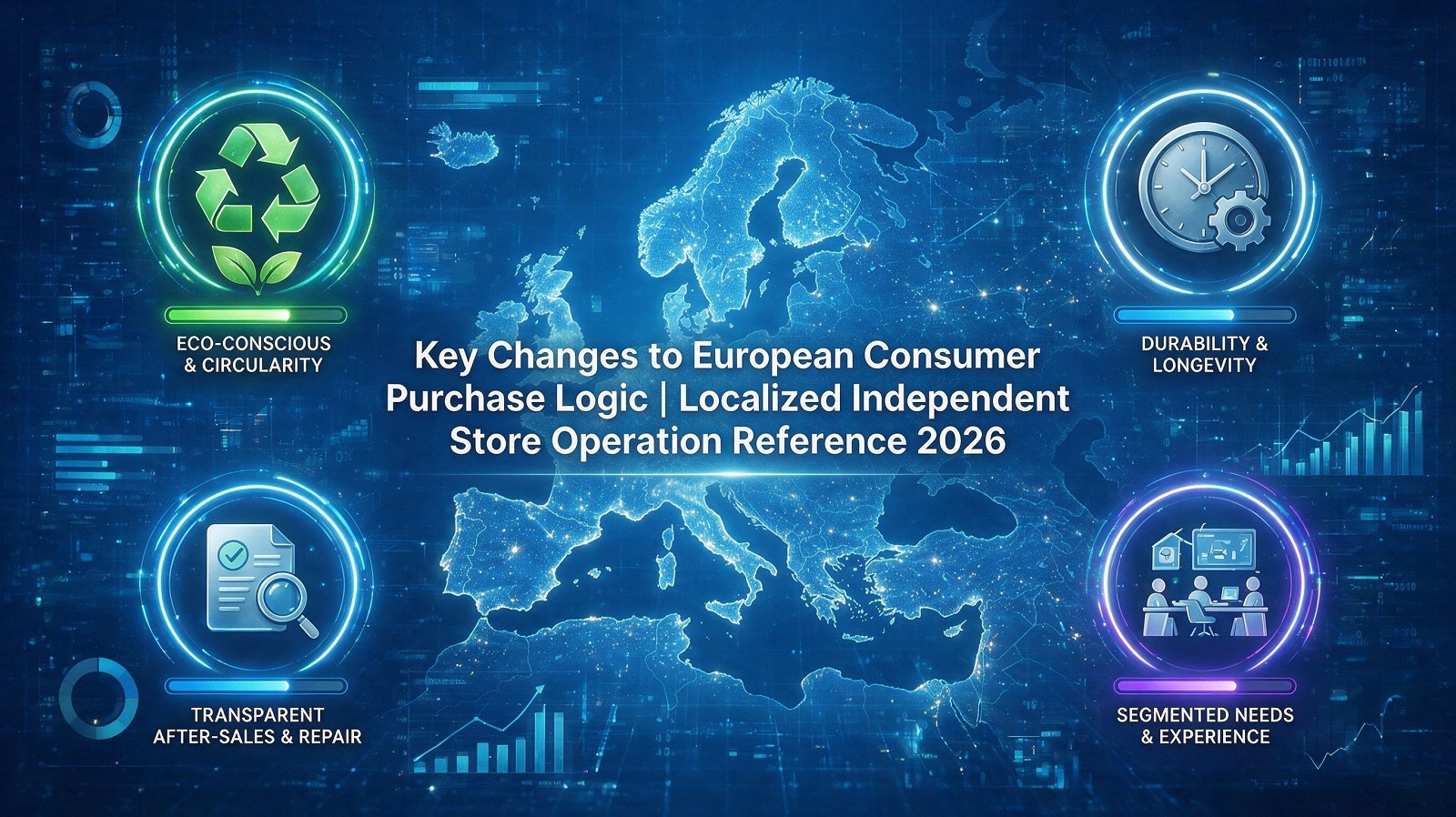
Four Major Changes in Local Consumer Purchase Logic
Change 1: Environmental attributes become a core screening condition
Most European buyers will actively check product material certificates and packaging environmental labels before clicking checkout. Products without relevant compliance descriptions will be filtered out early in the browsing stage, even with competitive pricing. Stores lacking clear green feature display will lose a large share of medium and high-value traffic.
Change 2: Long service life replaces low price as core advantage
The proportion of buyers focusing on long-term usability has increased year-on-year. Cheap goods with poor durability generate high return rates and bad reviews, while moderately priced durable products gain steady repeat orders. Users are willing to accept reasonable premium for goods that can be used for multiple seasons.
Change 3: Complete after-sales transparency affects final purchasing decisions
Before completing payment, many consumers will browse store return policies, repair support and complaint channels. Vague after-sales rules will directly reduce user trust, even if the product itself meets demand expectations. Clear, localized after-sales explanations effectively lift page conversion performance.
Change 4: Niche scene demand grows faster than mainstream general goods
General mass-market products face fierce competition, while items designed for specific local living scenes gain stable incremental traffic. Buyers with segmented scene demands are less sensitive to price comparison and have stronger recognition of stores with targeted product layout.
Differentiated Store Adjustment Ideas for Different Merchant Types
Small Single-category Independent Stores
Small teams can focus on optimizing product page environmental compliance descriptions and clear after-sales policy displays. Prioritize developing niche scene goods matching local living habits, and highlight product durability advantages in all graphic and text content. There is no need to expand multi-category product lines blindly.
Multi-category Brand Stores with Multi-region Layout
Brands covering multiple European countries can build layered product portfolios. Set independent display modules for green-compliant products, launch long-durability core series, and customize region-adapted after-sales clauses for each market. Regularly sort regional consumer feedback to update product development directions quarterly.
Common Misjudgments of European Consumer Demands
Misjudgment 1: Still relying on low-price strategies to attract traffic
Pure price reduction cannot form long-term competitiveness. Current local buyers value environmental performance and product durability more, and cheap low-quality goods trigger high after-sales losses.
Misjudgment 2: Simplifying environmental compliance information on product pages
Omitting material certification and recyclable packaging descriptions leads to loss of high-intent buyers, and may also bring customs detention risks for bulk shipments.
Misjudgment 3: Copying unified selling points for all European regions
Consumer scene demands vary between northern, central and southern Europe. Uniform product introduction cannot match localized usage habits, resulting in weak click conversion.
Misjudgment 4: Hiding detailed after-sales rules to avoid return losses
Hidden return policies reduce user trust significantly. Transparent after-sales explanations can effectively filter overly sensitive consumers in advance and cut unreasonable return rates.
Standard Store Localization Adjustment Workflow
Step 1: Collect regional consumer feedback and local policy requirements
Summarize user review focus points and latest environmental protection rules for target European countries to clarify core optimization directions.
Step 2: Reconstruct product page content display logic
Add independent modules for environmental certification, durability advantages and localized after-sales rules to match buyer browsing priorities.
Step 3: Adjust SKU layout proportion according to scene demand
Increase the proportion of niche scene durable goods and green-compliant products, and control the stock quantity of single-use cheap trendy items.
Step 4: Customize regional marketing copy and graphic materials
Modify scene display pictures and descriptive text to fit local living space, climate and usage habits of different European regions.
Step 5: Track monthly store conversion and return data to iterate strategies
Observe changes in page click-through rate, order conversion and after-sales volume, and adjust product layout and page content regularly.
Daily Localized Operation Checklist
Supplement complete environmental compliance parameter descriptions on all core product pages.
Highlight product durability and multi-scene practical advantages in all promotional content.
Write clear, localized after-sales policy explanations visible on product detail pages.
Develop targeted niche scene SKUs for regional market characteristics to avoid homogeneous competition.
Avoid over-reliance on low-price marketing to prevent unstable after-sales losses.
Collect local buyer feedback monthly to continuously optimize store product and content layout.
Real Store Operation Observation Case
A home goods independent store mainly serves German and French markets. The store used to take low pricing as its core selling point, with simple product pages lacking environmental material descriptions and detailed after-sales rules. In the first quarter of 2026, the store’s overall conversion rate kept sliding, and the monthly return volume remained high.
After adjusting operation logic according to the four consumer demand changes summarized in this article: optimizing page green compliance display, focusing on durable product promotion, standardizing transparent after-sales statements, and developing niche apartment scene supporting goods, the store achieved steady operational improvement within three months.
• The proportion of high-intent browsing traffic increased;
• Monthly unreasonable return volume decreased;
• User positive review rate improved obviously;
• Dependence on price discount marketing was reduced.
The store’s operation supervisor stated that grasping real local consumer logic changes is the core of stable European market operation. Passively following outdated selling modes can no longer support long-term store growth.
Core Takeaways
Four major shifts in European consumer purchase logic focus on environmental compliance, product durability, after-sales transparency and niche scene demand, reshaping cross-border store operation standards in 2026.
Small single-category stores and multi-region brand merchants can carry out targeted localized adjustment plans matching their own business scale.
Over-reliance on low-price marketing and simplified localized content are the two most common operational deviations that suppress store conversion performance.
Systematic localization transformation covering product layout and page content can match current European buyer demand characteristics and stabilize long-term store revenue.